It is a reality: the contemporary woman is accustomed to exhaustion. It no longer appears as a crisis or as a defining moment that halts time, but as a series of daily adjustments we learned to make automatically, without stopping to question them. We learned how to move as society expects us to. To anticipate reactions, to correct the way we speak, and even the way we think. We learned to stay on guard at all times, every hour of the day, and over the years, those adjustments stopped feeling like a burden and quietly became part of our routine.
And when normalization does its work, discomfort becomes so familiar that it is no longer questioned. Exhaustion blends into the everyday and takes root so deeply that it is mistaken for strength, adaptability or even maturity. But is it really emotional resilience, or simply learned and normalized exhaustion?
Author: aNDREA BAU
When Discomfort Becomes Everyday

Exhaustion is not abstract or symbolic. It exists, it’s uncomfortable, and it has visible consequences, even if it has been normalized over time. It appears in beauty standards that demand increasing investment, from permanent hair removal to aesthetic medicine. In the so-called pink tax that makes basic products and services more expensive.
It manifests in the constant need to assess our own safety before moving through the streets; in the silent penalties that accompany motherhood and lactation. Settles into the persistent taboo surrounding menstruation and the moral and social judgment that still weighs on female masturbation. It appears in sexual health systems that, surprisingly, do not prioritize women. And yes, in the way aging stops being a natural process and becomes constant pressure.
These are layers upon layers that accumulate and take root day after day, shaping the experience of inhabiting a female body within a social structure that demands constant adaptation. No, the uncomfortable part is not naming it. What is truly uncomfortable is recognizing how much of this we have learned to accept as part of life.
“Women today do not lower their guard because they simply cannot”
– ANDREA BAU
Living in a State of Alert
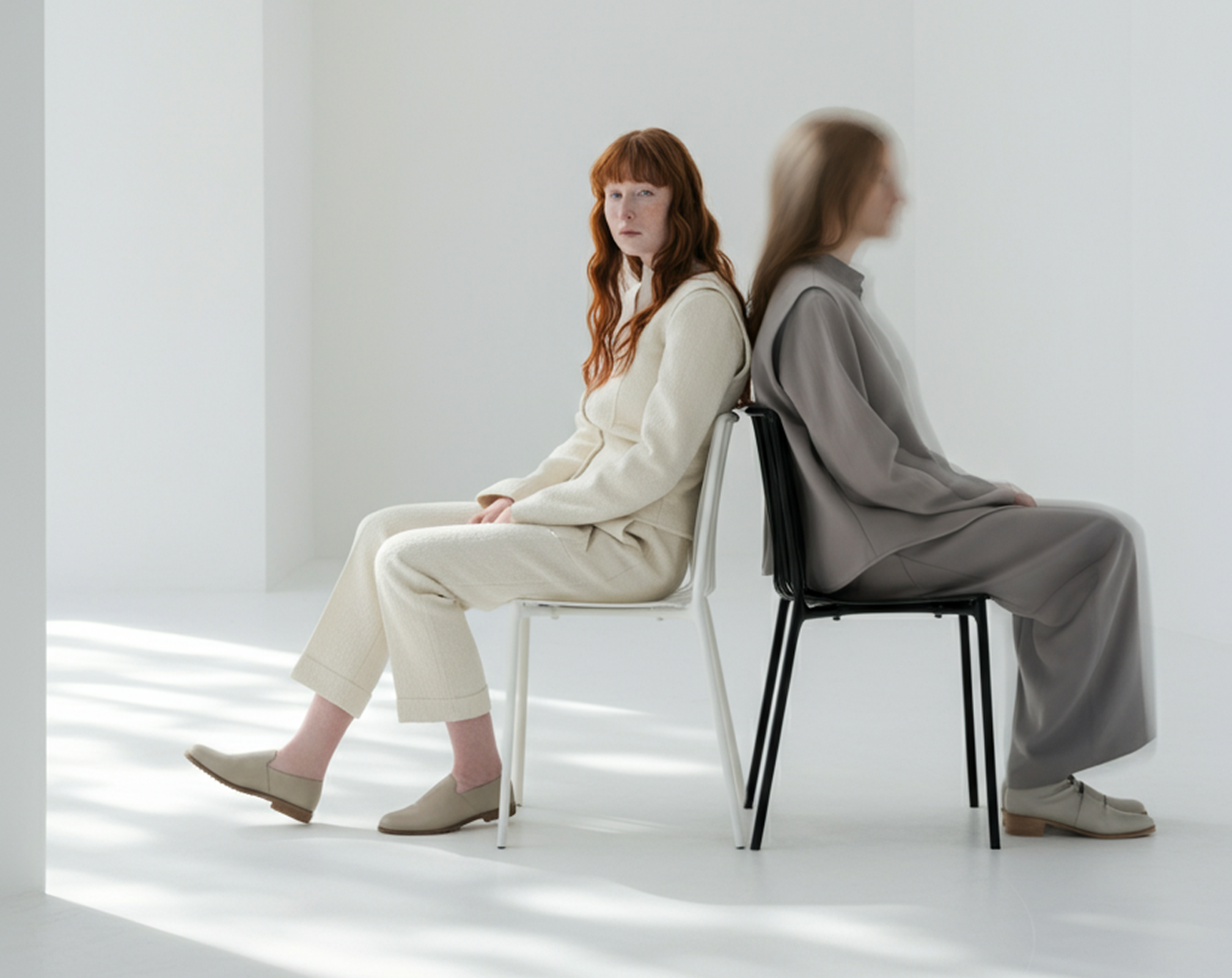
It is difficult to admit, but living under these layers is the modus operandi of the contemporary woman. Thinking before acting. Anticipating scenarios. Correcting oneself in silence. Hypervigilance stops being an occasional response, not by choice, but by learning.
Women today do not lower their guard because they simply cannot. They have adapted to remain alert at all times. Yes, we live on autopilot, as if following a perfectly rehearsed script that no longer requires notes. We edit what we say and adjust ourselves to space like expert set designers. We modify our presence and even our energy. And although this state is not always named as stress, the body records it. And the mind? Active even in stillness.
Anxiety becomes our baseline state, and rest turns into a superficial concept, because rest does not mean stopping the mental management.
The Right to Lower the Guard
Today, speaking about exhaustion is not a complaint or an exaggeration. It is an act of awareness. Of recognizing that real rest cannot exist in a permanent state of alert. Of questioning what forces us to live this way and to correct behaviors that have been normalized. Because as long as living requires anticipating, rushing and reacting, calm will remain temporary and deeply fragile.
Trying to change the stereotype of the contemporary woman is not a demand; it is a basic necessity. Rest should not be a privilege, but a natural state of being. And for that to happen, stopping the normalization of exhaustion is the first step.

“Living in a permanent state of alert trains the body to endure, but makes it forget how to truly rest.”
-ANDREA BAU
The Answer
No, this is not emotional resilience, because what we call strength and maturity is nothing more than sustained, learned and deeply normalized exhaustion. Today, it’s necessary to stop confusing resistance with well-being and surviving with living. It is time to open the possibility of lowering the guard.
This is not about performing less or being less.
It is, finally, about truly resting.