The first thing you see in Mother Mary is a face. Not Anne Hathaway’s face exactly, but the face that has been built on top of it.
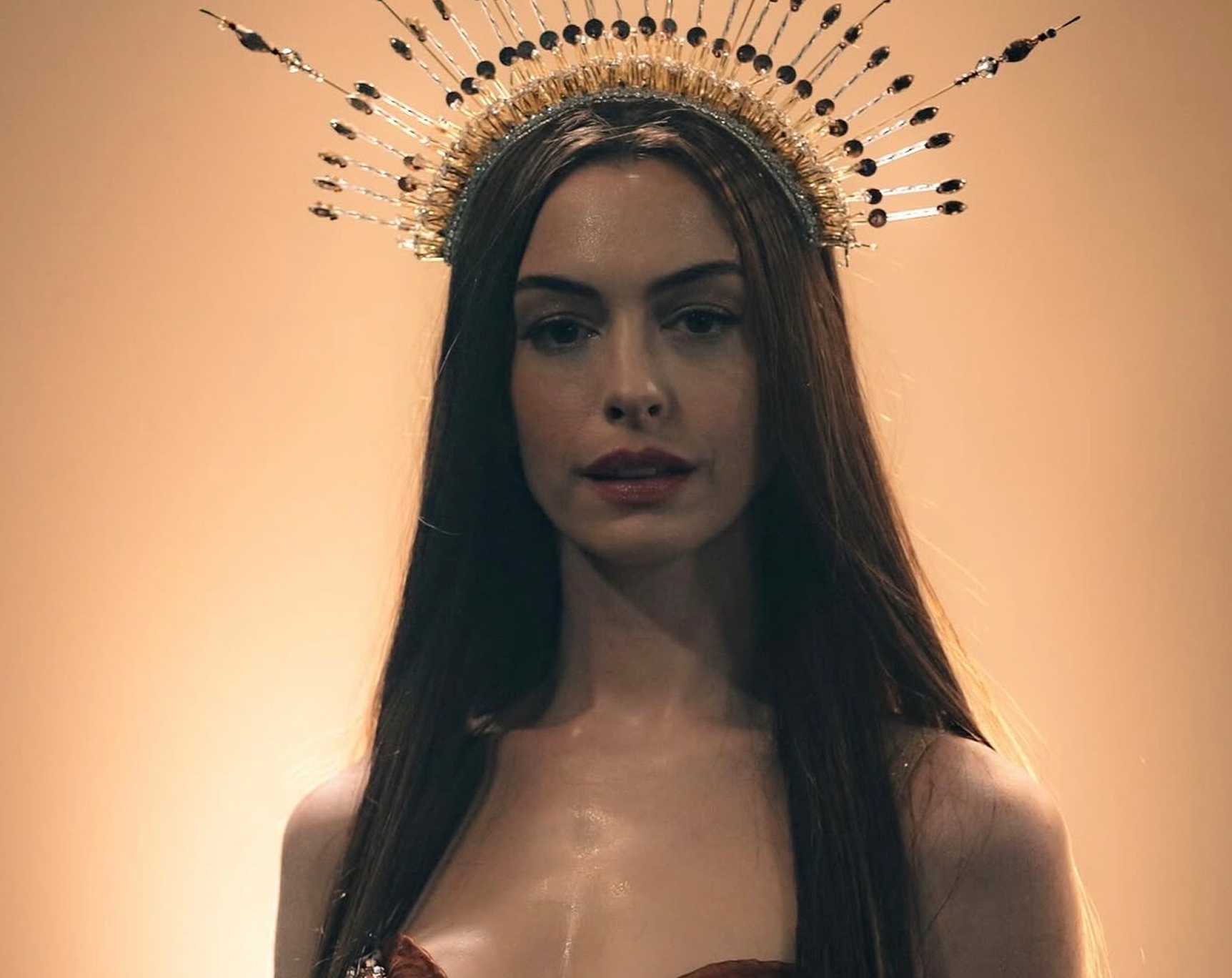
Long straight hair sealed into impossible smoothness. A wig so precisely constructed that it reads less like hair and more like the idea of hair. Skin so flawlessly finished that it crosses the line between beautiful and uncanny. A halo worn as headpiece. A body wrapped in shimmering gold. The face of Mother Mary, the global pop icon at the center of David Lowery’s extraordinary A24 film, has been engineered to the point where the person underneath it has become almost theoretical. That is the whole point.
Mother Mary, released April 17, 2026, is a film about what it costs to build a public face. About the labor, the craft, and the human relationships behind the image. And it is, for anyone who works in beauty or thinks seriously about what beauty communicates, one of the most important films made about this subject in years.
Author: Elizabeth Ulloa
The Architecture of the Icon
The film’s hair and makeup designer, Heike Merker, has spoken about the specific intention behind Mother Mary’s on-stage beauty look. The goal was not glamour for its own sake. It was the construction of something unattainable. A face so finished that it looked practically computer-generated. Not a pore in sight. Not a hair out of place. The kind of beauty that only exists when money and craft and intention converge at a specific point and produce something that is simultaneously stunning and slightly terrifying.
Merker made the decision to tell the character’s story through changing wig colors. Each performance look in the film carries a different shade, a different texture, a different quality of light in the hair that signals where Mary is emotionally without a single line of dialogue needing to explain it. This is makeup and hair doing what they do at their highest level: communicating character rather than simply serving appearance.
The silicone used to seal the hair into its signature smoothness is a detail that most viewers will never consciously notice and that is precisely why it matters. The hair moves exactly right. It catches light exactly right. It never disrupts the costume, never pulls away from the face, never behaves like real hair. It behaves like a perfect idea of hair. And that gap between real and ideal is where the entire film lives.
Contrast this with the first moment the character appears without the construction. Damp hair. No makeup. Dressed down. Stripped of the architecture that has been holding her together. Hathaway arriving at this moment looks not simply different but genuinely disoriented, as though the face beneath the face is not one she fully recognizes anymore. That is not acting alone. That is Merker’s work in reverse, the deliberate removal of the constructed self, making the real self look almost like the stranger.
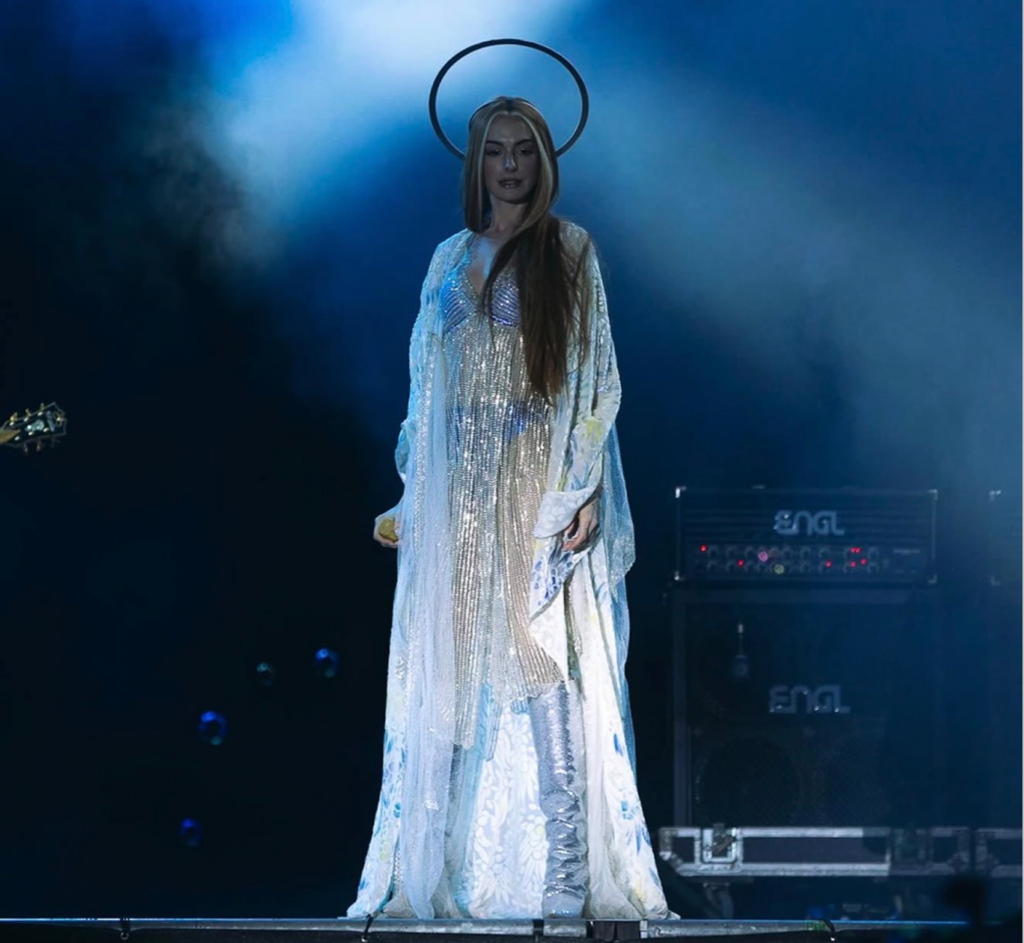
“The hair moves exactly right. It catches light exactly right. It never behaves like real hair. It behaves like a perfect idea of hair.”
The Costume as the Argument
Costume designer Bina Daigeler has described the film as being, at its surface level, a movie about a pop diva needing a dress. What she built goes significantly further than that.
The costumes in Mother Mary are a complete visual language. The on-stage looks draw from Lady Gaga’s maximalism, Madonna’s Catholic imagery, Taylor Swift’s precise pop sensibility, and Beyonce’s physical command. They are not homage. They are synthesis. A character built from the visual vocabulary of every female pop icon of the past thirty years, wearing their aesthetics simultaneously, which makes the question the film is really asking more urgent: underneath all of that borrowed language, who is she?
The gold halo look, clearly influenced by the Peter Dundas-designed outfit Beyonce wore at the 2017 Grammy Awards, is the film’s most visually arresting moment. It is also its most explicit argument. A woman wearing a halo. A woman presenting herself as sacred, as iconic, as beyond ordinary humanity. And the film asking quietly and persistently: what did she sacrifice to get there?
The production designers pursued a restrained aesthetic throughout, using color palettes and fabric choices to underline character psychology rather than call attention to themselves. The clothes are not decoration. They are psychology made visible.
The Two Faces of the Film
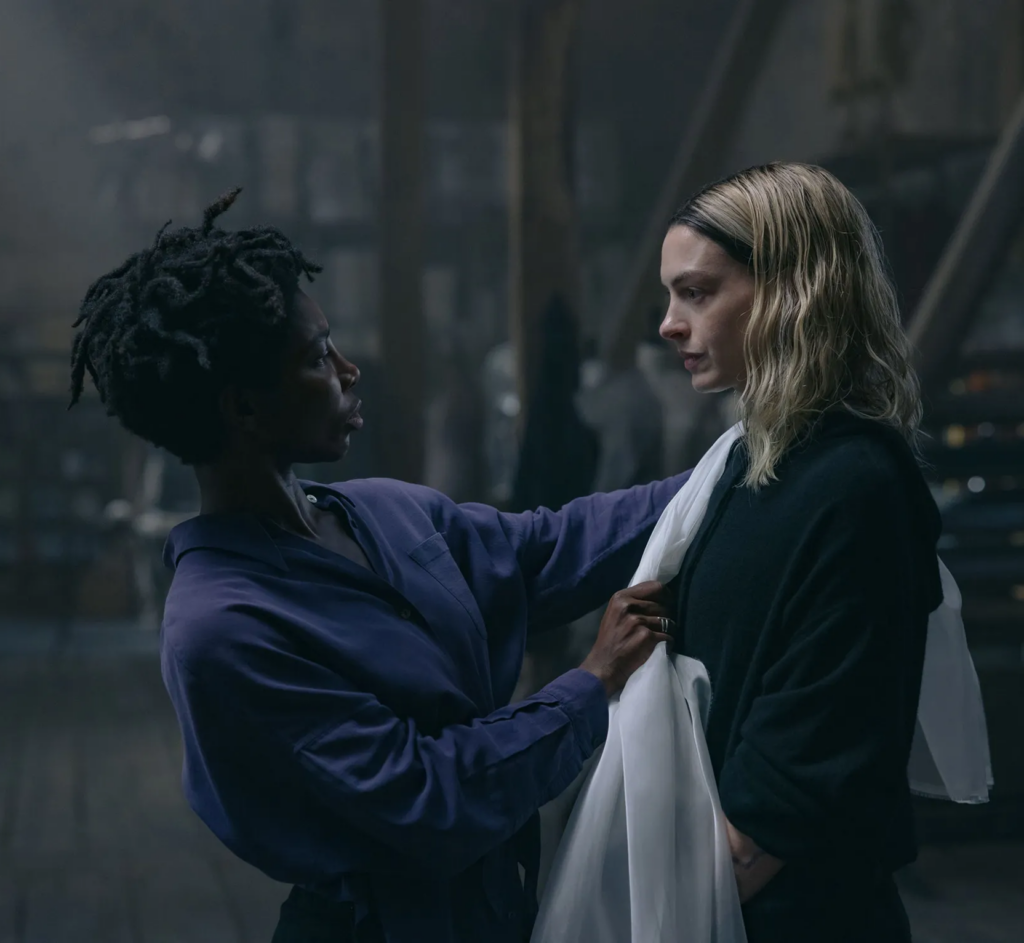
The relationship between Mother Mary and Sam Anselm, the former costume designer played by Michaela Coel, is at its core a relationship between a woman and the person who knew her before she was constructed. Sam built the looks. Sam understands the architecture. And Sam’s return threatens to bring it all down because she is the one person in the film who knows both faces
This is the beauty conversation the film is having at its deepest level. Not the surface conversation about glamour and image, which it handles with extraordinary craft. But the conversation underneath it: what is the relationship between the face you build for the world and the face that exists before anyone starts building?
Every woman who has sat in a makeup chair knows this question in some form. The moment before the brush touches the skin is a moment of genuine encounter with the self as it actually is. What the film does is take that moment and extend it into a full narrative, asking what happens when the gap between the two faces becomes too wide to cross.
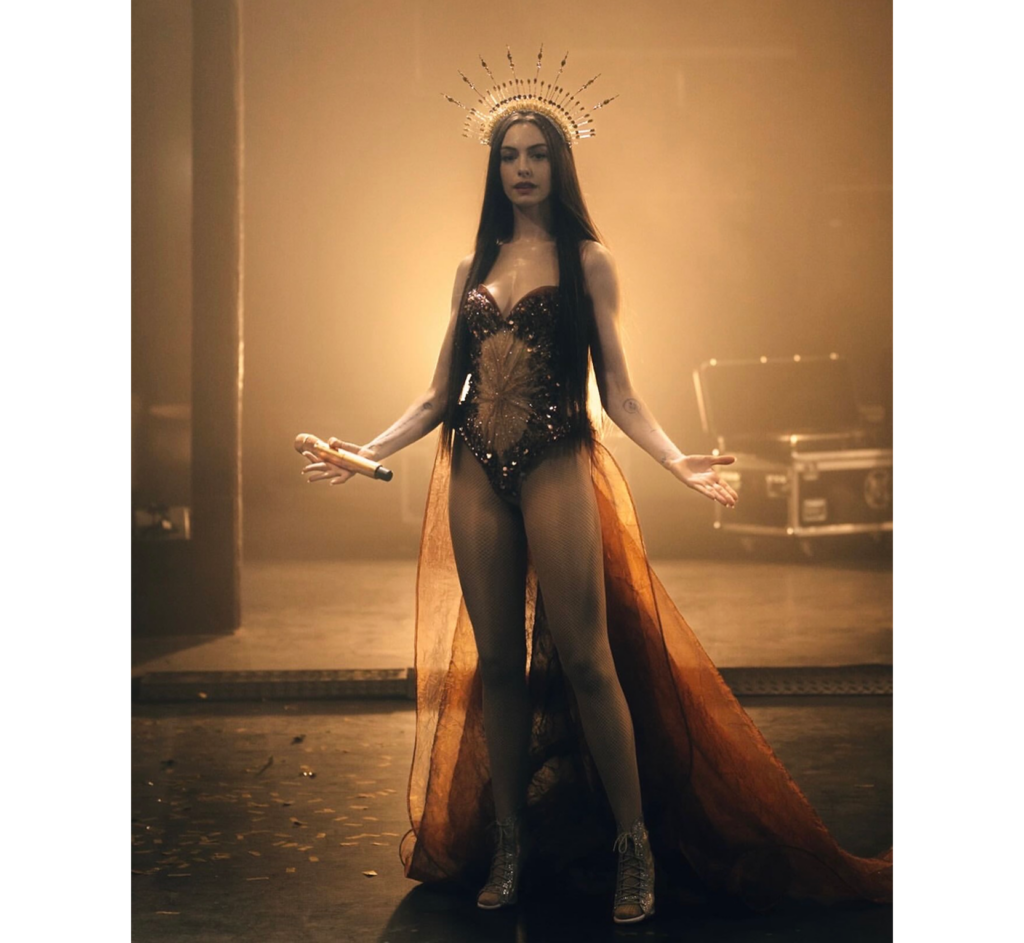
“Sam Anselm is not a supporting character. She is the film’s moral center.”
Heike Merker and Bina Daigeler: The Invisible Architects
One of the things that makes Mother Mary genuinely significant for the beauty conversation is that it makes visible the labor that is normally invisible. The hair and makeup artist, the costume designer, the women whose hands are responsible for the face and body the audience sees, are usually the most uncredited people in any production. Mother Mary puts that relationship at the center of the story.
Sam Anselm is not a supporting character. She is the film’s moral center. She is the person who understands that every beautiful thing onscreen had to be built by someone, and that the building required a human relationship that was real and significant and has consequences. When that relationship breaks and then attempts to repair itself, the film is asking questions about creative labor, about credit, about the specific intimacy between the person who sits in the chair and the person who works on the face.
As a makeup artist who has spent two decades in that relationship, this is the part of the film that lands the hardest. The chair is one of the most intimate spaces in anyone’s professional life. What happens in it, what is said and not said, what is seen and what is carefully not acknowledged, is a kind of trust that most people outside the industry never fully understand. Mother Mary understands it completely.
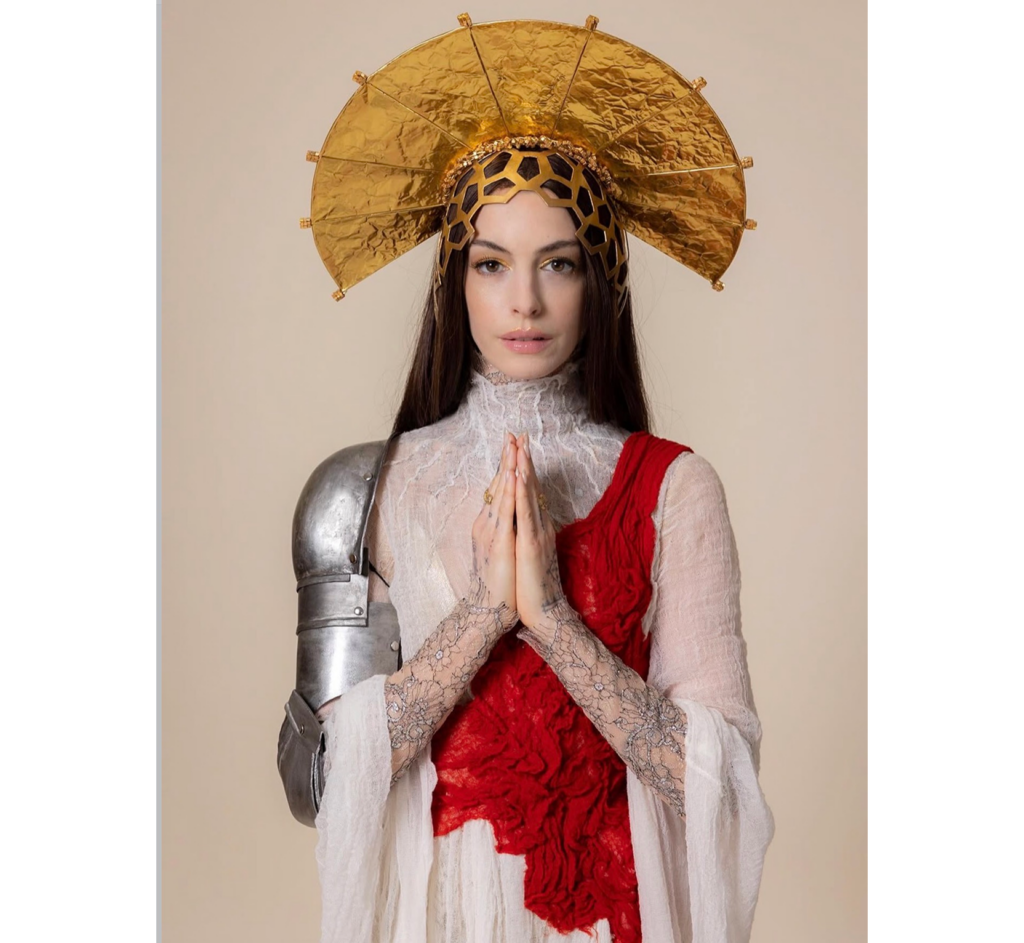
“What the film asks is not whether this is good or bad. It asks what it costs.”
What the Film Says About Beauty Right Now
Mother Mary arrives at a specific moment in the beauty conversation. A moment when the industry is reconsidering its relationship with perfection, when the gap between the constructed face and the real one is being discussed more openly than at any previous point in beauty culture’s history.
The character of Mother Mary is a woman whose public face has become indistinguishable from her entire identity. She cannot separate the icon from the person because the work of construction has been so complete, so sustained, and so successful that the original is no longer clearly visible even to herself.
What the film asks is not whether this is good or bad. It asks what it costs. And it gives that question the full weight of a David Lowery A24 psychological thriller, a stunning ensemble cast, the extraordinary craft of Heike Merker and Bina Daigeler, and one of the most complete and technically precise performances Anne Hathaway has ever given.
The face is the story. In Mother Mary, it always was.