There are stories that remain on the surface. Others simply mark a turning point in culture. The Devil Wears Prada belongs to the latter. It wasn’t just a film adaptation, it was a proposal that transformed the way fashion —and the editorial world— were understood, aspired to, and remembered.
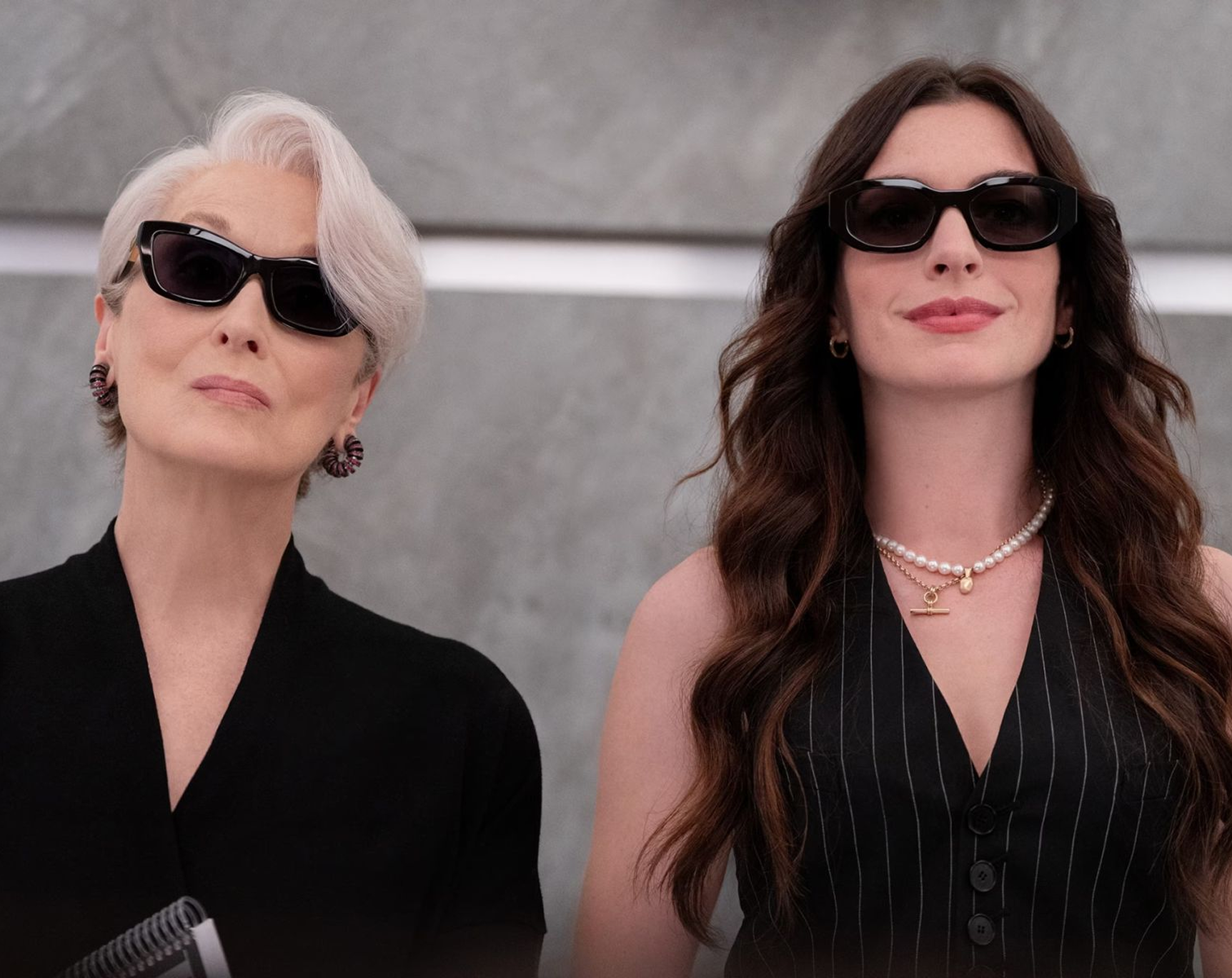
The collective obsession with the film starring Meryl Streep and Anne Hathaway goes beyond a single moment. It has everything to do with what it left behind: its iconicity, the nostalgia it activates, the industry it portrayed and, above all, the way it turned that universe into something that could be understood… and desired.
Perhaps that’s why its return, nearly two decades later, generates so much excitement. It doesn’t arrive as a simple nod to the past, but as a confirmation that everything it showed still resonates today; in the age of the algorithm and digital culture.
So, why are we still obsessed with The Devil Wears Prada? This is where the conversation opens.
Author: aNDREA BAU
For its iconicity
The way The Devil Wears Prada positioned itself within pop culture was particular. It didn’t remain just another film within the fashion space, it became a constant point of reference. A scene, a line, or even an attitude can instantly take us back to a specific moment in the film. It doesn’t need explanation, it’s simply recognized. And that is precisely why it is iconic.
Released in 2006 and based on the novel by Lauren Weisberger (inspired by her own experience as an assistant to Anna Wintour, then editor-in-chief of Vogue), the film started from a clear proximity to the fashion editorial industry that, at the time, very few productions had achieved.
Its permanence, however, is not sustained by its record, but by the way it translated that world into images that continue to function as references. The cerulean sweater monologue, Miranda Priestly’s controlled and calculated gaze, Emily fed up with the job, or the knee-high Chanel boots. Scenes that, over time, stopped belonging solely to the film and became collective codes. This is not just some
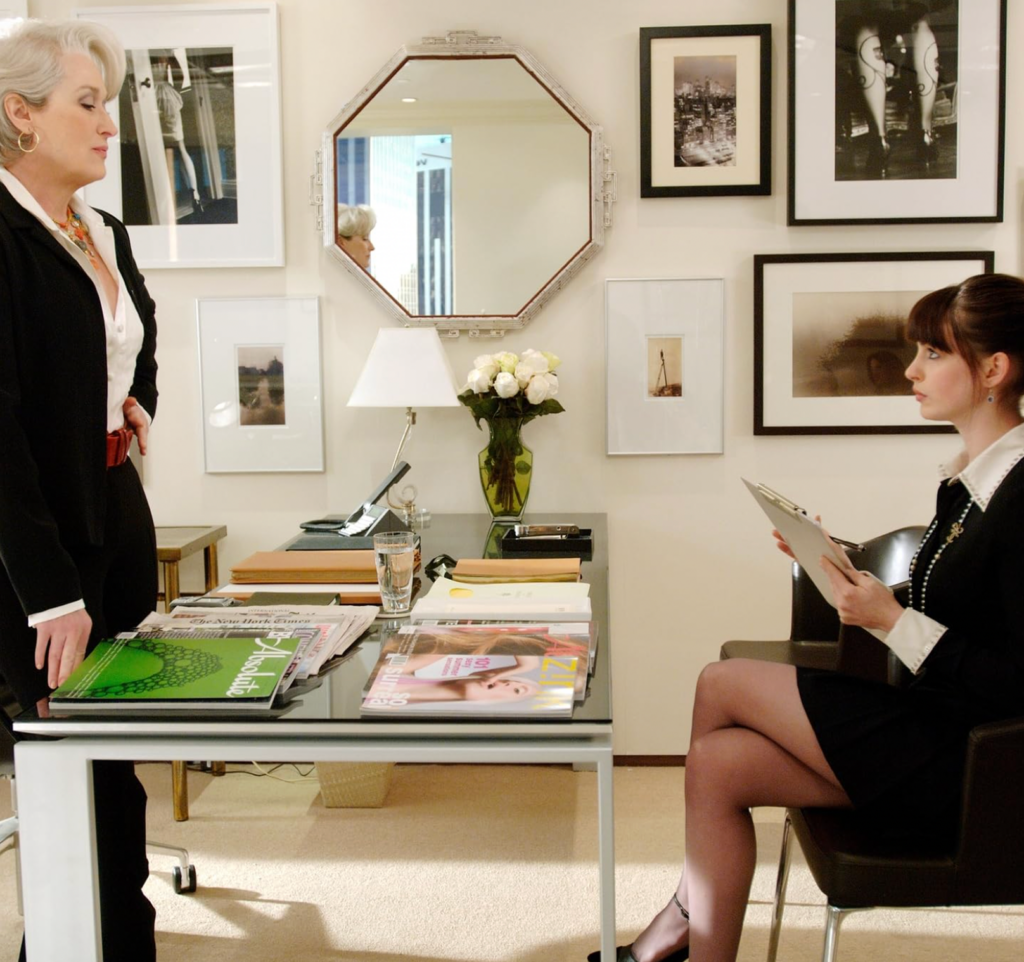
The Devil Wears Prada also marked a shift in how fashion was perceived outside the industry. In 2006, access to that world was limited.
For nostalgia
But its iconicity does not fully explain its permanence. Within that repetition, another factor appears: nostalgia. Returning to those moments and knowing exactly what comes next.
Part of that explains why it finds a second life. Not just as a fond memory, but as something we return to with a certain sense of comfort. A feeling that, without a doubt, intensifies with the announcement of its sequel. From the desire to revisit a universe we already understand, yet still want to experience once again. Because, at its core, it’s not only about what we saw, but about how it feels to return to it.
For the way it shaped how we understand fashion
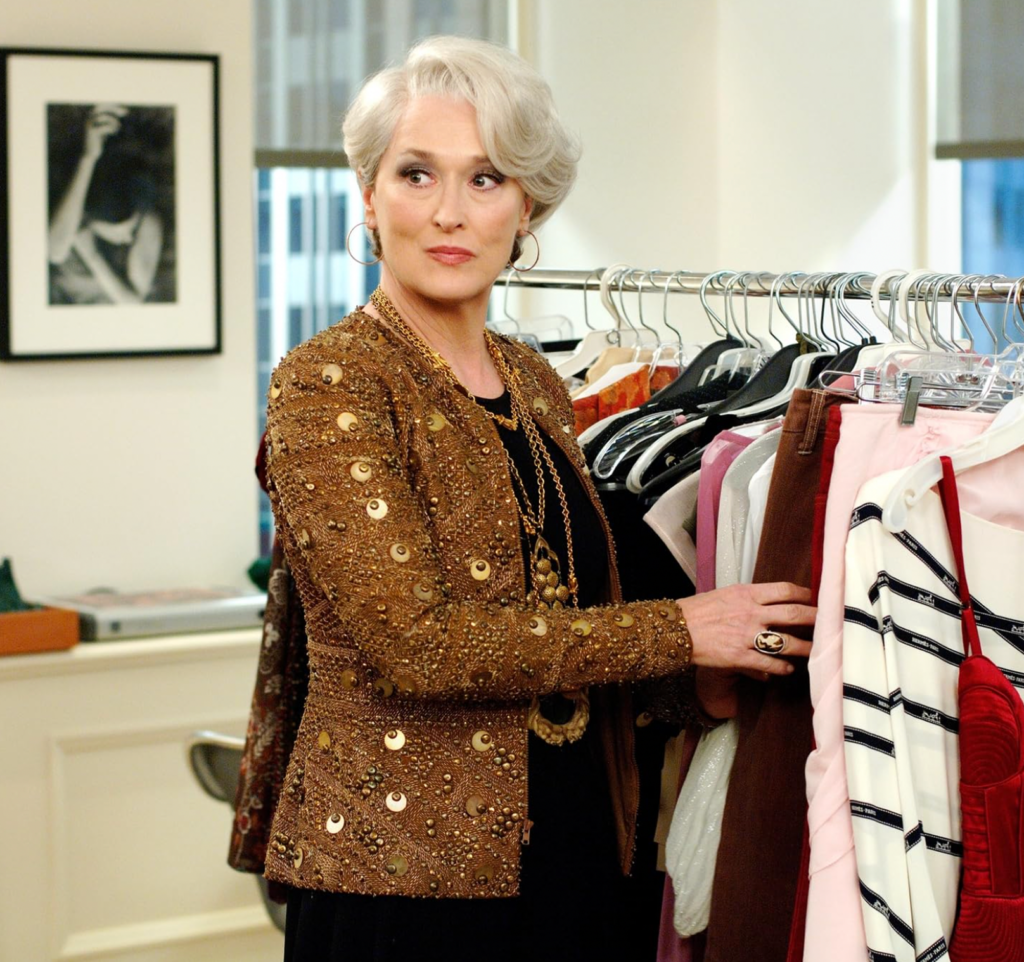
The Devil Wears Prada also marked a shift in how fashion was perceived outside the industry. In 2006, access to that world was limited: magazines, runways, and a much more controlled media landscape. The film worked as an initial entry point into that environment, showing not just the final result, but the processes, decisions, and dynamics behind it.
Yes, Lauren Weisberger’s book already built a strong foundation. But David Frankel’s adaptation ultimately made that universe feel alive and tangible. Through its characters, its tone —between comedy and drama— and its perspective on work, ambition, and the role of women within the industry, it translated a complex structure into something that could be observed, understood, and contextualized.
In that sense, the film didn’t just bring fashion closer, it contextualized it. It showed that fashion is not only about aesthetics, but about constant decision-making, timing, and a sharp awareness of what is happening around it. And that way of understanding it still holds true today. Perhaps that’s why its sequel generates so much anticipation: because it doesn’t just revisit a story, it brings back a way of seeing that still makes sense.
THE DEVIL WEARS PRADA 2 will be released in theaters starting April 30 in Latin America and May 1 in the United States.
For aspiration
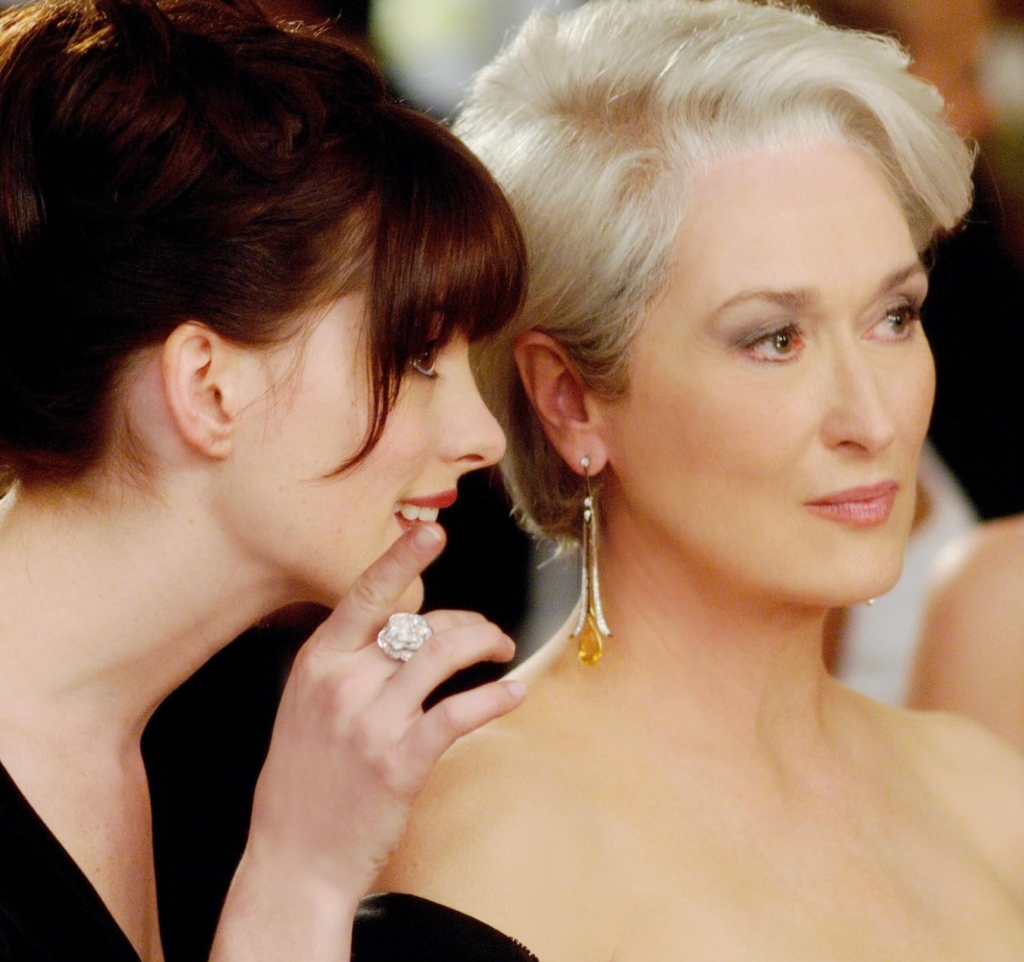
Beyond how we remember it or what it taught us, The Devil Wears Prada also built something much harder to sustain over time: the desire to be there. Not just to observe that world, but to be part of it.
For many, it was one of the first times that environment stopped feeling distant. Suddenly, working at a magazine, being in a space like Runway, understanding how decisions are made and how the day-to-day operates… became a possibility. Not as a fantasy, but as a concrete aspiration. Something that could be pursued, achieved, even imagined as a personal path.
And fashion —particularly in its connection to the editorial world— has always been aspirational. That’s why the film continues to hold a special place. Because, beyond everything, it also represents a moment the industry recognizes with affection: being, for many (including part of the TTT team), a first entry point into that universe.
Epilogue
Under this reading, it becomes clear that The Devil Wears Prada did not stay in its moment. It remains alive, even across different spaces such as digital culture. Beyond nostalgia, it continues to function as a reference in an environment where everything is consumed in fragments.
Its scenes operate as clips, its dialogue as language, and its characters as archetypes that social platforms resurface whenever they align with an active conversation. And in a generation shaped by the algorithm, that is enough for it to remain present.
In 2026, the film we are still, in many ways, obsessed with returns with its sequel, The Devil Wears Prada 2. Directed by David Frankel and once again starring Meryl Streep, Anne Hathaway, Emily Blunt, and Stanley Tucci, it will be released in theaters starting April 30 in Latin America and May 1 in the United States.