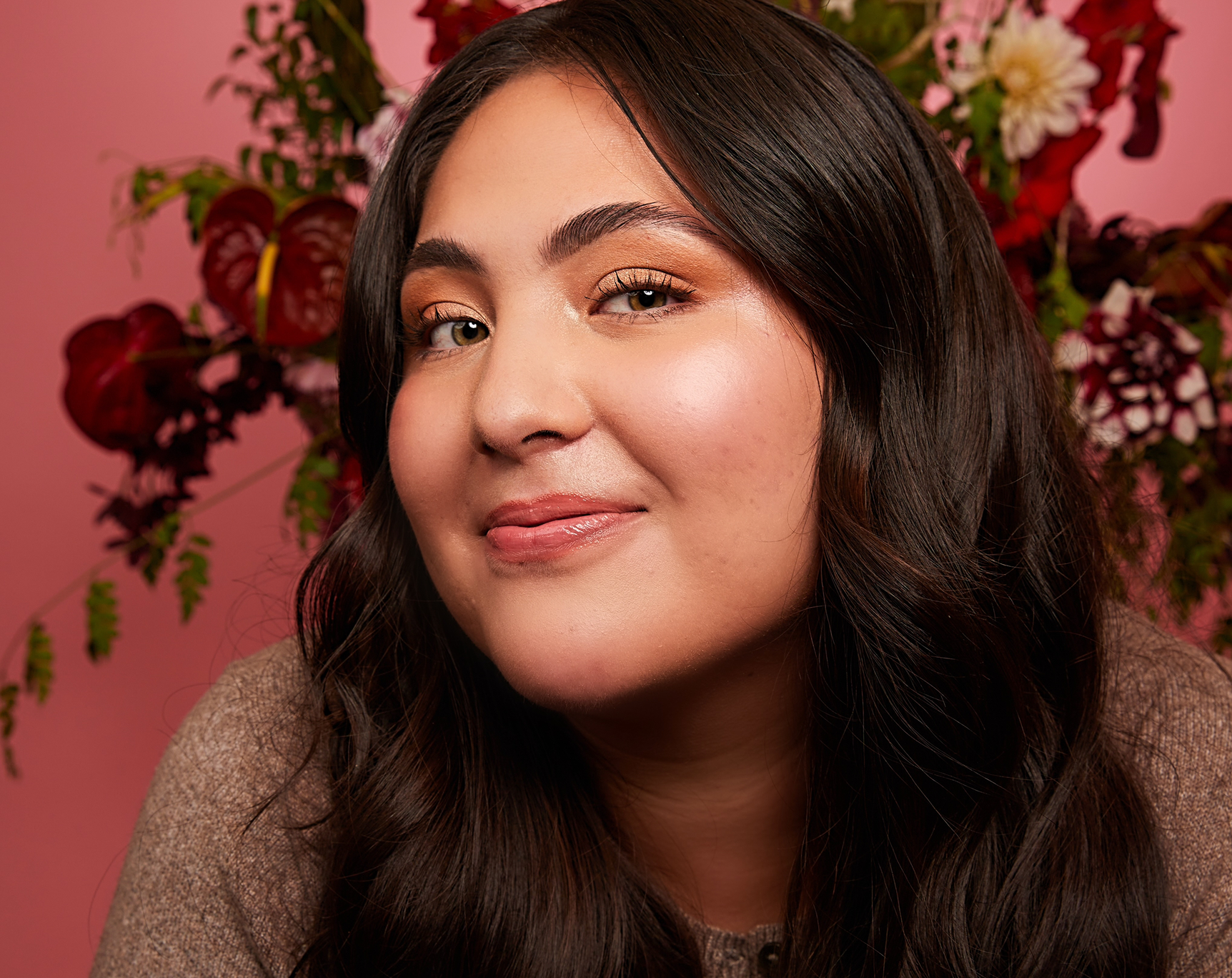
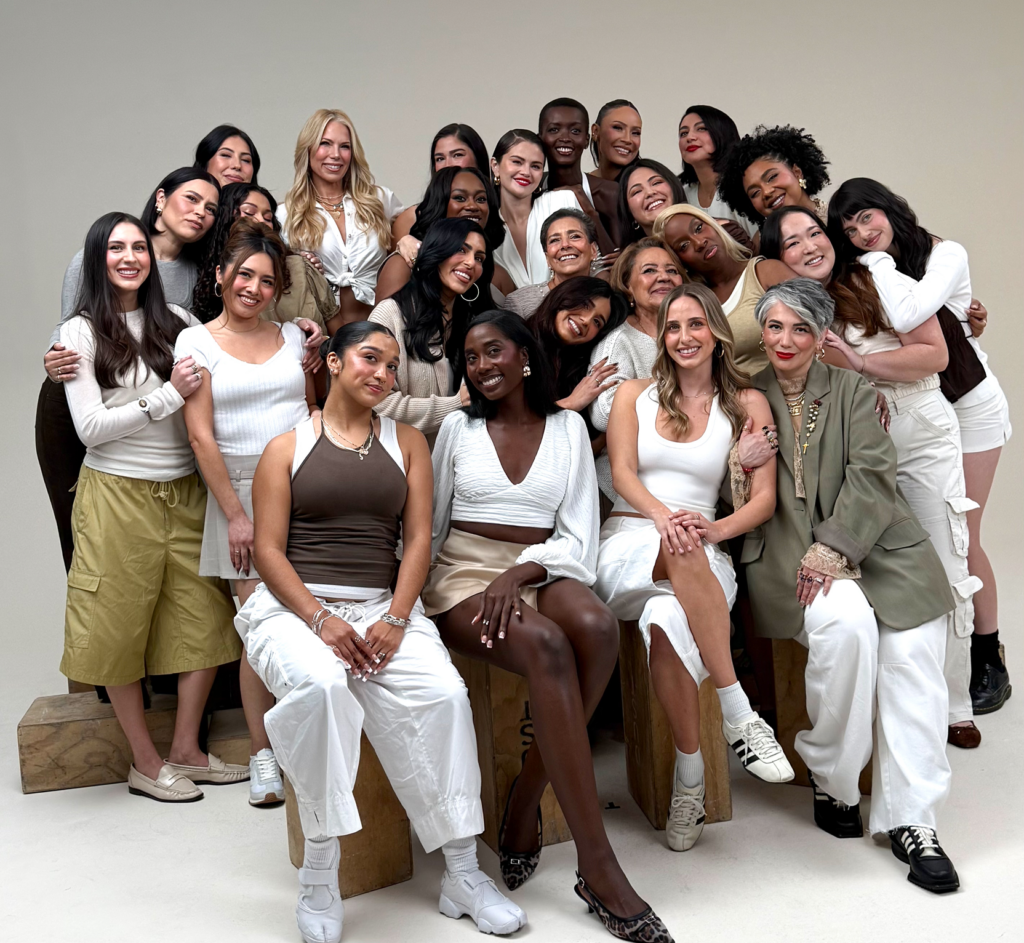
When Rare Beauty launched Every Story Belongs, the conversation immediately centered around something the beauty industry had spent years avoiding: Latina identity was never just one image.
But behind the stories, the conversations and the emotional sensitivity that shaped the campaign; there were also people living that process from the inside.
Emily Ceja, Rare Beauty Social Media & Content Manager, was one of the key voices within the emotional and narrative treatment of Every Story Belongs; facilitating many of the interviews, participating in the development of the conversations and helping preserve the honesty of the stories that ultimately became the emotional heart of the campaign; and perhaps that is exactly what makes this piece feel so different.
Author: Claudia Valdez
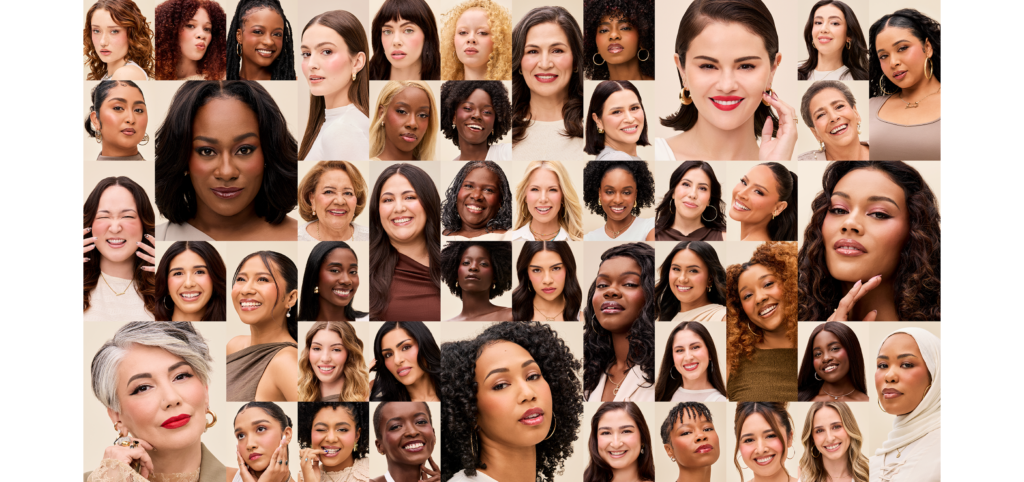
Emily does not speak about Latina representation as a trend within beauty. She speaks as someone who also belongs to the community she was trying to emotionally protect throughout the project.
In her exclusive interview for Topics That Transform, Emily reflects on belonging, visual memory, representation, cultural identity and the emotional weight of finally seeing women reflected with complexity, humanity and dignity.
“Far too often we get reduced to one image and one story.” — Emily Ceja
“Far too often we get reduced to one image and one story.”
-EMILY CEJA
Exclusive Interview
Many beauty campaigns attempt to speak about diversity, but Every Story Belongs feels far more interested in dignity and emotional recognition. What felt important to preserve in each of the women featured in the campaign?
Emily Ceja: The most important thing for me was preserving the individuality of every person I spoke with and giving them the opportunity to share their own story; instead of imposing a narrative onto them, which is something I believe happens far too often within our community.
Far too often we get reduced to one image and one story. Every woman completely directed her own narrative and the way she wanted to speak about her identity. Preserving that was the most important thing to me.
If you watch the interviews; each one is completely different from the next. No experience was the same, and that difference was exactly what I wanted to honor.
“We were in community, we were at home.”
There is something very particular about the collective image within the campaign: the women do not seem to exist simply to “represent” something; they simply exist fully. While shaping the visual narrative of Every Story Belongs, what conversations did you have around how these women should be seen on camera so that everything felt human rather than performative?
Emily Ceja: I think the way we approached this might even feel “backwards” to some people; especially from an editing perspective, but we started with the slogan first and everything else naturally revealed itself afterward.
We did not arrive with expectations about which stories needed to be told; we simply turned on the camera and had real conversations.
It was a genuine conversation between people from the Latin American diaspora. From the women participating, to me asking the questions; even the crew behind the camera.
“We were in community, we were at home.”
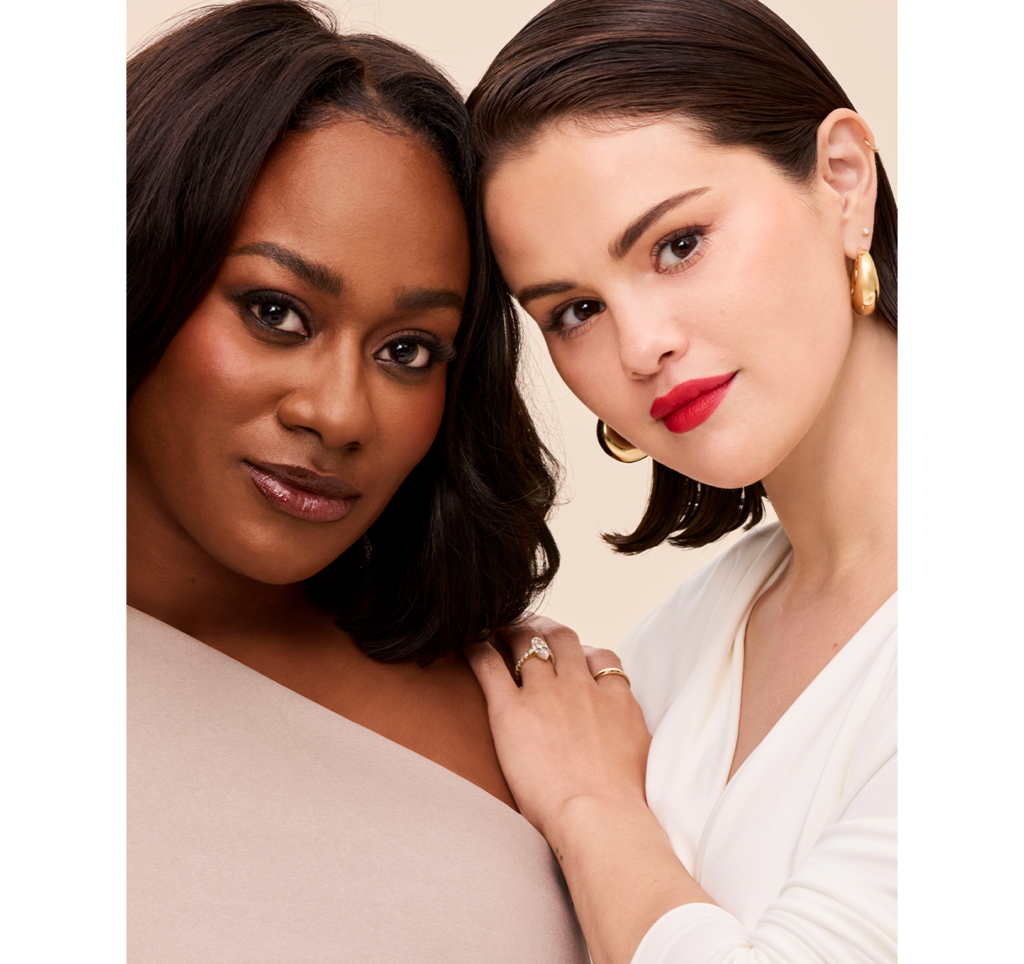
We did not arrive with expectations about which stories needed to be told; we simply turned on the camera and had real conversations.
-EMILY CEJA
The Emotional Weight of Seeing Yourself Reflected
While developing the campaign, was there any moment where you felt the weight of all the ways Latina beauty has historically been reduced or simplified within the industry?
Emily Ceja: Definitely. I cried a lot making this campaign. There were moments where I felt incredibly emotional asking myself: why is something like this still so rare in 2026? Why is it still uncommon to see more than one person from my community both in front of and behind the camera?
I kept thinking about my Afro-Latina and Indigenous friends; and why they continue to be excluded from these conversations. I also kept thinking: why do we almost never see older models? Models who look like my grandmother or my mother within beauty campaigns. They use these products every single day, they shop for beauty products too, and yet; the women representing them almost always look the same.
All of that felt very heavy; although at the same time it also felt hopeful. Hopeful for the future and for the conversations this could potentially open inside other brands.
“We created our own representation.”
You listened to stories from women across different generations, skin tones and backgrounds. What did you discover about how they grew up seeing or not seeing themselves reflected within beauty?
Emily Ceja: Many of the women I spoke with did not grow up seeing themselves reflected within beauty. But almost every conversation eventually turned into stories about the beauty they did find inside their own homes: through their mothers, sisters, grandmothers and friends.
That reminded me so deeply of the resilience and love within our community. Even when we were not reflected on screen; we found that representation within each other. “We created our own representation.”
My parents always used to tell me: “If they won’t let you in through the door, find another way; come in through the window.” And honestly; that is exactly what our community has done. Here we are. We are beautiful. We are taking up space and we are not going anywhere.
Here we are. We are beautiful. We are taking up space and we are not going anywhere.
-EMILY CEJA
Authenticity Cannot Be Fabricated
The campaign never feels emotionally overproduced; it feels intimate. While working on the interviews, the visual treatment and the editing process, what felt emotionally important to preserve?
Emily Ceja: It feels intimate because it truly was intimate. This was never something that could be artificially edited or built through prompts. The only way this project could exist authentically was through stories from people within our community; created by people within our community.
Preserving that authenticity throughout every aspect of the project was incredibly important to me. The vulnerable and honest moments that appear throughout the videos exist because the people behind the camera, including myself as the interviewer, could genuinely relate to what was being shared; because we are also part of this community.
It felt less like speaking to a camera and more like speaking directly to ourselves; to the community; to the young girl who will eventually see herself reflected in these women.
Older Women Deserve Space Too
There are older women within the campaign, something that still remains rare within global beauty advertising. What conversations did you have around age, visibility and who “deserves” to continue occupying space within beauty?
Emily Ceja: Two of the older women featured in the campaign are my mother and my grandmother. I think one of the most painful parts was seeing their surprised reaction when we asked them to be part of the project. But at the same time; one of the most beautiful conversations of the entire experience happened there.
It was almost like telling them: “of course Rare Beauty wants you to be part of this campaign. You are beautiful and you deserve to be seen on screen.”
It was incredibly special watching their confidence grow second by second while we were on set. That is the narrative I hope more women who look like them can eventually understand and believe too.
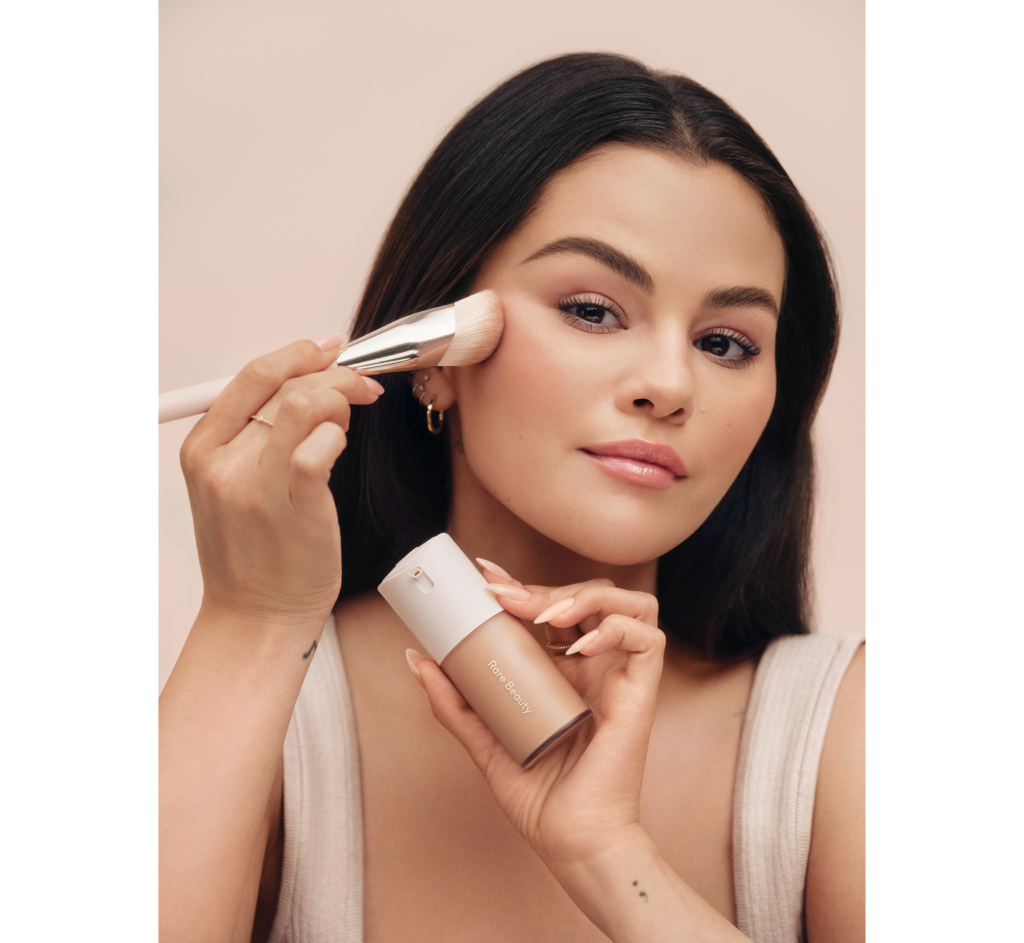
We deserve to be represented as multifaceted people; not reduced to one single narrative or a simple “light-medium shade”.
-EMILY CEJA
“We are not a monolith.”
After experiencing Every Story Belongs so closely, what do you feel the beauty industry still does not fully understand about Latina women?
Emily Ceja: I think the industry still does not fully understand that we are not a monolith. People often forget that those of us within this diaspora do not experience or understand identity in the same way. We are incredibly diverse, complex and different from one another; in how we look, in our cultures and in our lived experiences.
We deserve to be represented as multifaceted people; not reduced to one single narrative or a simple “light-medium shade.” But even more importantly: representation cannot stop at what we see in front of the camera.
We need space behind the scenes just as much as we need space in front of the camera; in creative direction, casting, production and decision-making. True complexity begins when our voices also help shape the industry itself.
Because Being Fully Seen Can Also Become a Form of Belonging
Throughout the interview; it becomes clear that Every Story Belongs never attempted to create a new definition of Latina womanhood. It attempted something far more difficult: to stop simplifying it.
And perhaps that is where the true emotional strength of the campaign lives. Not in the number of shades, not solely in visual representation, but in the decision to allow different Latina women to appear without having to soften themselves, translate themselves or become a more comfortable version of who they are in order to be accepted within contemporary beauty.
For years, many women grew up seeing themselves only partially reflected within the industry; recognizing themselves in fragments, but rarely completely. Every Story Belongs seems to understand that being fully seen can also become a form of belonging. And perhaps that is why this campaign feels different.
Because for the first time in a very long time; Latina beauty was not treated as a single image. It was treated as a community filled with stories that should have never been reduced to only one.
That is the narrative I hope more women who look like them can eventually understand and believe too.
-EMILY CEJA