Before there was a beauty industry built around the idea of self-expression, before the language of authenticity became a marketing strategy, before the notion of owning your appearance was something a brand could sell you, there was Frida Kahlo. Standing in front of a mirror. Painting what she saw. Refusing to apologize for any of it.
Kahlo is one of the most recognized faces in the history of art and one of the most misunderstood figures in the history of beauty. She is frequently celebrated for breaking conventions, for the unibrow, the mustache, the flowers in the hair, the Tehuana dress, the bold lip. But reducing her relationship with beauty to a list of unconventional choices misses the deeper truth of what she was doing. Frida Kahlo was not simply breaking rules. She was writing her own. And the distinction between those two things is the difference between defiance and self-possession.
She was her own muse. Her own subject. Her own standard. And everything she chose to put on her face and her body was a language she invented to tell a story that nobody else could tell.
Author: Elizabeth Ulloa
The Mirror as Canvas
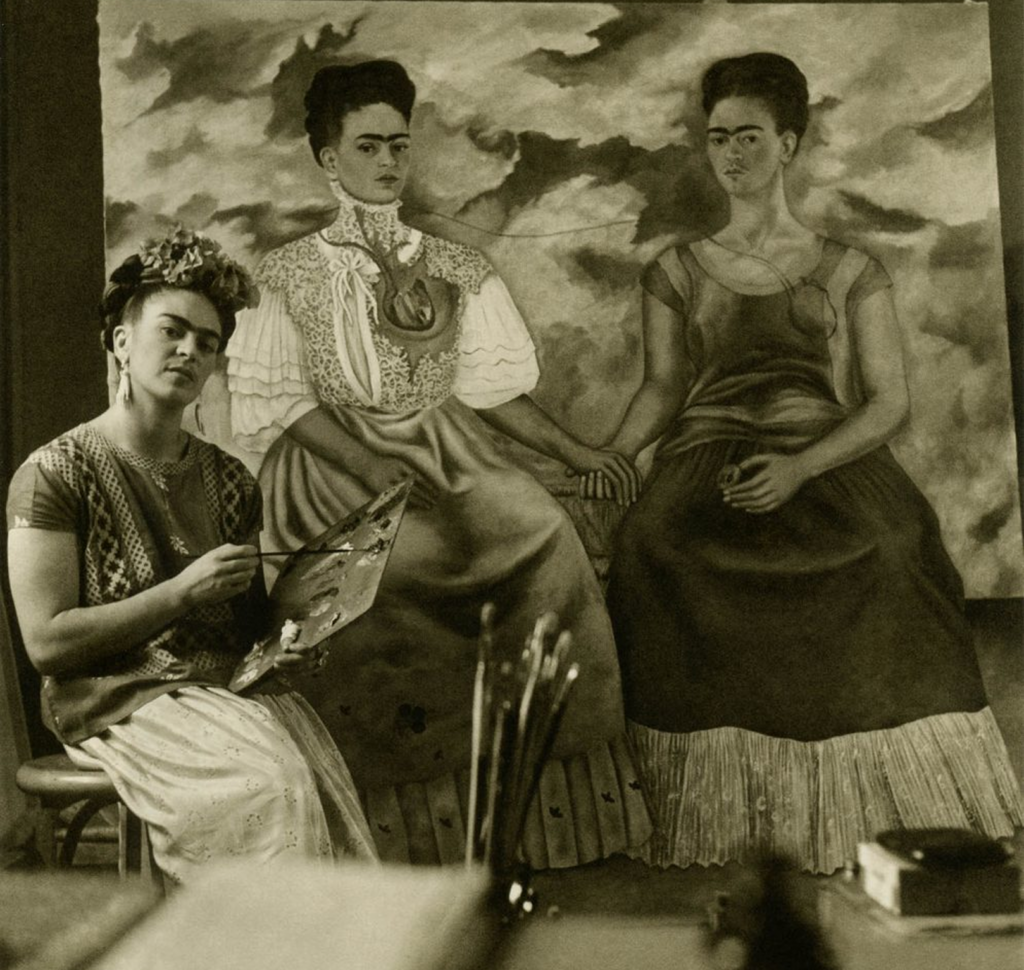
Kahlo began painting self-portraits in earnest during her long recovery from the bus accident that shattered her spine, collarbone, ribs, right leg, and foot when she was eighteen years old. Confined to bed for months, unable to move freely through the world, she turned inward. Her mother had a special easel constructed so she could paint lying down, and a mirror was attached to the canopy of her bed so she could see her own face.
This origin matters. The self-portrait for Kahlo was not an act of vanity. It was an act of survival. The mirror was the world available to her, and the face in it became the subject she could always access, the one constant in a life of physical pain and emotional turbulence. She painted herself not because she was narcissistic but because she was present. Because the face was there. Because it held everything she had lived through and was living still.
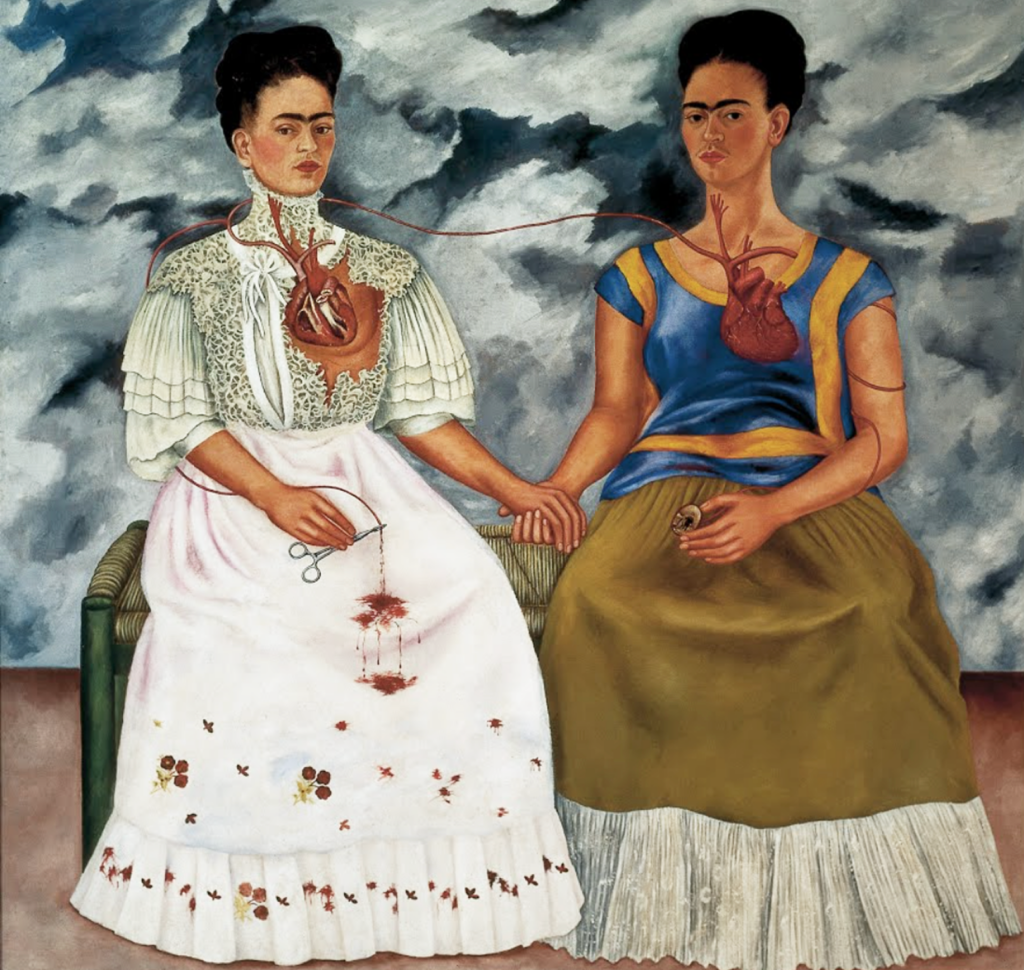
She painted fifty-five self-portraits in her lifetime. Each one is a complete world. Each one is a woman looking back at you with a directness that refuses to accommodate your comfort or your assumptions. These are not portraits designed to please. They are portraits designed to be true.
Beauty as a Political Act
To understand Kahlo’s beauty choices it is necessary to understand the political context in which she made them. Mexico in the 1930s and 1940s was navigating its post-revolutionary identity, and the question of what it meant to be Mexican, particularly what it meant to be a Mexican woman, was a live and contested one. The European beauty standard that dominated international culture valued pale skin, thin eyebrows, a delicate femininity that bore no trace of Indigenous heritage.
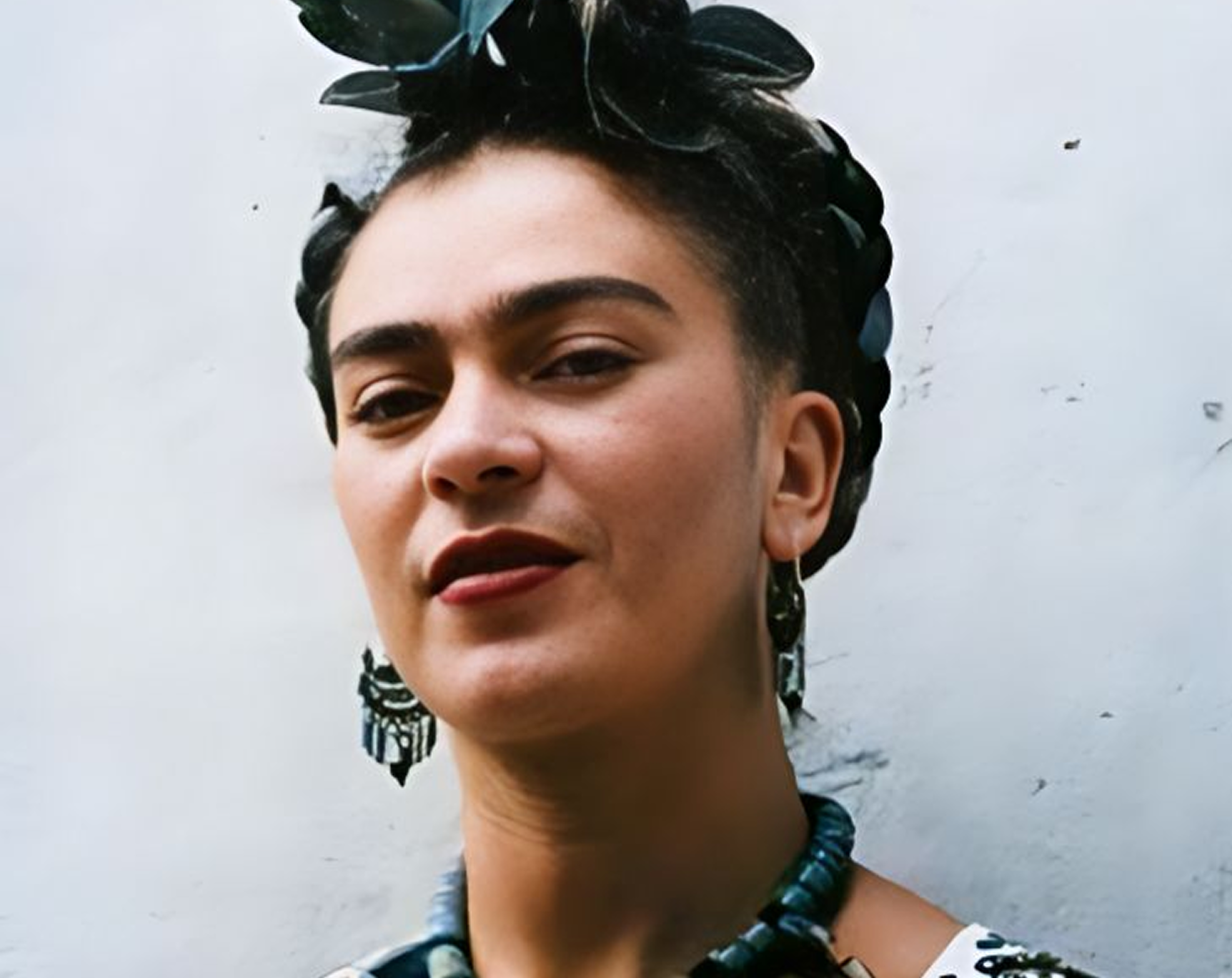
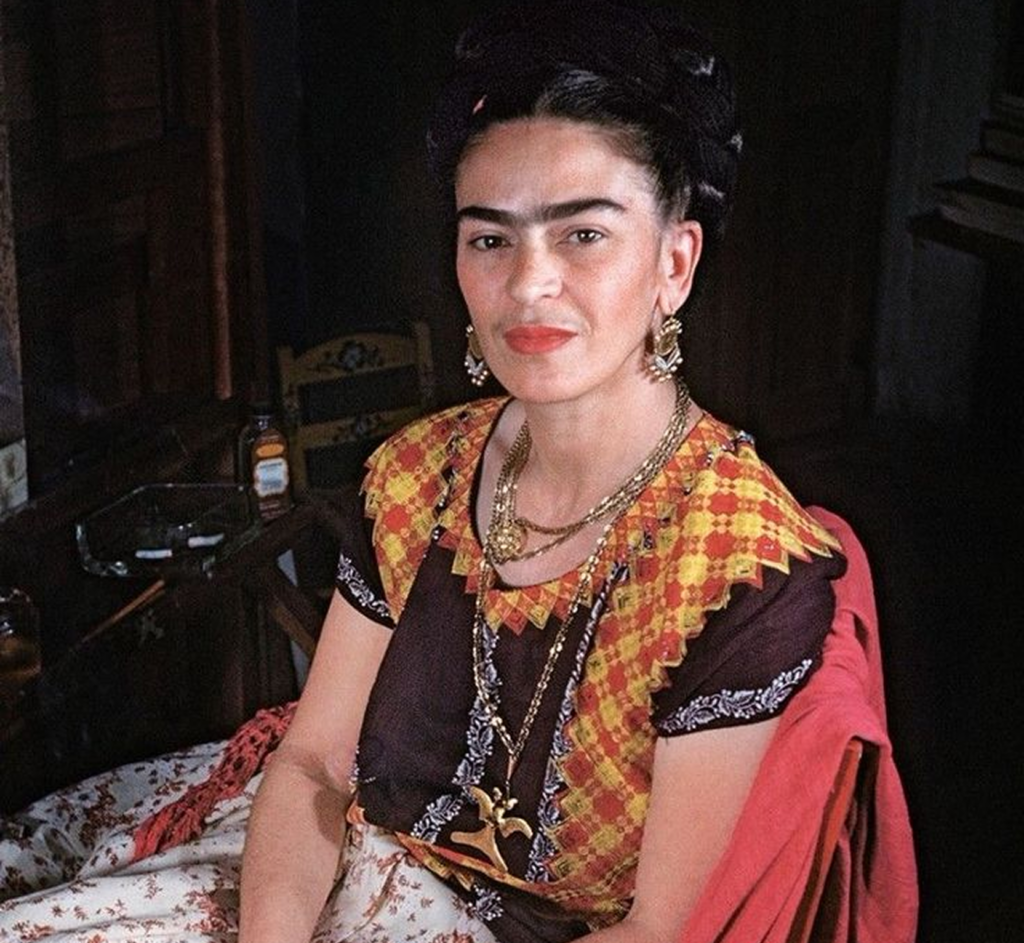
Kahlo rejected this standard entirely and deliberately. Her choice to wear traditional Tehuana dress, the clothing of the Tehuantepec matriarchy from her mother’s Zapotec heritage, was a statement of cultural pride in a world that still valued European aesthetics above Indigenous ones. Her unibrow, her visible facial hair, her strong features, all of which she rendered faithfully and without apology in her self-portraits, were a refusal to perform the kind of femininity that the dominant culture demanded of women who looked like her.
This was not simply personal preference. It was politics worn on the face. Every flower crown, every embroidered blouse, every braided hairstyle wrapped with ribbon was a declaration of allegiance to an identity that colonial history had tried to erase. Kahlo understood that beauty was never neutral. That the way a woman chooses to present herself to the world is always a statement about what she values, who she is, and who she refuses to become.
“Frida Kahlo was not simply breaking rules. She was writing her own.”
The Unibrow and What It Carried
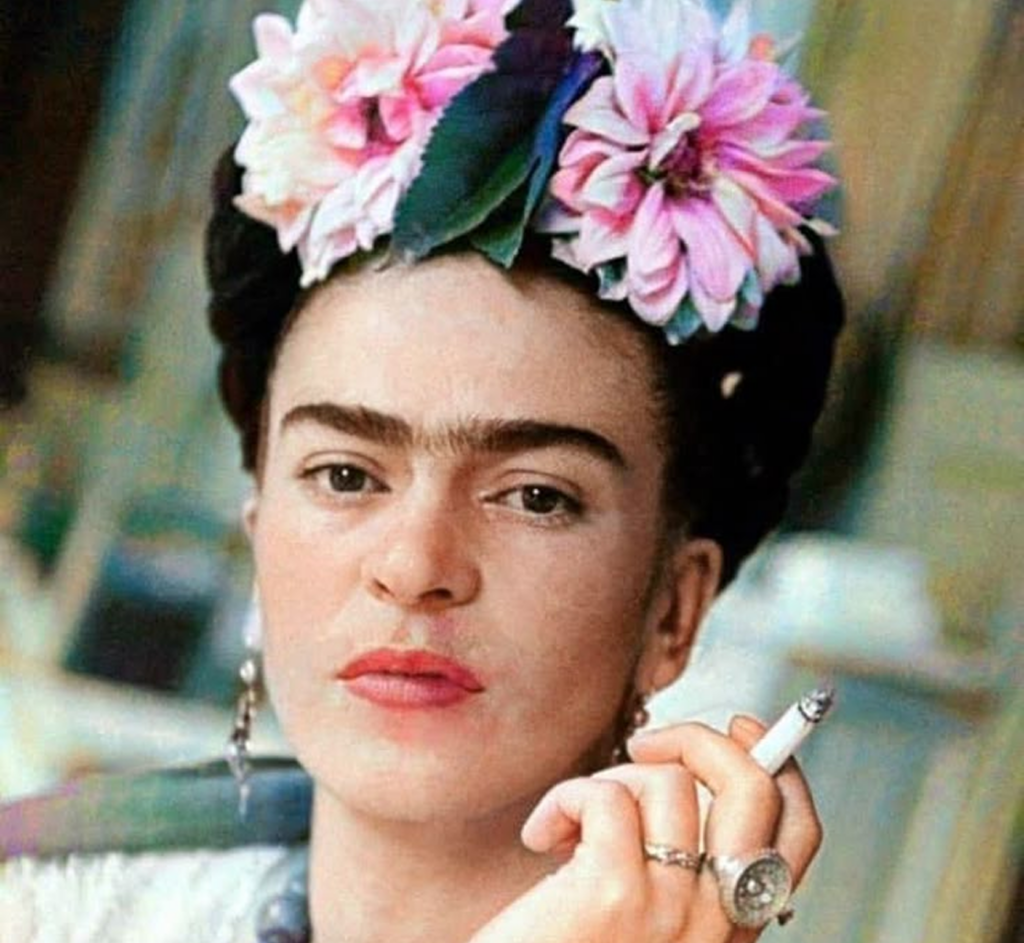
Of all of Kahlo’s beauty signatures, the unibrow has become the most iconic and perhaps the most misread. It is often discussed as a statement of feminist defiance, which it was, but it was also something more personal and more intimate than any political reading fully captures.
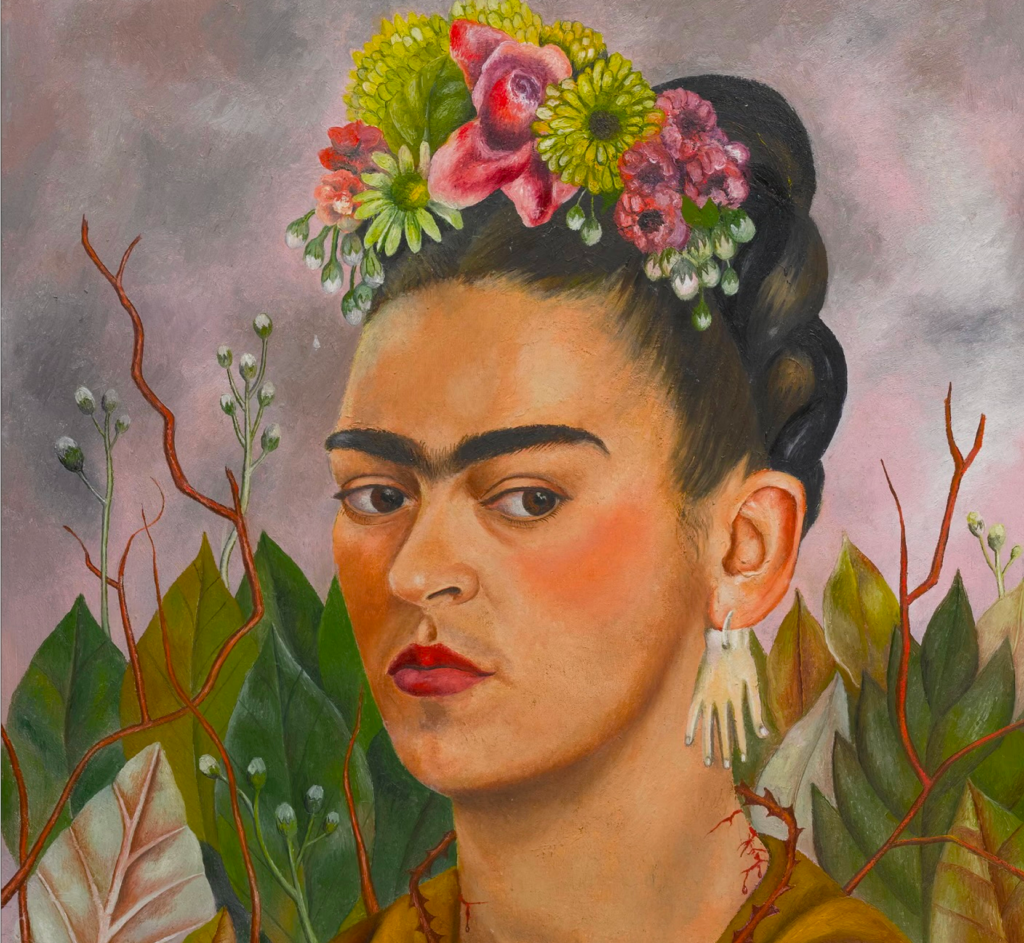
Kahlo did not simply leave her brows ungroomed. She painted them in her self-portraits with a deliberateness that made them one of the defining features of the face she presented to the world. In some portraits the brow is rendered almost as a single wing across the forehead, dark and absolute. In others it is more naturalistic but still unmistakably present, unmistakably hers.
What the unibrow communicated was a refusal to diminish. To make herself smaller. To remove the parts of her face that did not conform to a standard built without her in mind. It said: this is my face. All of it. And I find it worthy of documentation, of attention, of paint.
That message has lost none of its power in the decades since her death. It has only become more relevant as the beauty industry has continued to expand its vocabulary of correction, offering women an ever-growing array of tools to alter, reduce, and refine the features that make them themselves.
The Language of Flowers
Kahlo’s relationship with personal expression went beyond the brow. Her entire visual identity was a carefully constructed language of color, texture, and symbol. The flowers she wore in her hair were not decorative afterthoughts. They were specific. Chosen. Meaningful. In her self-portraits, flowers appear in her hair, around her body, woven into her braids with a specificity that suggests each one was placed with intention.
Different flowers carried different meanings in the Mexican cultural tradition Kahlo was drawing from. Marigolds, the flower of the dead, appeared in her work as references to mortality and the thin line between the living and those who had passed. Bougainvillea, native to Mexico, connected her to the landscape of her homeland and the specific earth she belonged to. Dahlias, Mexico’s national flower, were worn as declarations of cultural pride. When Kahlo braided flowers into her hair she was not simply adorning herself. She was speaking a botanical language that her culture understood and that the European art world she inhabited did not, which was precisely the point.
“The self-portrait for Kahlo was not an act of vanity. It was an act of survival.”
Color, Jewelry, and the Body as Canvas
Her use of color in her personal presentation, the embroidery of her blouses, the richness of every textile she chose, reflected the same visual intelligence she brought to her paintings. She understood that the body was a canvas. That what was placed on it communicated something. That every choice, from the largest gesture to the smallest detail, was part of a complete visual statement about who she was and how she understood herself.
The jewelry she wore deserves its own attention. Kahlo favored pre-Columbian pieces, jade beads, obsidian earrings, gold from the regions of Oaxaca and Tehuantepec, choosing objects whose origins predated the Spanish colonization of Mexico and whose presence on her body was another act of cultural reclamation. To wear Indigenous jewelry in the Mexico City art world of the 1930s and 1940s was to make a statement about which history mattered and which lineage she claimed as her own.
Her lips deserve particular attention. In her self-portraits, the lips are almost always painted a rich, deliberate red. Not as a concession to conventional femininity but as a counterpoint to the features that defied it. The red lip in Kahlo’s work is not softening. It is completing. It is the final gesture of a face that has decided, absolutely, how it wants to be seen.
She was always composing. Always declaring. The face and the body were never separate from the work. They were the work, walking through the world every day, in full color, without apology.
“This was not simply personal preference. It was politics worn on the face.”
Pain, Beauty, and the Body
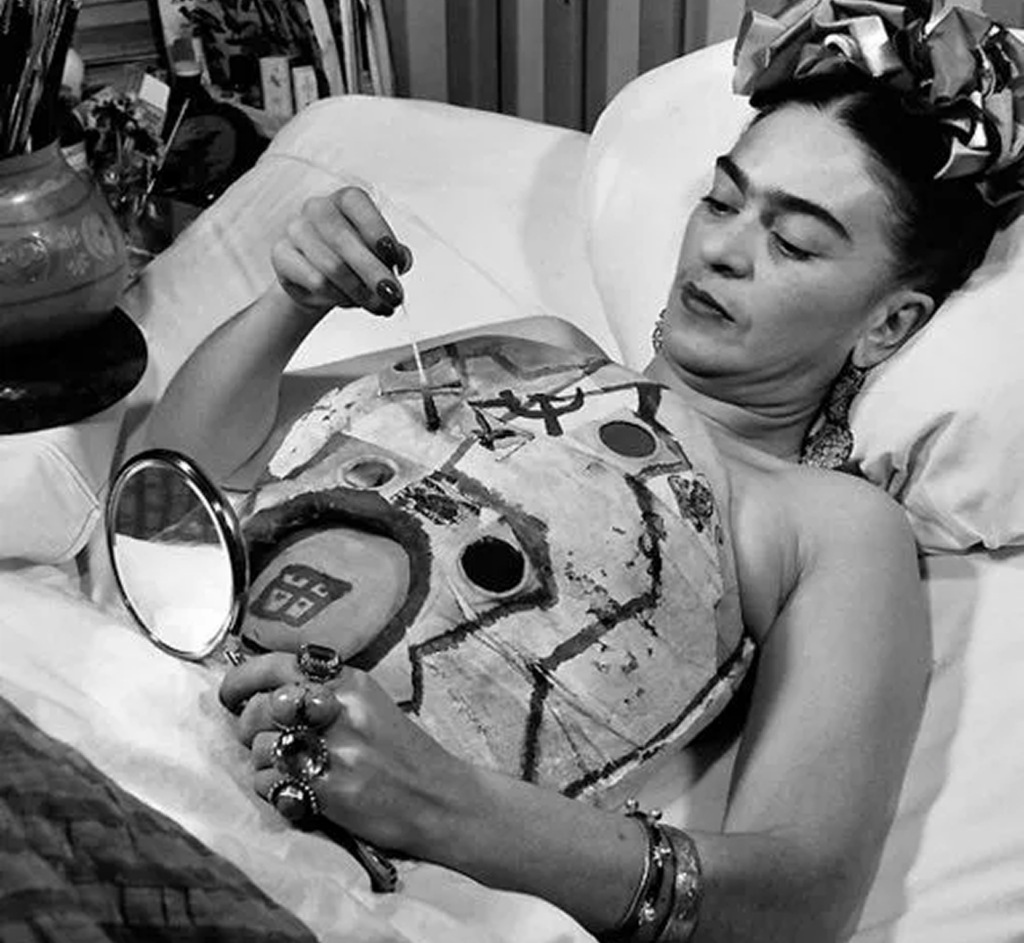
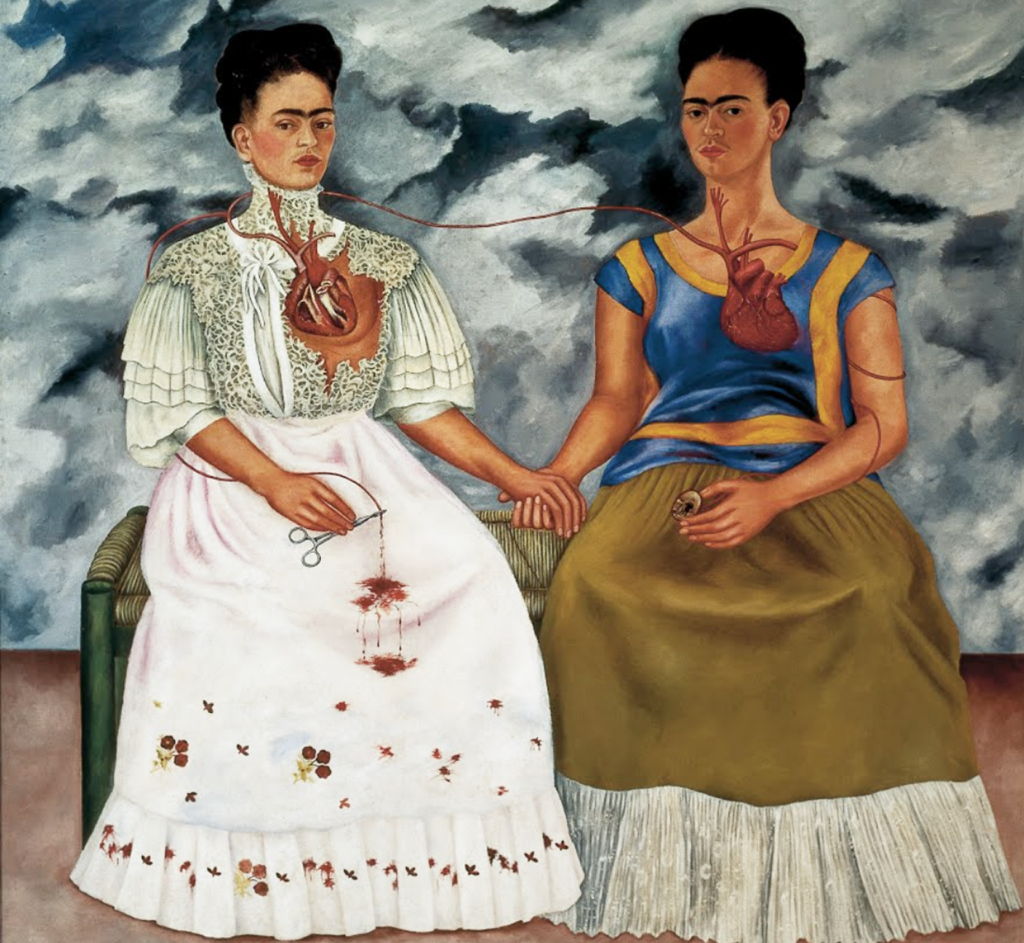
And yet beneath all of that color and intention lived a body that was breaking. Any honest discussion of Kahlo’s relationship with beauty must acknowledge the body she inhabited. She experienced more than thirty surgeries in her lifetime. She lived with chronic pain from the injuries sustained in the accident and the spinal condition she had carried since childhood. She wore a medical corset for most of her adult life, and she painted those corsets, turning the instruments of her medical management into works of art decorated with her own imagery.
This is the most radical thing Kahlo did with beauty. She refused to allow her broken body to be hidden or managed into invisibility. She painted her surgeries. She painted her miscarriages. She painted the medical devices and the hospital rooms and the physical reality of a life lived in significant pain. She insisted that all of it was part of the complete picture of who she was. That the scars and the limitations and the suffering were not separate from her beauty but woven into it.
In doing so she created a body of work that remains one of the most honest representations of the female body in the history of art. Not the idealized body. Not the body made acceptable for the viewer’s comfort. The actual body, in all of its specificity, its damage, and its extraordinary capacity to continue.
What She Left Behind
Frida Kahlo died in 1954 at the age of forty-seven. She left behind a body of work that has only grown in significance and cultural weight in the seven decades since. Her face is one of the most reproduced images in the world. Her name is invoked in conversations about feminism, identity, chronic illness, Indigenous rights, queer visibility, and the politics of beauty.
But the most important thing she left behind is harder to categorize. It is the example of a woman who looked at her own face with complete honesty and complete acceptance and decided that what she saw was worth painting. Worth showing. Worth the full attention of her considerable artistic gifts.
She was her own muse not because she was vain but because she understood, more clearly than almost anyone before or since, that the self is a worthy subject. That the face you were born with, in all of its particularity and imperfection and cultural meaning, is not something to be corrected or managed into something more palatable.
It is something to be painted.