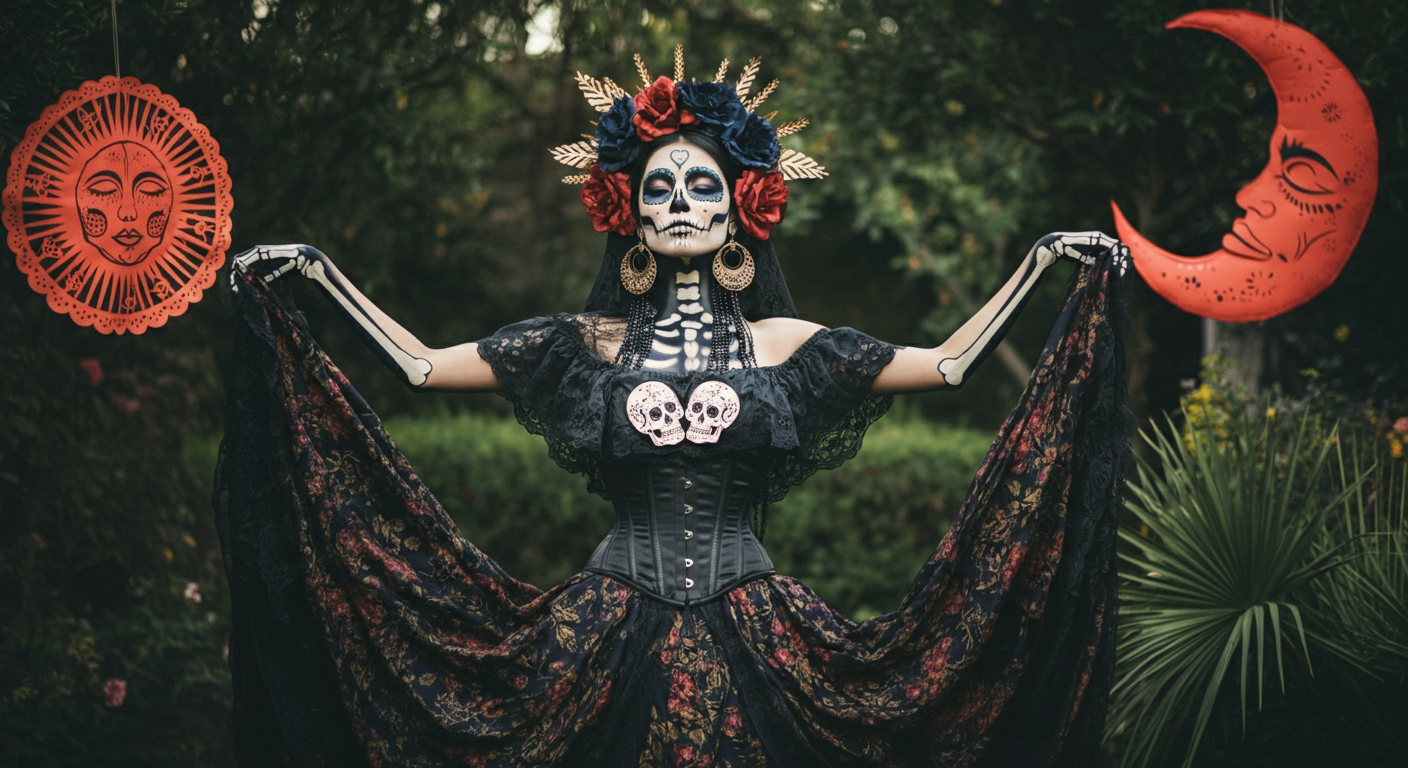
Day of the Dead. More than a commemoration, a collective ritual of memory, identity and beauty that lives at the heart of every Mexican. A moment when life and death reconcile. When homes fill with color, Mexican marigolds illuminate every avenue, and altars become a nostalgic form of art—turning even the most painful goodbyes into living memories.
This year, Mexico City transforms the country’s most beloved celebration into an aesthetic and sensorial experience through two interventions that invite contemplation. Hasta el corazón del Día de Muertos– in english, To the Heart of the Day of the Dead –,an installation by Betsabeé Romero at The St. Regis Mexico City, and an altar by the architectural studio MTA+V, which turns architecture itself into an act of remembrance.
Author: aNDREA BAU
altars become a nostalgic form of art, turning even the most painful goodbyes into living memories.
THE St. Regis Mexico City x Betsabeé Romero: Art as an Altar of Memory

In the heart of Paseo de la Reforma, The St. Regis Mexico City becomes home to an ephemeral installation. One that reinterprets tradition through the lens of contemporary art.
Under the title Hasta el corazón del Día de Muertos, Mexican artist Betsabeé Romero presents an immersive work that transforms the hotel’s spaces into a symbolic journey through identity and memory.
True to her signature style, Romero elevates everyday materials — carved tires, paper cutouts, and flowers — into an offering that pays tribute to the fragility of domestic altars. Where the memory of loved ones intertwines with life and death in an act of love and permanence.
Hasta el corazón del Día de Muertos will be open to the public until November 6, inviting guests of the iconic hotel and visitors alike to rediscover the beauty of remembrance.
MTA+V: architecture transformed into an altar

At Miguel de la Torre’s studio, architecture has always been in dialogue with memory. Every line, material, and space seems to hold a personal story and an emotion. This 2025, the Mexican architect carries that conversation to a new dimension filled with marigolds, geometry, and reflections. An altar that, more than being built, is felt.
Yes, it is a contemporary offering. But not one that omits the vibrancy of the tradition; rather, one that reinterprets it through restraint and light. In this installation, the orange flower becomes a solar symbol; and steel, a mirror of the soul.
Standing before it, visitors are invited to contemplate death not with solemnity, but as part of the vital cycle that also inspires architecture. In that dialogue between form and emotion, the space becomes a site of introspection. A pause where architecture itself remembers.
Open to the public on November 1 and 2; the installation by MTA+V is part of Open House Mini: Día de Muertos. An edition that celebrates Mexican tradition through the language of contemporary design.
death reminds us that true eternity does not lie in the tangible, but in becoming a trace within memory.
Where art becomes memory
Today, the Day of the Dead reveals its greatest power. Transforming remembrance into an aesthetic, unforgettable experience. In the hands of Betsabeé Romero and Miguel de la Torre, tradition is reinvented without losing its essence. It becomes a gesture of beauty. A visual language that transcends time.
In every lit candle and every solemn space, death reminds us that true eternity does not lie in the tangible, but in becoming a trace within memory.