His story, having lived between El Salvador, Montreal, Lausanne, Paris, and New York, did not simply draw a map; it shaped a sensibility. Ferrufino looks at form the way one looks at a human being: with respect, with attention, with the awareness that every creation carries something lived within it.
Whether it’s a bottle, a lipstick, or the visual identity of a brand, his work does not aim to dazzle; it aims to connect. Each piece holds a restrained gesture that doesn’t seek to impose itself, yet remains. A kind of emotional clarity that can be felt even before the aesthetics are analyzed.
Author: Claudia Valdez
The Silence that Designs: Ferrufino’s Vision
Today, as Director of Industrial Design & Packaging at Baron & Baron, Ferrufino shapes the universes that millions of people touch without ever knowing who created them. He works for houses like NARS, Zara, Rose Inc., and Trussardi, yet his approach remains intimate. He designs as someone who listens first and responds only after.
What distinguishes Ferrufino is not only his technical precision, though he has it, but the way he understands that even the smallest object becomes part of someone’s life. That awareness changes everything: from the intention behind the first line he draws to the final decision on a curve or a finish.
Ferrufino is not a designer seeking the spotlight.
He seeks truth. And perhaps that is why his work endures: because it does not demand attention, it earns it. Because it doesn’t shout, yet it has something to say.
Because it is not driven by ego, but by humanity. In a world saturated with forms, he works to create the ones that truly mean something.
In this conversation, Ferrufino opens the door to what usually remains behind the process: the memory that guides an idea, the intuition that defines a form, the patience required to craft an object well, and the awareness that every design, no matter how small, occupies a real place in someone’s life.
What follows is a portrait from the inside: a look at the person behind the precision.
EXCLUSIVE INTERVIEW:

Beauty as a Measure of Time
TTT: Memory seems to have texture. How aware are you of what clings to the material when you design?
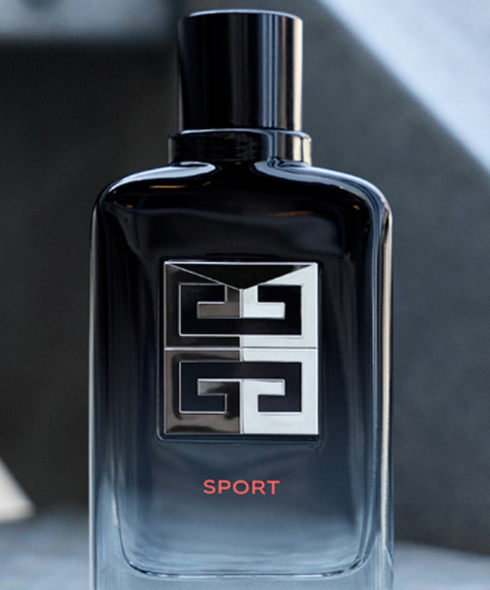
J.F: When I design, whether it’s a lipstick, a fragrance bottle, a cosmetics collection, furniture, or even a window display, I try to place myself in the mind of the person who will see it, hold it, or use it. I want to understand what they might feel in that first moment of contact.
Everything we are, what we love, reject, or seek ,comes from our personal journey. That’s why I imagine the origins and paths of the people who will encounter the object: who they were, what shaped them, and where they stand now, to better understand what they might desire.
When I design a bottle or a cosmetic, I think about the memory its finish, form, and presence may leave on the person who uses it.
TTT: Your personal story spans countries and stages. How do those origins continue shaping the way you see beauty and design?rígenes tu manera de ver la belleza y el diseño?
J.F: I was born in El Salvador, raised in Montreal, studied in Switzerland, and have lived in New York for fourteen years. That journey lives in my work: it is built on resilience and passion, on a constant mix of the classic and the new, of precision and continuous evolution.
I find beauty in this diverse collection of influences. They feel authentic to me, and they shape my creative process in a profound way.


“Whenever I design, I think about the memory an object may leave, its finish, its form, and the emotion that remains in the person who touches IT.”
TTT: There is a quiet, contained beauty in your work. What draws you to the minimal gesture, to stillness, to the form that doesn’t need explanation?
J.F: The beauty industry moves at an unrelenting pace: new brands, new products, new collections appearing constantly. That landscape can feel noisy and overwhelming. My work looks for the opposite: to distill a brand’s essence into its clearest and most unmistakable form.
An object shouldn’t feel complicated. When the form is minimal and the function is precise, the design becomes instantly readable, almost familiar, as if it had always belonged to the hand holding it. That clarity allows the audience to recognize the brand’s visual language and enter it naturally.
Simplicity creates space for connection. True luxury lives in everyday rituals: in the intimate moment when an object stops being a product and becomes part of someone’s life. When a design carries that quiet, assured presence, it integrates effortlessly. This is how well-crafted packaging moves from being admired to being cherished.
TTT: Your objects seem to acquire presence, not just function. How do you know when a design stops being correct and starts feeling alive?
J.F: That recognition comes from years of practice: creating, discarding, comparing, and creating again. That cycle sharpens intuition. It’s the moment when an idea begins to take real direction.
I work with countless sketches and models, then refine rigorously until only the essential remains. What survives is a condensed set of possibilities where beauty and function hold a subtle tension. Those are the forms that generate joy, even a kind of affection.
If I can step away from the object and, upon returning, it still has presence, then I know it has crossed that threshold. From there, I refine finish, color, and detail until they align with the intention. And on a practical level, timing, budget, and technical capability signal when the piece is ready to exist.


TTT: You’ve collaborated with houses that build desire, yet your work feels made to endure. What distinguishes an object that moves us from one that simply dazzles?
J.F: The difference is the same as between a trend and a conviction.
The luxury houses I work with don’t chase novelty for its own sake; they are anchored in timeless values and a strong identity. When I design for them, I begin from those values. That grounding is what gives an object longevity.
Objects that move us are made to last. They integrate into rituals; they belong to everyday life. That is the difference between something designed to be replaced and something conceived to be reborn, through new editions, variations, and collaborations. When a cosmetic or a fragrance feels timeless, it proves its worth.
TTT: Baron & Baron has a precise and demanding language. How do you balance structure and soul within that framework?
J.F: My time at Baron & Baron has taught me that beauty and precision are inseparable. Beauty has codes; precision is the tool that brings those codes to life.
Before drawing a single line, we make sure we understand the client’s essential identity. That understanding sets the strategic foundation for the project. From there, the outcome is always a combination of creative vision and reality: suppliers, timelines, engineering, budgets.
Precision is indispensable for an idea to take form. A beautiful idea without precision remains a dream; precise execution without creativity becomes just another object. Design lives in the union of both.
TTT: You’ve said design can be a spiritual practice. How does that manifest in your process?
J.F: I deeply believe that design, especially in its contemplative stage, can be a spiritual practice. That quiet is necessary for the kind of work I do.
In a world saturated with images, concepts, and digital noise, true luxury demands introspection. I make space to listen to my thoughts, desires, and references. From the first sketch to deep research, that immersion feels almost meditative: a ritual that allows ideas to emerge with authenticity.
“A design begins to live when I can step away, return to it, and still feel its presence.”

TTT: You move naturally across disciplines, materials, and scales. What invisible thread connects everything you create?
J.F: The constant thread is the desire to create something that resonates emotionally. Whatever the category, I want each object to evoke a true response.
I place enormous value on the exploration phase. That is where the thread begins: in understanding the audience, the brand, the environment, and the shifts in the industry. It is a period of listening and adaptation where intention starts taking shape.
TTT: In a world saturated with objects, how do you create something that truly leaves a mark on the person who touches it?
J.F: I focus on designing objects that tell a story. I pay close attention to who they’re meant for. When I set my ego aside, the skills I’ve built over the years shape that story with clarity and honesty. I believe that intention reaches the user and creates a shared memory between the designer and the person holding the object.
TTT: After so many years designing for luxury houses, what still moves you to create? What are you looking for now that you weren’t before?
J.F: Design is a continuous challenge with no final answer.
The industry evolves quickly, and often I feel that each project is an experiment for what comes next.
I love what I do. I find inspiration in human interactions, in light, architecture, stories, art, food, even in the plate it’s served on. All of it forms an unconscious library I draw from constantly.
I sketch every day the ideas that appear. Drawing still feels like childhood play, and I’m fortunate to call it work. Seeing my designs in stores around the world, or catching someone using an object I made without knowing it had an author behind it, gives me deep fulfillment.
And more and more, what moves me is the desire to inspire: my team, students, colleagues, anyone who crosses my path. Whether through design, teaching, or simply sharing my story, that spark is something I want to keep nurturing.