In a market where choice is infinite, curation becomes criterion. And in beauty, that criterion means healthy skin, structured hair, and makeup that doesn’t follow trends, it creates them.
With the arrival of Ulta Beauty in Mexico (and its increasingly notable expansion across the United States), the retailer positions itself as an idyllic space for beauty lovers. A meeting point where formulas, communities, and perspectives seek to expand the standard and elevate the conversation.
Today, attention turns to five brands that embody this shift. From the body as cultural identity and structural inclusion in makeup, to emotional disruption and the science of K-beauty, increasingly embraced even by the most skeptical consumers.
Author: aNDREA BAU
With the arrival of ulta beauty in Mexico (and its increasingly notable expansion across the United States), the retailer positions itself as an idyllic space for beauty lovers.

Nopalera: The Body as Identity
For a long time, body care spoke in another language. One that rarely included references to Mexican skincare. Nopalera shifts that narrative. Founded by Sandra Velasquez, the brand places cactus (an ancestral, resilient, and deeply symbolic ingredient in Mexican culture) at the center—not only of its identity, but of its formulations.
High-performance solid exfoliants, body oils that deliver luminosity without compromising texture, and soaps that prioritize plant-based ingredients and socially responsible processes. Compositions intentionally designed to restore, hydrate, and turn body care into a daily act of awareness. A brand that doesn’t just elevate the standard, it establishes it.

about-face: Audacity as a Position
Some brands understand makeup as correction. about-face understands it as decision.
Highly saturated liquid pigments, lipsticks that do not shy away from bold color, and liners defined by contrast and shine. Finishes that don’t seek to soften, but to interrupt. Formulas that prioritize intensity, hold, and presence as a language of their own—not a passing effect. In Halsey’s beauty universe, color does not accompany; it elevates the conversation.

Rizos Curls: Texture as Structure
We were taught that curly hair had to be controlled, that it had to fit in. Rizos Curls offers another perspective: curls are not a problem, they are a structure worthy of attention.
Shampoos that prioritize deep hydration, masks that define without rigidity, and products that care for the scalp at its root. Ingredients chosen to respect natural texture, not to transform it. For Rizos Curls, the standard lies not in disciplining volume, but in understanding it.

COSRX: Consistency as Standard
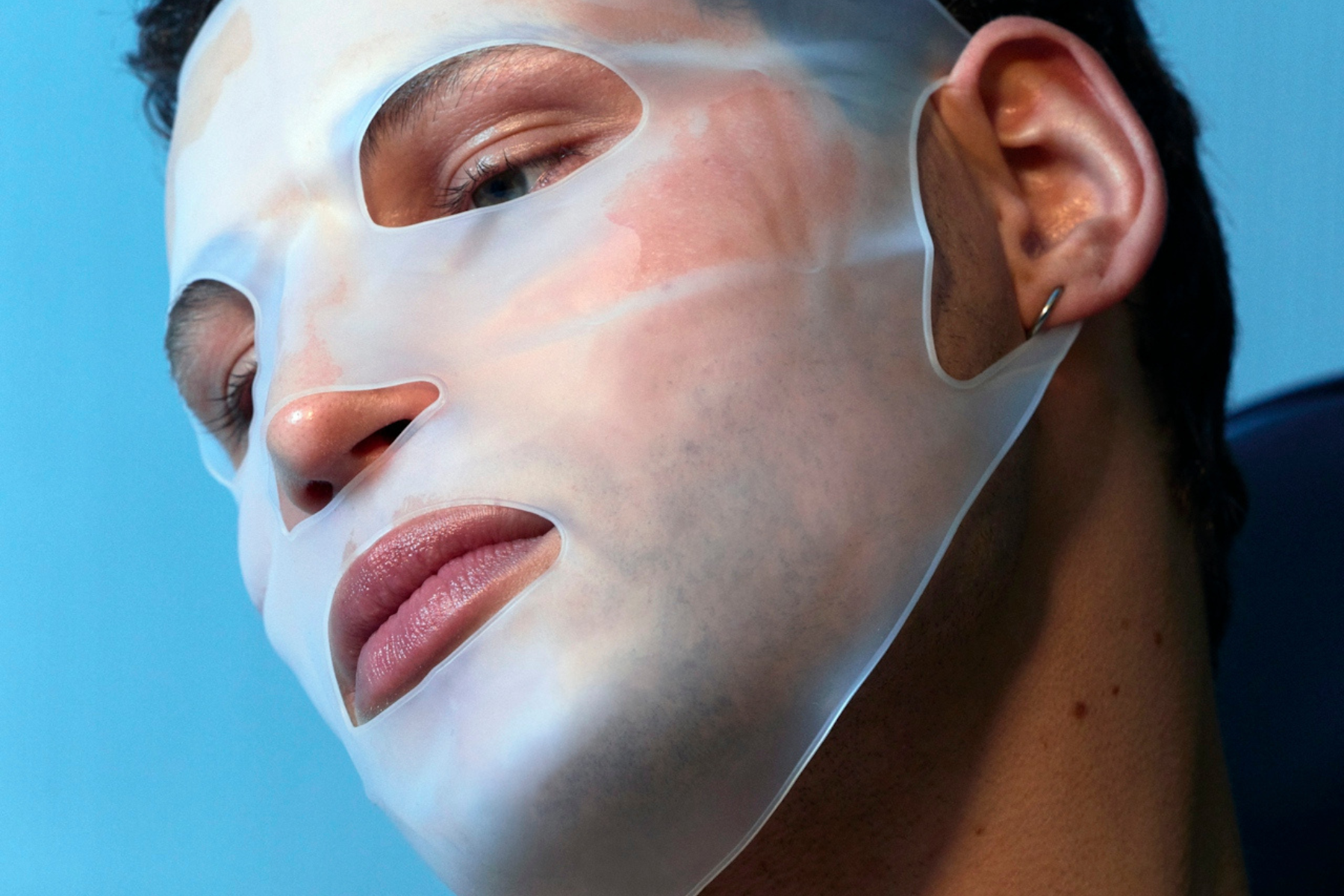
Skin also demands a precise criterion: no accumulation, no excess, no instant promises. Protection and consistency. COSRX operates from that logic.
Originating in South Korea (and one of the pioneers of K-beauty), the brand built its reputation around formulas focused on strengthening the skin barrier rather than overwhelming it. Ingredients like snail mucin, centella asiatica, and BHA position themselves not as trends, but as real solutions for sensitive or acne-prone skin. Compositions designed to repair, rebalance, and sustain the skin over time. Here, skincare does not promise; it delivers.

Live Tinted: Representation as a Starting Point
Makeup must also begin with criterion. Not from aesthetics, but from representation. Live Tinted is rooted in that premise.
Founded by Deepica Mutyala, the brand understands that expanding shade ranges is not enough if subtones are not reformulated at the core. Correctors designed to neutralize without erasing, formulas that work with real pigmentation, and products developed for skin tones long considered outside the standard. A brand born from criterion, now restructuring it.
Epilogue
When it comes to beauty, criterion is not a category. It is a position. One expressed through the body as identity, color as representation, texture as structure, and skin as consistency. And today, it finds in Ulta Beauty the space to elevate that conversation.