El Palacio de Hierro has been part of Mexico for 138 years. And yet, there is a chapter of its history you may not know: to understand where it comes from, you have to travel all the way to France. Not only because of the two men who founded it, but because of a relationship between both countries. One that has left its mark on our architecture, fashion, art and, above all, the way we understand luxury.
Two centuries after Mexico and France began writing that story together, El Palacio de Hierro is returning to its own origins to celebrate it. L’Art de Vivre Totalmente Palacio brings together art, fashion, design and beauty to revisit some of the places where both cultures have met and, even more interestingly, discover how that relationship continues to take new forms today.
Looking Back
To find the first meeting point between France and Mexico’s most famous department store, we have to go back to the late 19th century. That was when Joseph Tron and Joseph Léautaud shared an idea: to bring a new way of shopping to Mexico. And so, El Palacio de Hierro was born. A store —or, really, almost a statement of modernity for its time— that rose in Mexico City’s Historic Center using, as its name suggests, the same material that was reshaping the streets of Paris: iron.
But the connection went far beyond a building. Tron and Léautaud were part of a generation of French immigrants who arrived in Mexico from Barcelonnette. A French town that would ultimately influence the way business was done in the country. And perhaps that is the most interesting part of returning to this story today. Because long before L’Art de Vivre existed, France was already written into the history of El Palacio.
Joseph Tron and Joseph Léautaud shared an idea: to bring a new way of shopping to Mexico. And so, El Palacio de Hierro was born.
France, Reinterpreted
Two hundred years leave room for plenty of stories. They also leave enough time for what began as a diplomatic relationship to find its way into far more unexpected places. In 2026, Mexico and France are celebrating two centuries of diplomatic and commercial relations. And El Palacio de Hierro chose to mark the occasion by returning, in a way, to an origin that belongs to its own story too.
And so, L’Art de Vivre Totalmente Palacio was born. A season that, from August 14 through October 29, takes over El Palacio de Hierro Polanco —better known as El Palacio de los Palacios— and turns it into a meeting point between both countries. Not simply to look toward France, but to discover what happens when we look at it from Mexico.
An immersive experience that goes beyond celebrating the relationship between both countries, turning fashion, art, beauty and gastronomy into different ways of telling the same story. From exhibitions that revisit the past to installations that speak to what we share today and experiences that play with some of the most recognizable codes of French culture. Because if L’Art de Vivre makes one thing clear, it is that after 200 years, the relationship between Mexico and France can hardly be told from a single place. But it can be told within a single space: El Palacio de Hierro.
The Selfie Experience: A Trip to Paris Without Leaving Polanco
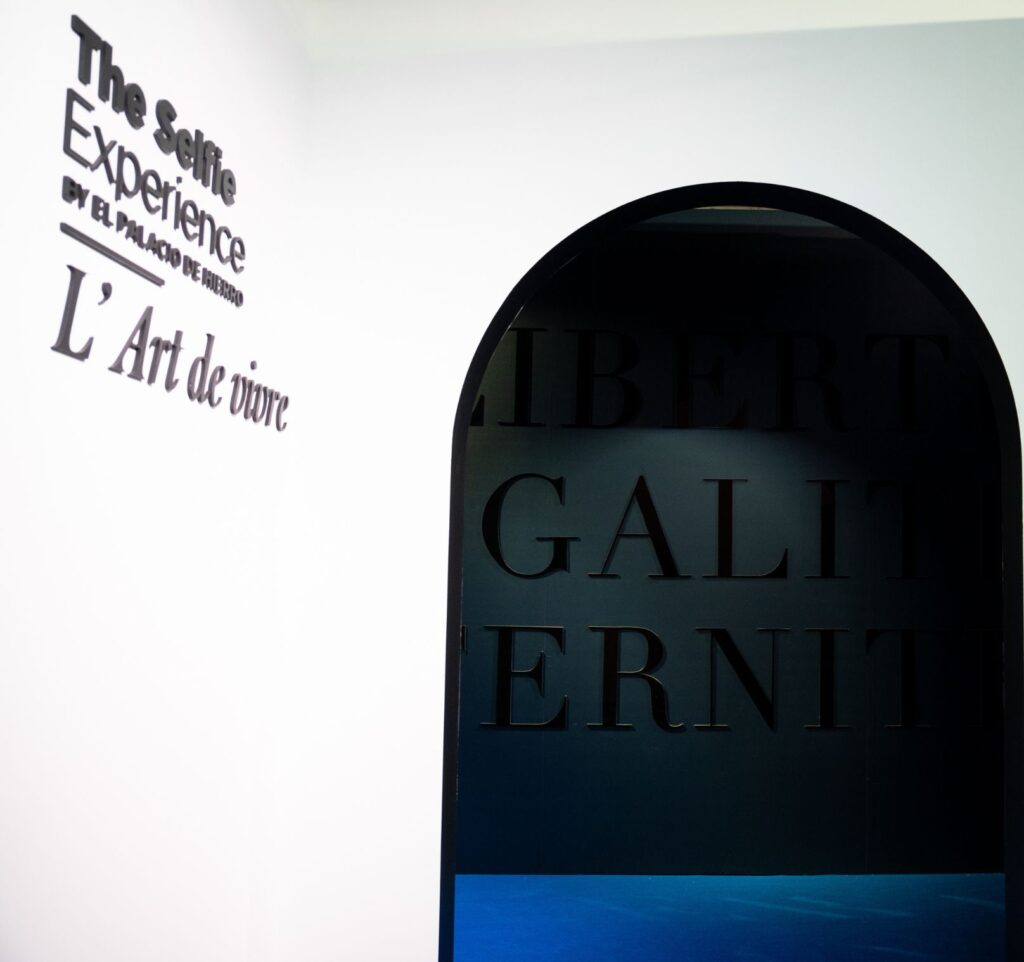
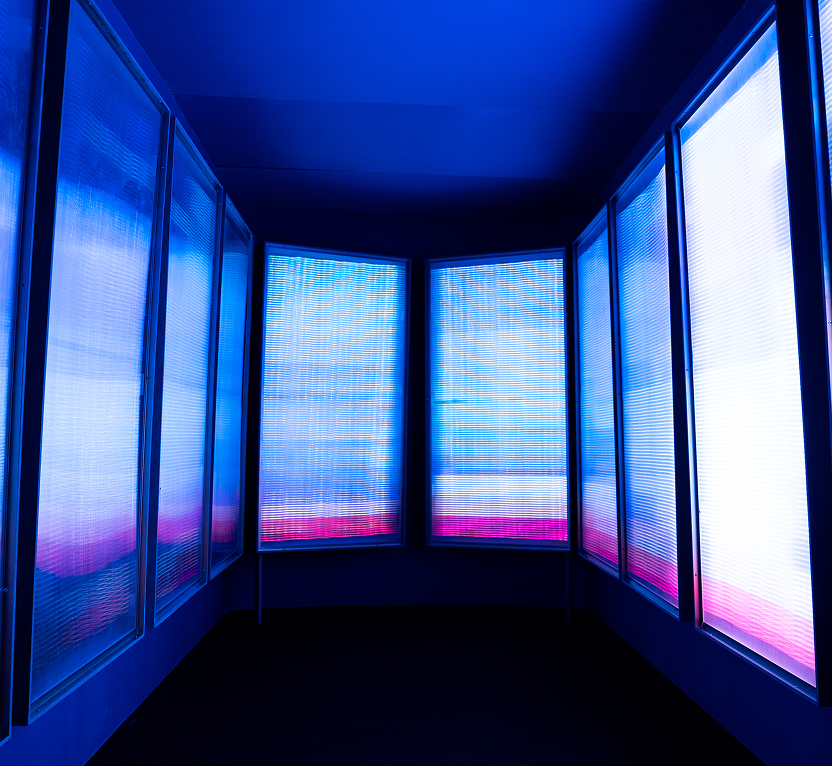
There is a point in L’Art de Vivre where the idea of traveling to France stops being merely a metaphor. The Selfie Experience is a journey through nine rooms that takes some of the country’s most recognizable places and symbols and plays with them from a different perspective. And while its name might suggest that everything was designed around getting the perfect photo, the experience goes much further.
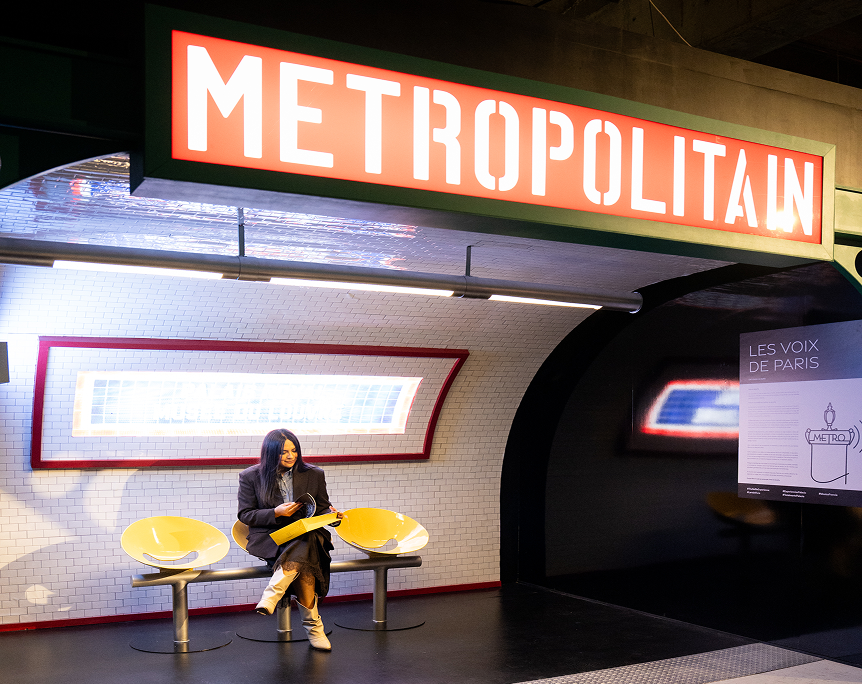
Within minutes, you can pass through some of the Paris Métro’s most iconic stations, come face-to-face with Louis XIV or step into a space where light takes center stage, almost as a small nod to the Ville Lumière. Then comes Versailles. A contemporary reinterpretation of the Galerie des Glaces multiplies mirrors, reflections and light around a 1910 Louis XV-style chandelier.
But the journey does not end there. The Mona Lisa appears around a corner, seen through a small mirror that completely changes the way you encounter one of the world’s most recognizable works of art. In another moment, the Winged Victory of Samothrace changes color in a small tribute to one of the world’s most famous museums: the Louvre. Yet the most unexpected moment comes at the end, where virtual reality allows you to do what the entire experience has been promising from the beginning: travel through Paris.
It is fun, yes. Instagrammable, too. But perhaps the most interesting thing is that it works. Because, even if only for a few moments, you leave a department store in Polanco feeling as though you have just walked through a rather unexpected version of the streets of Paris.
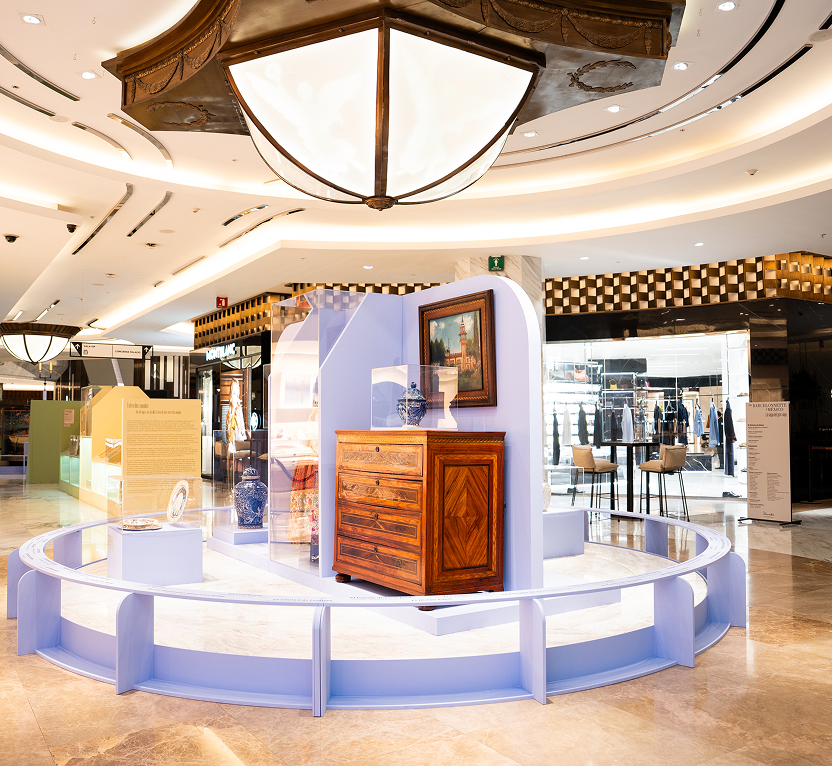
“De Barcelonnette a México: Una historia de origen” traces the arrival of this community and the mark it would leave far beyond El Palacio de Hierro.
From Barcelonnette to Mexico
After walking through Paris, the story returns to where it began: Barcelonnette. The small French town Joseph Tron and Joseph Léautaud left behind is also at the heart of an exhibition that uncovers a lesser-known chapter in the relationship between Mexico and France: that of the French immigrants who crossed the Atlantic in the late 19th century to build a new life in our country.
De Barcelonnette a México: Una historia de origen traces the arrival of this community and the mark it would leave far beyond El Palacio de Hierro. Its influence reached commerce, architecture and even certain ways of understanding lifestyle in Mexico. Suddenly, what began as the story of two founders becomes the story of an entire generation.
Epilogue
In the end, 200 years are not celebrated by looking only toward the past. They are also celebrated by discovering all the ways a story continues to change as we keep telling it. And the one between Mexico and France clearly still has plenty left to write.
Because if the L’Art de Vivre exhibition proves anything, it is that the distance between both countries can be measured in thousands of kilometers —9,210, to be exact— but sometimes, all it takes is stepping inside El Palacio de Hierro Polanco to make it feel just a little bit shorter.