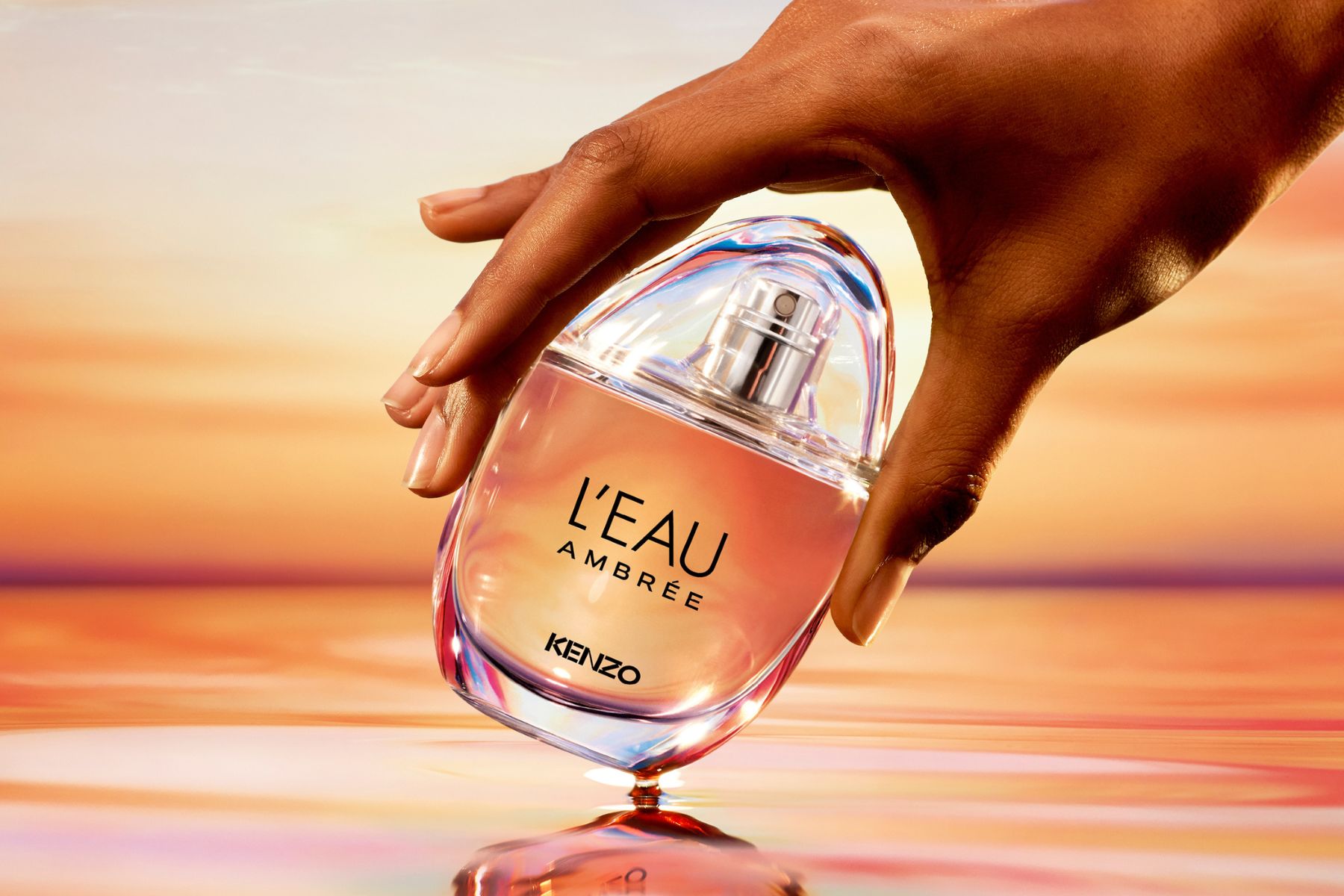
The connection may not be obvious at first, but light can also transform the way we imagine a scent. The same landscape can feel entirely different as the sun begins to set. Water, so often associated with crystalline freshness, suddenly takes on an unexpected warmth. The ocean hasn’t changed. Our perception of it has. With L’Eau Ambrée, KENZO Parfums translates that fleeting moment into fragrance.
The latest addition to the L’Eau family marks a new expression of the Franco-Japanese house’s olfactory identity. It preserves the aquatic character that has defined the collection for nearly three decades, while reimagining it through the tones of sunset. The result is a composition where freshness takes on new depth and water, for the first time in a fragrance, appears bathed in sunlight.
L’Eau: Water as a Starting Point
In 1996, Kenzo Takada imagined a fragrance around a seemingly simple idea: giving color to water. The result was L’Eau Kenzo pour Femme, a scent that brought freshness, flowers, and nature together into an olfactory language that would find its masculine counterpart two years later. Nearly three decades on, water remains one of KENZO Parfums’ most recognizable codes, and the starting point for a family that continues to find new ways of interpreting it.
But even the most recognizable codes can shift depending on how we choose to see them. If L’Eau began with a fresh, luminous vision of water, L’Eau Ambrée seems to ask what happens when that same freshness enters a different hour of the day. Blue turns golden, transparency gains depth, and the ocean is no longer imagined only through its cooler side. It is here, just as the light begins to fade, that this new fragrance finds its place.
KENZO Parfums continues its collaboration with Coral Gardeners, an organization dedicated to restoring coral reefs.
L’Eau Ambrée: When Freshness Turns Warm
Behind this new interpretation are Daphné Bugey —the perfumer who had already begun reshaping the L’Eau universe with L’Eau Pure— and Nicolas Bonneville, the nose behind fragrances such as Prada’s Paradigme and Givenchy’s Encens Divin. Together, they imagine a scent that feels as fresh as it does enveloping. The premise? To preserve the collection’s signature freshness without allowing it to define the fragrance entirely.
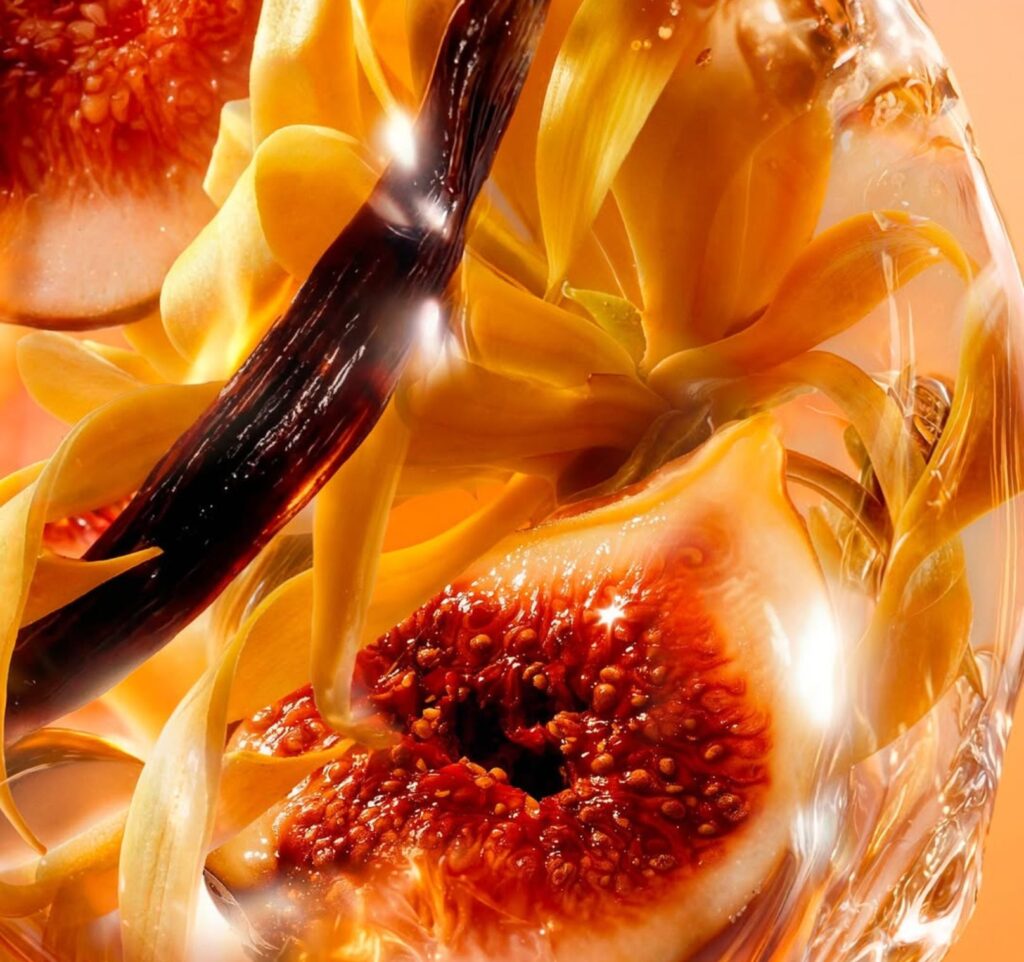
From there, L’Eau Ambrée opens with juicy fig, while ylang-ylang reveals its sunniest side, explored in three different forms to move from subtly spiced nuances to something creamier, almost like the scent of a coconut cracked open at sunset.
It is within this contrast that the composition begins to explain its name. Ambrée —French for amber— hints at the warmth running through the fragrance: while sandalwood, Tahitian vanilla, and the balsamic nuances of benzoin create a warm base, Aquozone®, a molecule designed to recreate the crystalline sensation of water, draws the composition back to its aquatic origins.
L’Eau Ambrée doesn’t leave freshness behind in order to become a warm fragrance; it allows both sensations to exist at once. And that is where its power lies: in showing that even something we instinctively associate with water can feel deep, creamy, and luminous all at once.
The Continuation of Contrast
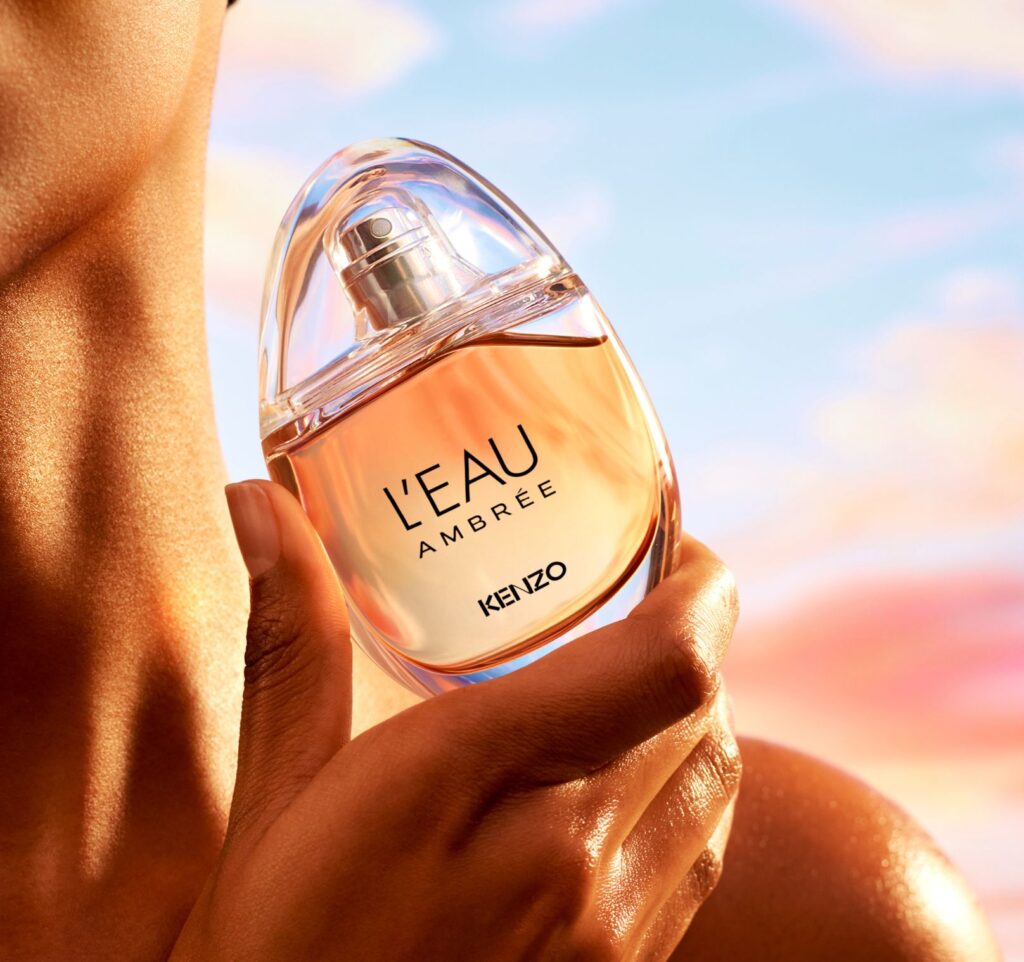
L’Eau Ambrée’s duality doesn’t end with the way it balances freshness and warmth. It carries through to the way the fragrance presents itself. The bottle retains the silhouette of a drop of water, now tinted in warm amber, reminiscent of the final moments of daylight. Before the scent is even discovered, the design seems to anticipate the same transition taking place inside: from crystalline water to the golden reflections of sunset.
But there is another choice —or rather, the absence of one— that ultimately defines its identity: L’Eau Ambrée is a genderless fragrance. Unlike the earliest chapters of L’Eau, there is no pour Femme or pour Homme counterpart. The same composition is made for everyone, leaving it to the skin, rather than a category, to determine how the fragrance is ultimately perceived.
L’Eau Ambrée opens with juicy fig and finds its most solar expression in ylang-ylang.
Fragrance as Commitment
Perhaps the relationship with water doesn’t end with what inspires a fragrance. With L’Eau Ambrée, KENZO Parfums continues its collaboration with Coral Gardeners, an organization dedicated to restoring coral reefs. That relationship extends to the fragrance itself: its formula is made with 90% naturally derived ingredients, while its bottle incorporates 15% recycled glass.
Because if water has been the starting point of this story for nearly three decades, perhaps protecting it is also a way of imagining its future.