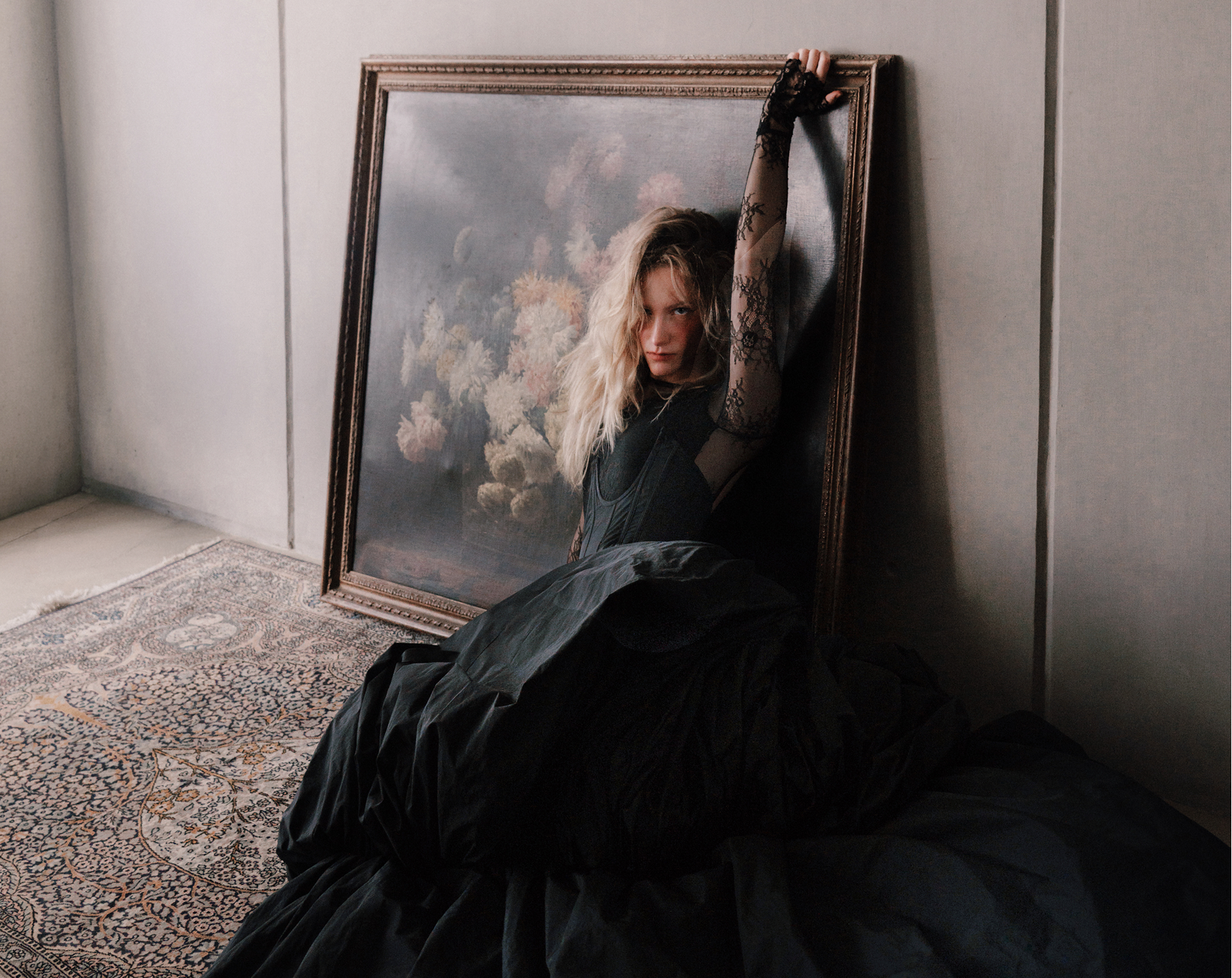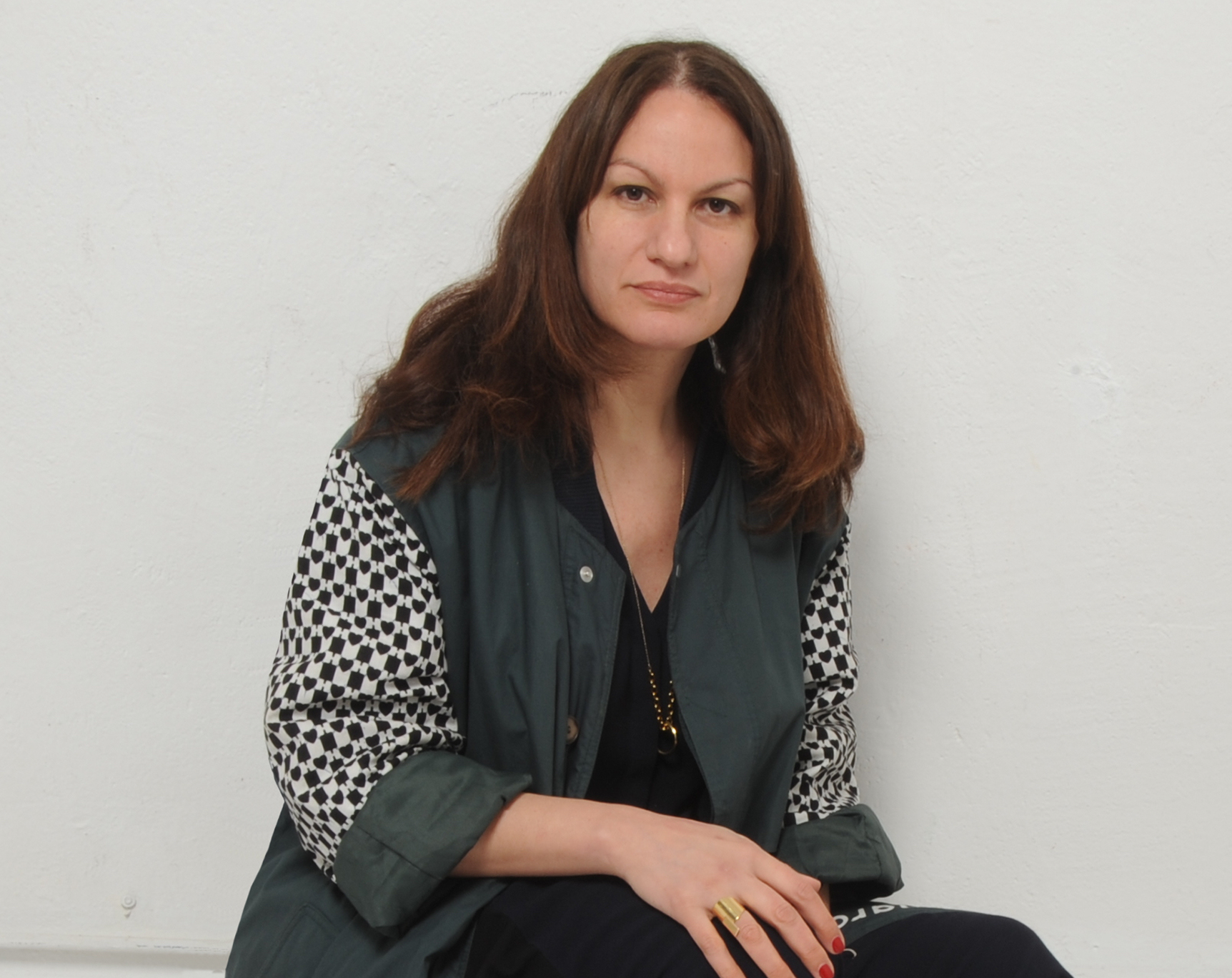
Inside haute couture ateliers exists a silence that few notice: the silence of fabrics that never make it to runways, editorials, or storefronts. Fragments of silk, cashmere, and jacquard left over by mere centimeters, dismissed by the system as irrelevant. For Eva Zingoni, these fragments are not discards; they are living matter. Suspended stories waiting for their second existence.
Long before the industry spoke about circularity or impact, Zingoni, an Argentine designer based in Paris, began building a brand from what fashion threw away. In the midst of the 2009 economic crisis, when luxury was beginning to question its own velocity, she saw in the remnants a new possible language. A quiet alternative to the logic of excess.
Her proposal combines textile architecture, spiritual sensitivity, and a deep understanding of luxury as intention rather than accumulation. In a sector saturated with empty sustainability discourse, Zingoni does not seek to persuade. She creates from coherence.
Author: EDUARDO OLIVAR
PARIS, THE CRISIS, AND WHAT REMAINS BETWEEN FABRICS
In 2009, the industry trembled after the global financial collapse. Haute couture houses sought stability while ateliers continued producing precious materials that often had no destination. Silk that was not quite enough for a dress, cashmere left over by a few centimeters, irregular cuts that no longer fit the technical sheets.
That void, that quiet remnant, was Zingoni’s point of departure. Instead of seeing waste, she saw possibility. She saw a fissure in the system where something new could be born.
A more honest, more human, more conscious luxury.

FROM ARGENTINA TO PARIS: A SENSITIVITY FORGED IN MOVEMENT
Zingoni’s story is marked by displacement. She left Argentina very young, grew up between Madrid, Turin, and Paris, and built her creative identity through disciplines ranging from film to heritage preservation, with fashion running through all of it.
Before founding her brand, she worked at Ralph Lauren, in trend agencies, and later at Balenciaga under Nicolas Ghesquière. That phase, intense, formative, demanding, taught her rigor, precision, and also the emotional cost of the industry.
She experienced the grandeur of luxury but also its burnout. It was there, in that combination of beauty and exhaustion, that her ethical lens took shape.
SPIRITUALITY AS METHOD, NOT DECORATION
Zingoni integrates symbols, mantras, and personal imagery into her pieces, but not as embellishment. In her universe, spirituality is not an aesthetic. It is a compass. It is intention. It is presence.
Each bag is a reminder, a message, an invitation to look more slowly. For her, ethical fashion begins within, in one’s values, consciousness, and emotional, social, and material responsibility.
EXCLUSIVe interview:

Your work crosses design, ecology, and spirituality. How do these dimensions dialogue within your brand’s identity?
E.Z: For me, they are not separate zones. Spirituality gives me intention, ecology gives me responsibility, and design gives me form. My pieces inhabit that balance: brutalist structure, Bauhaus sensitivity, and a feminine softness that holds everything together.
Migrating so young shaped your sensitivity. What part of that journey remains alive in your creative process?
E.Z: The ability to adapt and observe. Growing between continents taught me to look at the everyday with curiosity. That hybrid vision appears in my pieces, in how I combine influences, symbols, and materials.
What values inherited from your family do you recognize in your way of creating?
E.Z: Sensitivity, curiosity, and the conviction to work for what I desire. Ethics and effort were valued in my home. All of that appears in every project I undertake.
Balenciaga shaped me deeply, but it also pushed me to rethink how I wanted to live my creativity.
EVA ZINGONI
Your experience at Balenciaga was pivotal. What creative and human learnings did that period leave you?
E.Z: It was an exceptional school. Five years of intense work taught me technique, rhythm, and precision. I also learned what burnout was without knowing its name. Balenciaga shaped me deeply, but it also pushed me to rethink how I wanted to live my creativity.
Your ecological awareness began before the industry talked about circularity. What did you see that others did not see?
E.Z: I saw beautiful fabrics being thrown away. It made no sense. There was a disconnect between the material’s value and its final fate. When I left Balenciaga, I realized I could transform that leftover into pieces full of intention. That is where it all began.

In 2009 you became a pioneer in Paris working with remnants. How was that proposal received?
E.Z: It was a complicated moment. The economic crisis dominated the conversation and no one talked about sustainability. Yet the first six bags I launched caught the attention of the French media. They understood this was not a trend. It was an urgency.
Today the word sustainable is overused. What does it really mean to create ethical fashion in 2025?
E.Z: It is a complete system. It involves design, materials, traceability, impact, and human relationships. It is not just recycling. It is creating from responsibility. For me, spirituality is also part of it. It connects you with your values and with nature.
For me, spirituality is also part of it. It connects you with your values and with nature.
EVA ZINGONI

Your pieces incorporate mantras and personal symbols. What role does spirituality play in your creative process?
E.V: It is a compass. I do not want my pieces to simply look good. I want them to accompany. The symbols function as emotional reminders, not as ornamentation.
In a saturated market, what makes a contemporary brand authentic?
E.V: Coherence. Knowing who you are and communicating from that place. When a brand is true, you can feel it. It does not need spectacle.
You have said that success is intimate. What does success mean to you today?
E.V: It is the alignment of your talents with your values. It is the ability to say this is who I am without fear. Real success comes from within, not from the outside.

CLOSING
Eva Zingoni’s work reveals something essential: innovation in contemporary luxury does not emerge from producing more. It emerges from seeing better. Her work proves that beauty can be ethical, that design can be spiritual without becoming superficial, and that what remains, when seen with intention, can become a manifesto.
Zingoni does not respond to a trend. She responds to a vision.
A vision of fashion that can heal, repair, and redirect.
A luxury that, finally, breathes.