At the Maison Dior, decision-making has never been a purely rational act. Since its founding, the house has operated in a territory where technique coexists with intuition, and where fate has functioned as a silent counterweight to the weight of the industry. Within a system governed by rigid calendars, multimillion-dollar investments, and global expectations, decisions have historically required more than calculation alone.
This is why, far removed from trivial superstition, the oracle has appeared at Dior as a private structure of thought. Not as spectacle. Not as public faith. But as an intimate way of ordering risk when certainty does not exist.
Christian Dior and Trust in Signs
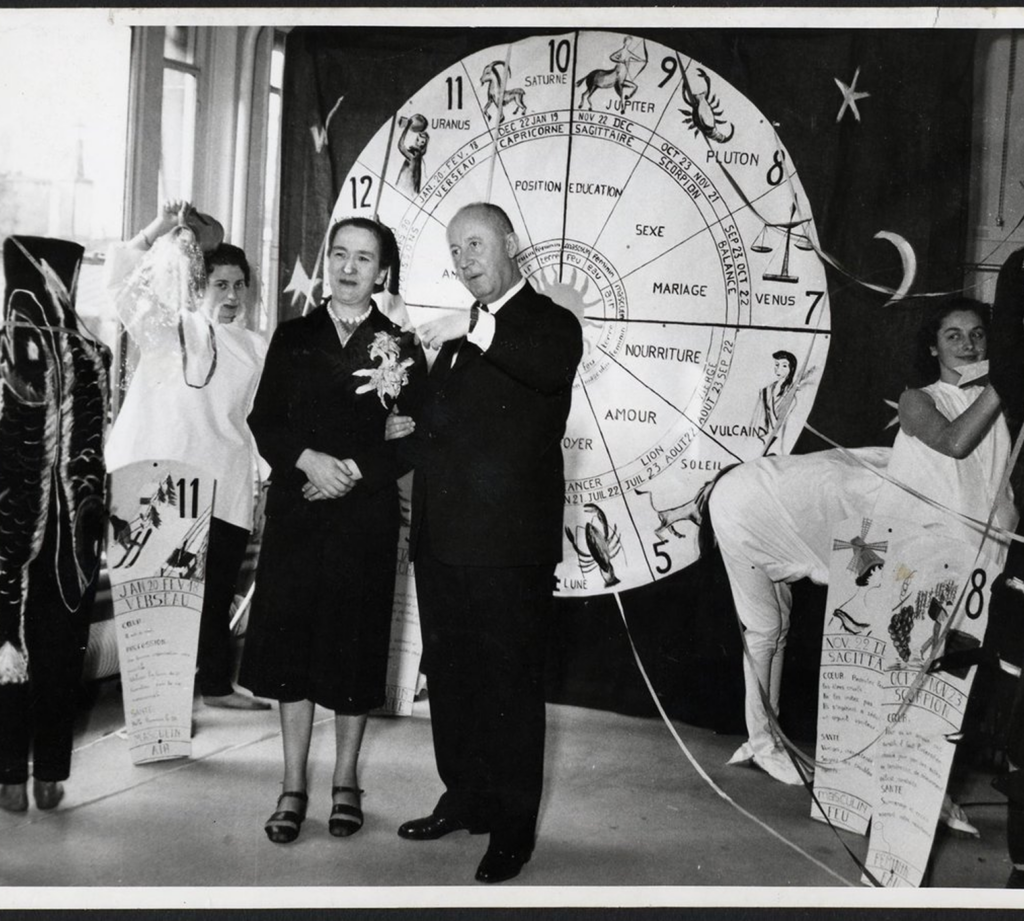
Before becoming one of the most influential institutions in modern luxury, Christian Dior was a profoundly superstitious man, a trait widely documented in his biography. He consulted fortune tellers, believed in omens, and maintained personal rituals that accompanied key professional decisions.
Historical accounts agree that in the period leading up to the founding of his fashion house in 1946, when leaving the security of working for others represented a high-stakes gamble, Dior turned to oracular consultations as part of his decision-making process. He did not understand tarot as literal prediction, but as symbolic confirmation: a way of validating intuition when economic logic offered no guarantees.
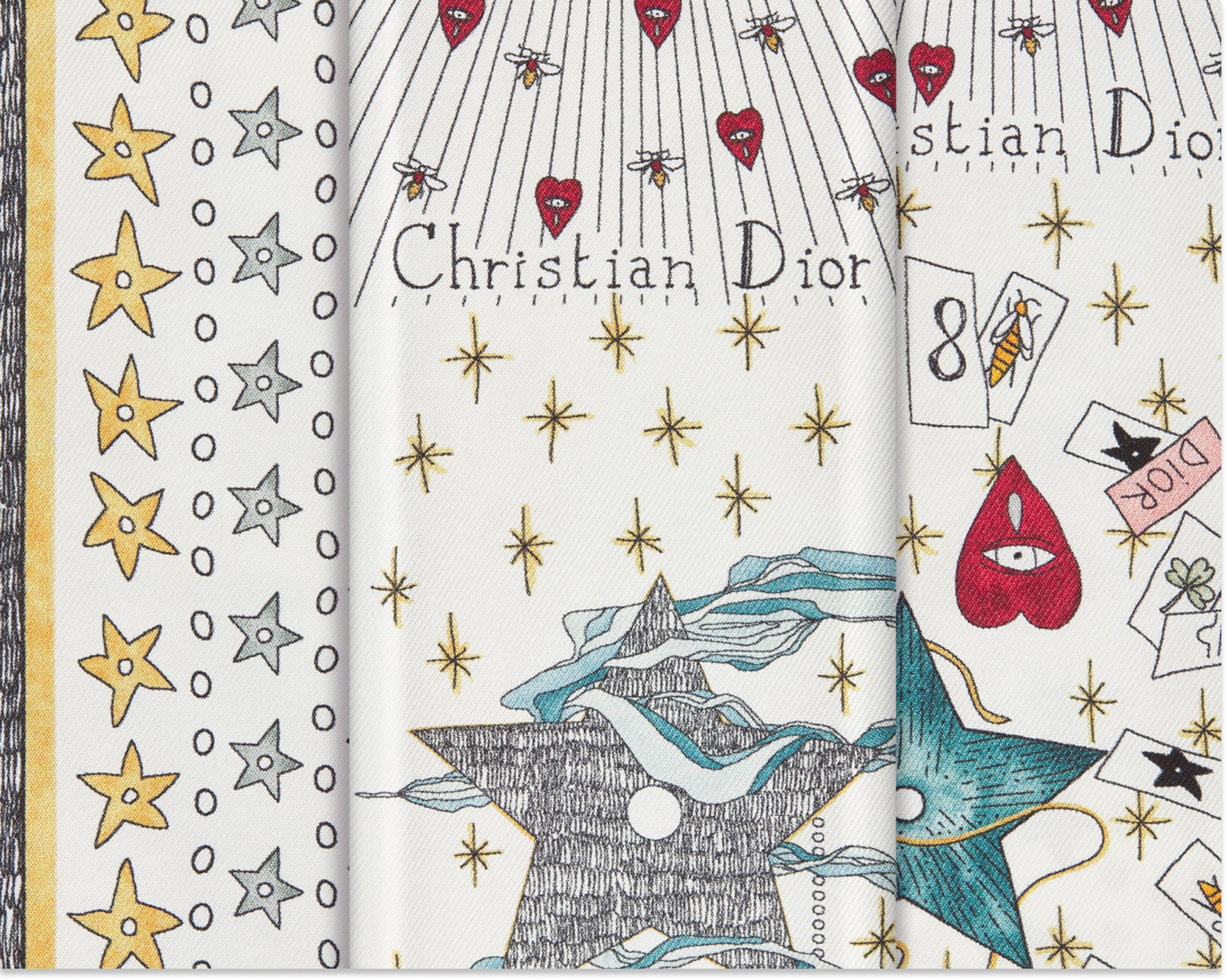
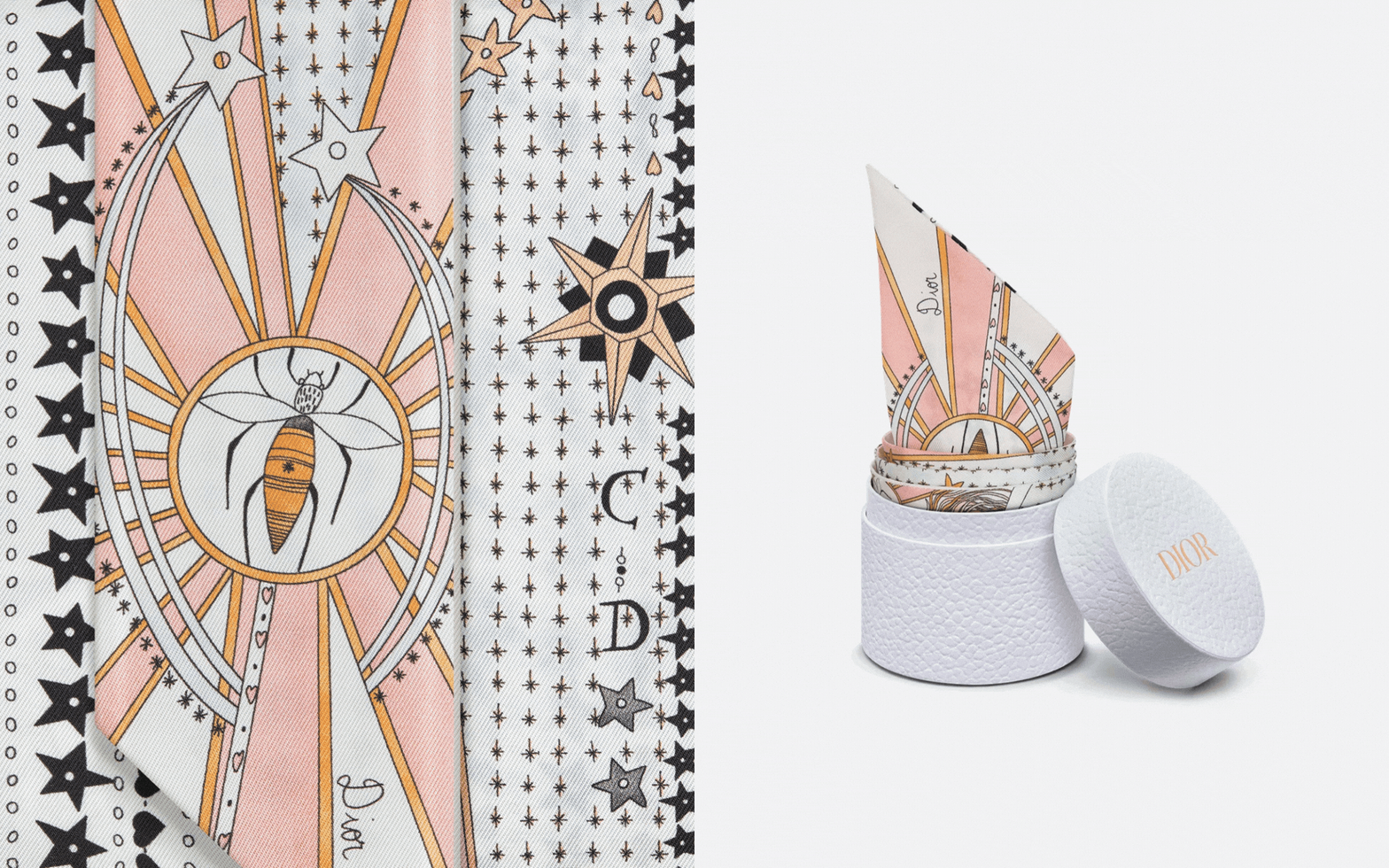
It is no coincidence that the Maison was born surrounded by intimate gestures: amulets sewn into garments, lucky numbers, recurring symbols. At Dior, luxury was not built solely through silhouette or craftsmanship, but through a quiet relationship with destiny.
The Oracle as a Private Structure of Luxury
What truly matters is not that Dior “believed” in tarot. It is that the Maison Dior understood, from its origin, that major decisions require spaces of reflection that are not public.
The oracle fulfilled that role. It was not explained. It was not displayed. It was never turned into commercial narrative. It operated in silence, like the most important decisions do. In an industry obsessed with visibility, tarot belonged, and still belongs, to the opposite territory: that of strategic intimacy.
Tarot as Creative Language: Maria Grazia Chiuri’s Vision
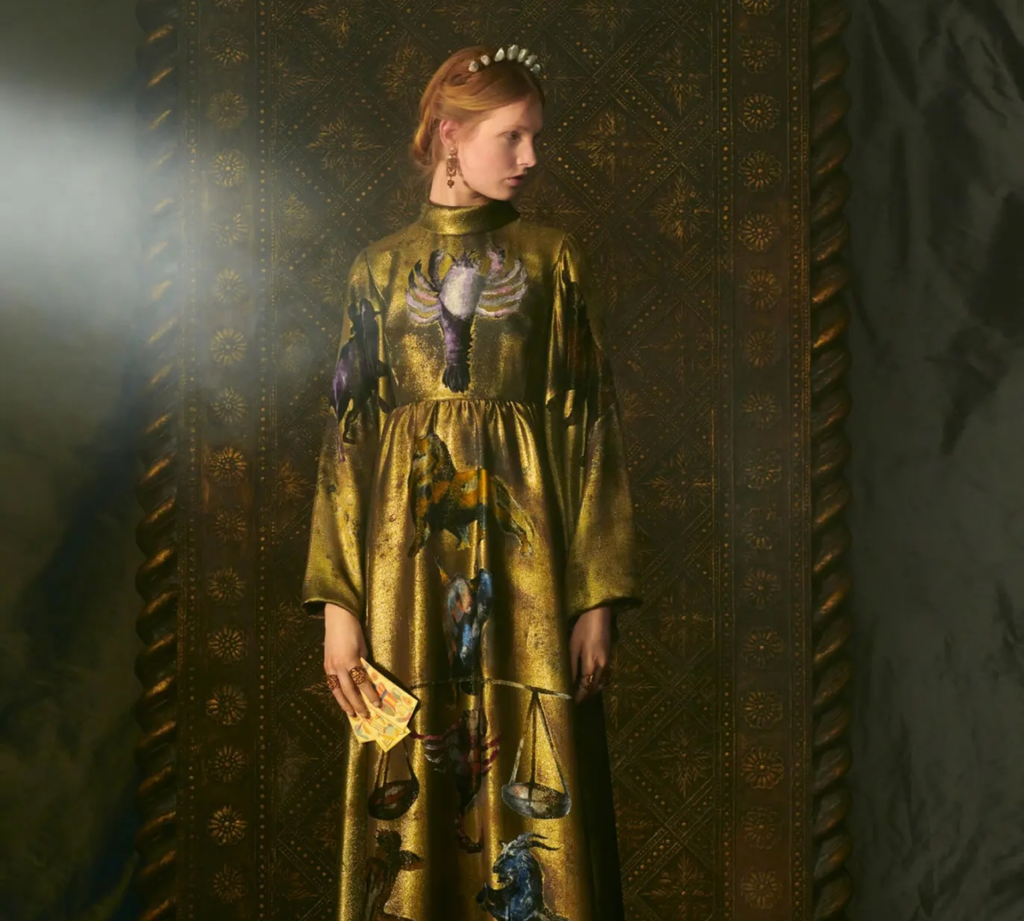
Dior’s relationship with tarot has not been limited to the private realm of decision-making. In 2021, under the creative direction of Maria Grazia Chiuri, the oracle emerged explicitly as a narrative and aesthetic structure.
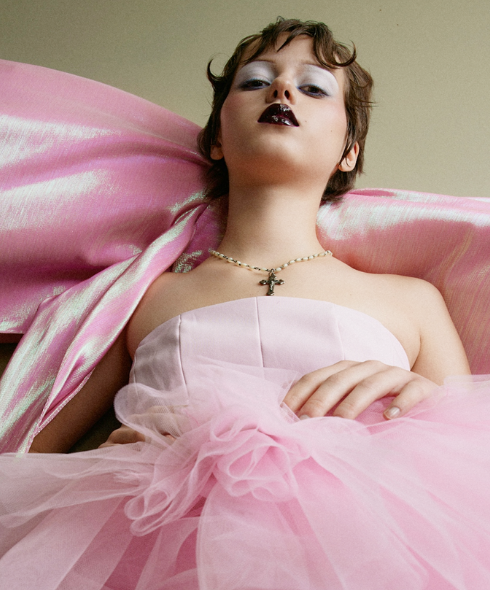
The Spring/Summer 2021 Haute Couture collection drew direct inspiration from tarot cards and was presented through the film Le Château du Tarot. Far from a decorative exercise, Chiuri used archetypes: The High Priestess, The Moon, The Empress, as symbolic language to think about the future during a moment of profound global uncertainty.
In this collection, tarot functioned as a conceptual map: a way to project possibility, to articulate femininity, power, and destiny without literalism. The Maison Dior did not use tarot as a trend, but as a narrative system, reaffirming that symbolism has historically been part of its creative DNA.
The Present: Jonathan Anderson and the Return of the Symbol
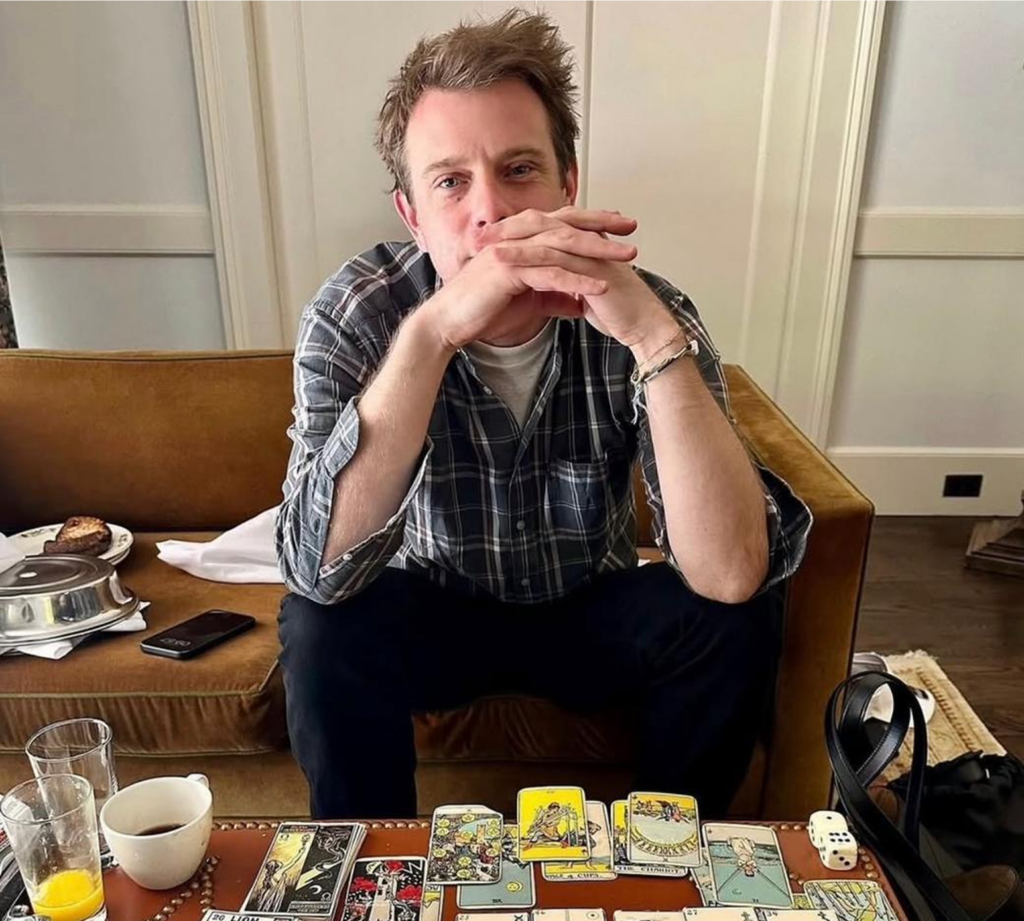
Decades later, the image of Jonathan Anderson, current Creative Director of the Maison Dior, receiving a tarot reading reignited this conversation. The reading, conducted by tarot reader Trevor Ballin and shared publicly, went viral not because it was extravagant, but because of what it revealed: even at the peak of creative power, uncertainty persists.
Anderson is not an intuitive designer without structure. He is one of the most rigorous and conceptually solid figures in contemporary fashion. The presence of tarot in his orbit does not suggest blind belief, but rather the need for symbolic language at a moment of maximum creative pressure.
Today, leading Dior means safeguarding a monumental heritage, engaging with historic archives, and responding to a global market that demands constant novelty without fracturing the house’s DNA. In this context, the oracle does not predict, it frames. It offers a reflective pause when all decisions appear equally risky.
Belief Is Not Abdication
The difference between Dior then and Dior now lies not in the tool, but in the context. Christian Dior operated within a slower, more intimate, more artisanal system. Maria Grazia Chiuri translated symbolism into the contemporary language of Haute Couture. Jonathan Anderson navigates a hyper-visual, immediate, permanently exposed industry.
The point of convergence is clear: when control is absolute, intuition becomes indispensable.
Neither Dior, nor Chiuri, nor Anderson ever delegated their decisions to tarot. They used, and continue to use, it as a mirror, as a symbolic system, as a space where the unconscious can formulate questions when data falls short.
Fate, Risk, and Permanence
That the Maison Dior repeatedly returns to the oracle is neither coincidence nor passing trend. It is a reminder of something deeper: luxury has always coexisted with uncertainty. And when the future cannot be calculated, symbols offer structure.
From Christian Dior to Maria Grazia Chiuri and Jonathan Anderson, tarot appears not as superstition, but as method. Not as spectacle, but as support. Not as an answer, but as a rigorously formulated question.
In a historical moment obsessed with immediate certainty, consulting fate can paradoxically become an act of lucidity.
At the Maison Dior, the oracle belongs neither to the past nor to the present. It belongs to a way of deciding. A way that understands that luxury is built not only through technique, archives, and capital, but also through disciplined intuition, strategic silences, and the ability to listen for signals when reason alone is no longer enough.
In times of overexposure, over-intervention, and excessive control, returning to the symbol is not regression.
It is a reminder that even the most powerful houses sometimes need to consult destiny.