

Ballet is one of the most violent disciplines we have learned to romanticize.
Extreme discipline, forced verticality, absolute control of the body, and an almost spiritual relationship with pain, balance, and endurance. For Spring–Summer 2026, Christian Louboutin does not soften that truth: he displaces it from the classical stage and relocates it into another territory.
Author: Claudia Valdez
The playing field.
Not as a sporting spectacle.
But as a space of exposure.
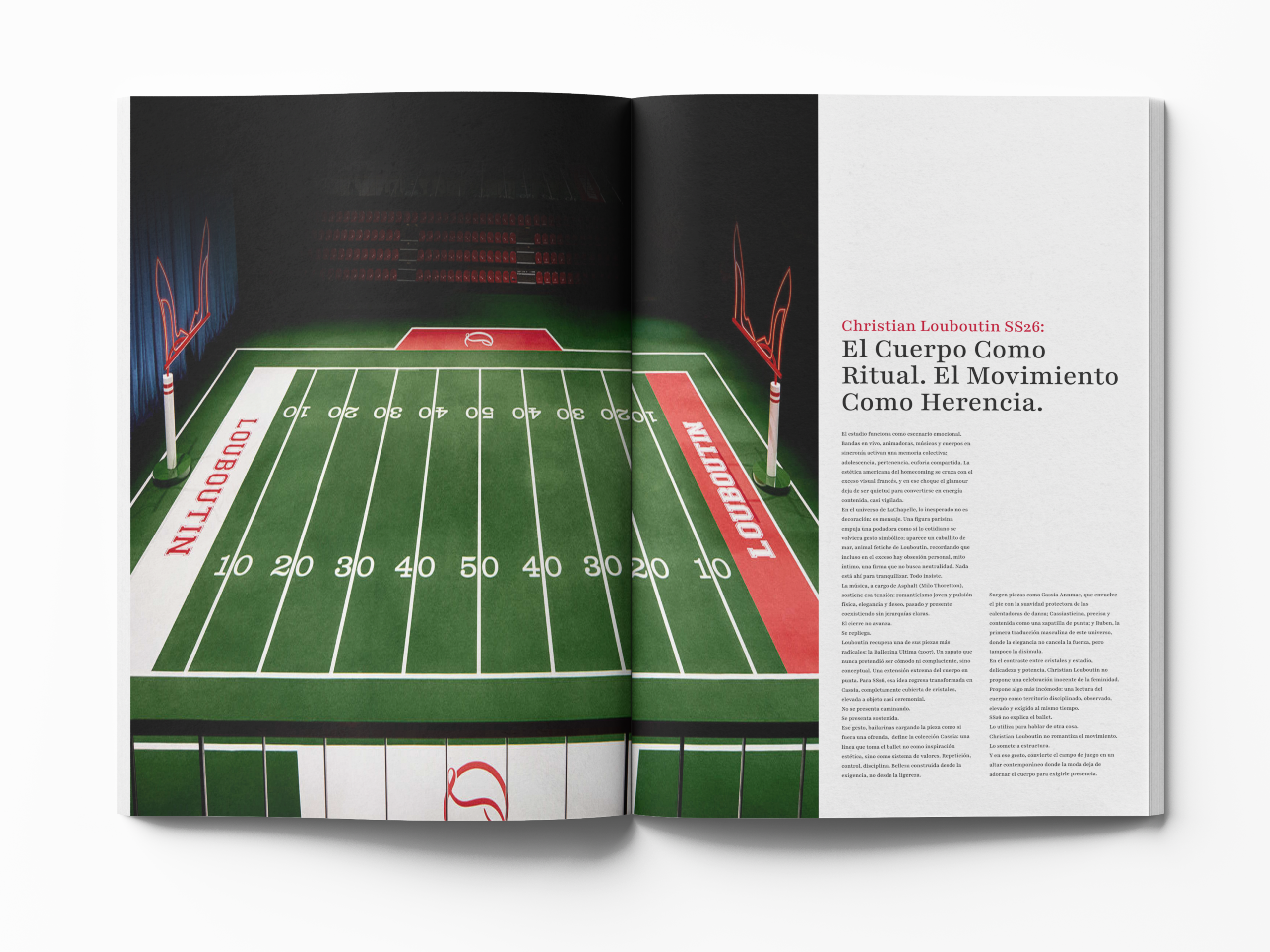
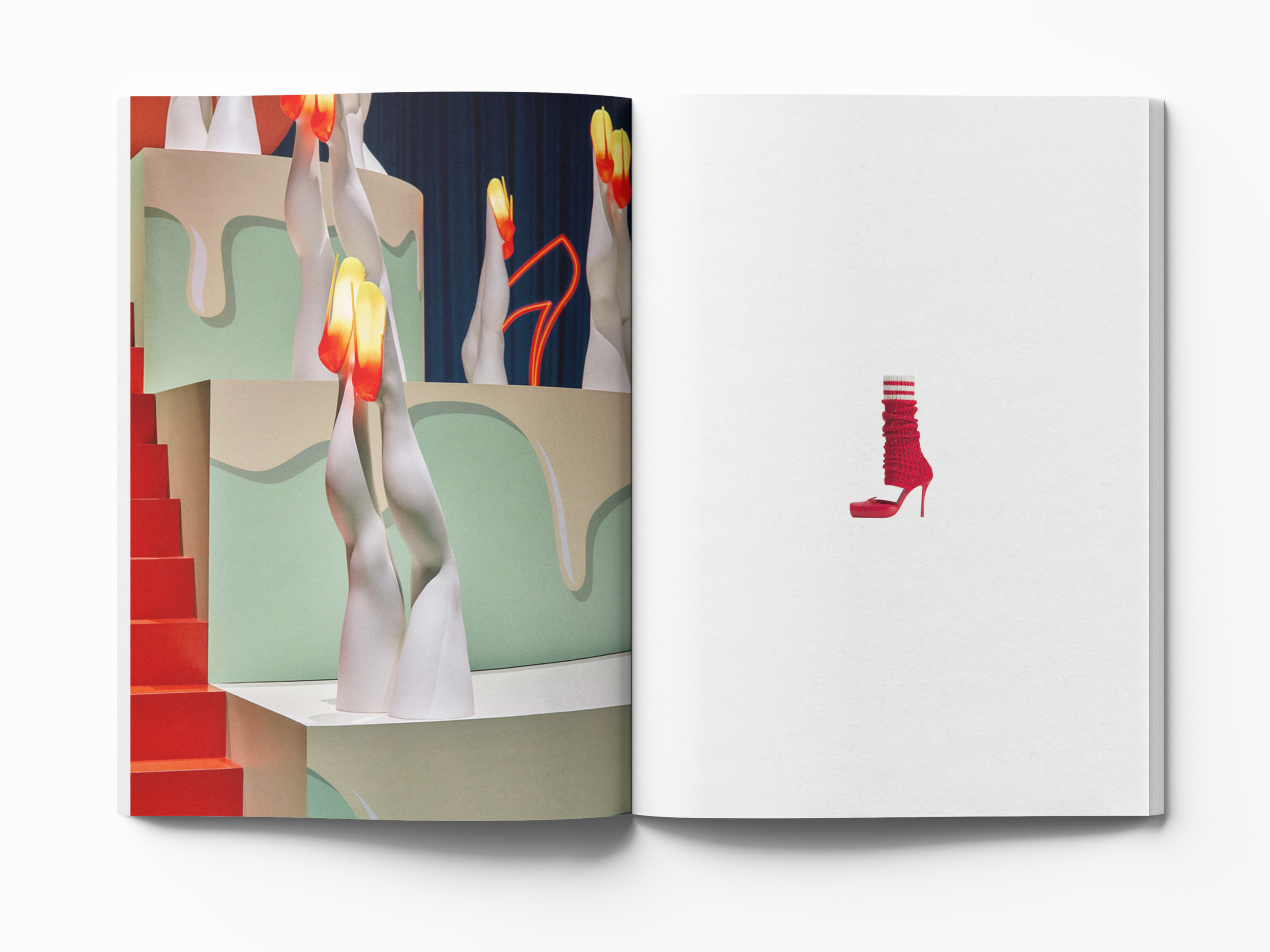
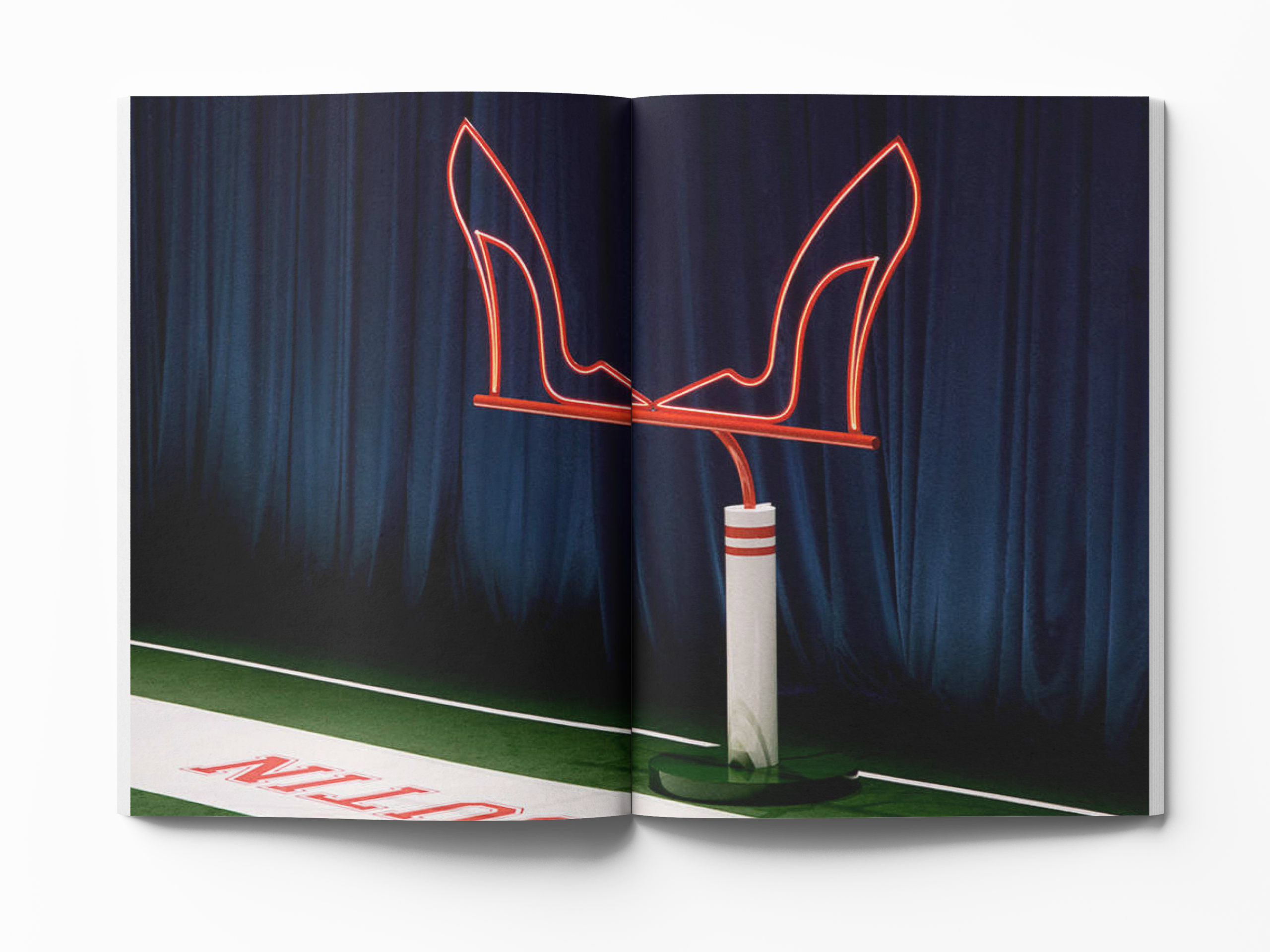
At the Loubi Show SS26, presented at the Dojo Arena in Paris, movement ceases to be ornament and becomes system. The body, trained, observed, demanded, turns into the point of intersection between ballet, athletics, and fashion. Under the visual direction of David LaChapelle and the choreography of Blanca Li, the show unfolds as an expanded choreography: five acts where celebration, competition, and nostalgia coexist without fully resolving.
There is no runway here.
There is imposed rhythm.
The stadium operates as an emotional stage. Live bands, cheerleaders, musicians, and bodies in synchrony activate a collective memory: adolescence, belonging, shared euphoria. American homecoming aesthetics collide with French visual excess, and in that friction glamour stops being stillness and becomes contained energy, almost surveilled.
In LaChapelle’s universe, the unexpected is not decoration: it is message. A Parisian figure pushes a lawn mower as the ordinary turns into symbolic gesture; a seahorse appears, Louboutin’s fetish animal, reminding us that even in excess there is personal obsession, intimate myth, a signature that refuses neutrality. Nothing is there to reassure. Everything insists.
The music, composed by Asphalt (Milo Thoretton), sustains that tension: youthful romanticism and physical impulse, elegance and desire, past and present coexisting without clear hierarchies.
The closing does not advance.
It folds inward.
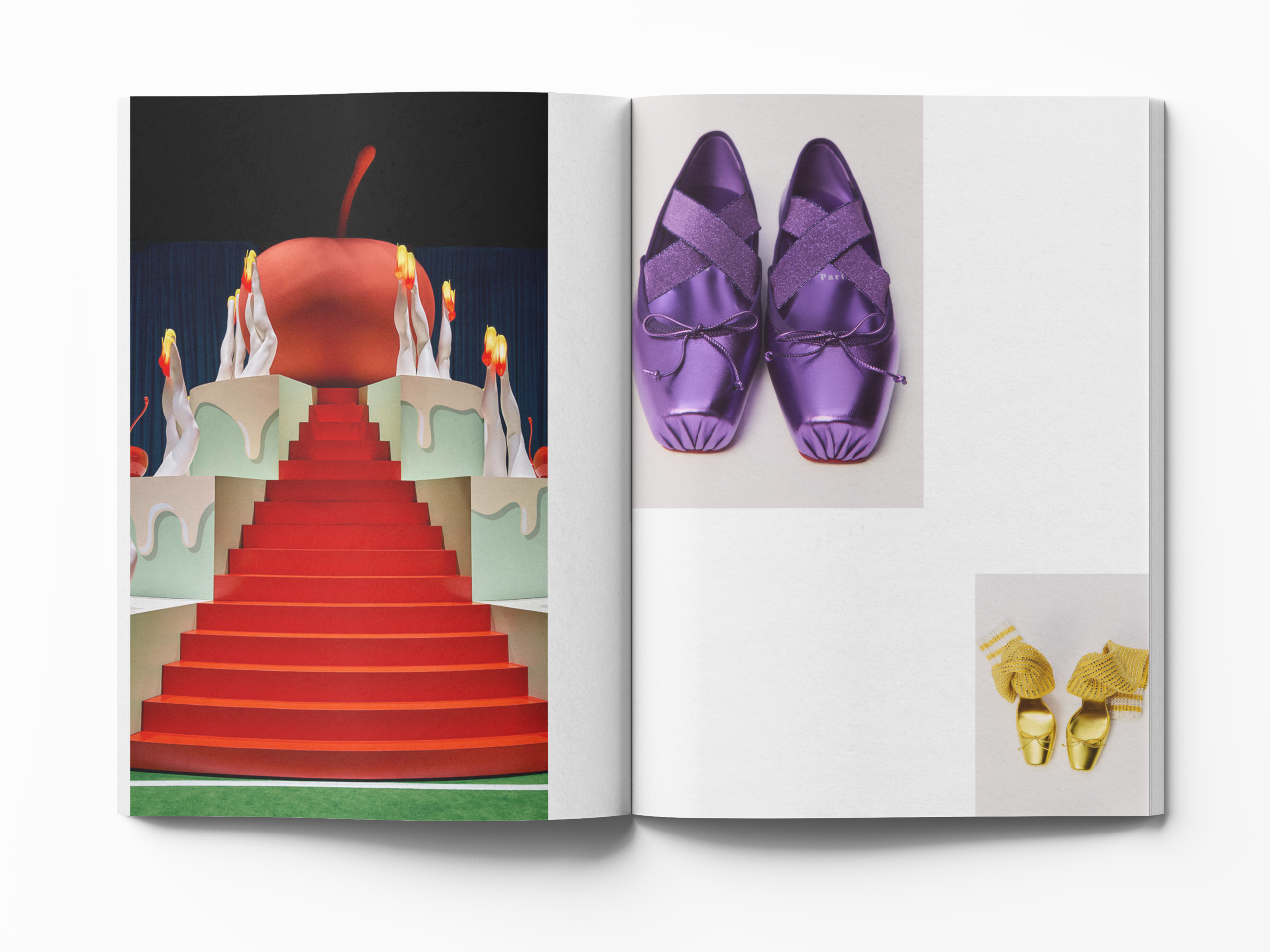
Louboutin revisits one of his most radical creations: the Ballerina Ultima (2007). A shoe that never aimed to be comfortable or compliant, but conceptual, an extreme extension of the body en pointe. For SS26, that idea returns transformed as Cassia, entirely covered in crystals and elevated into an almost ceremonial object.
It is not presented walking.
It is presented carried.
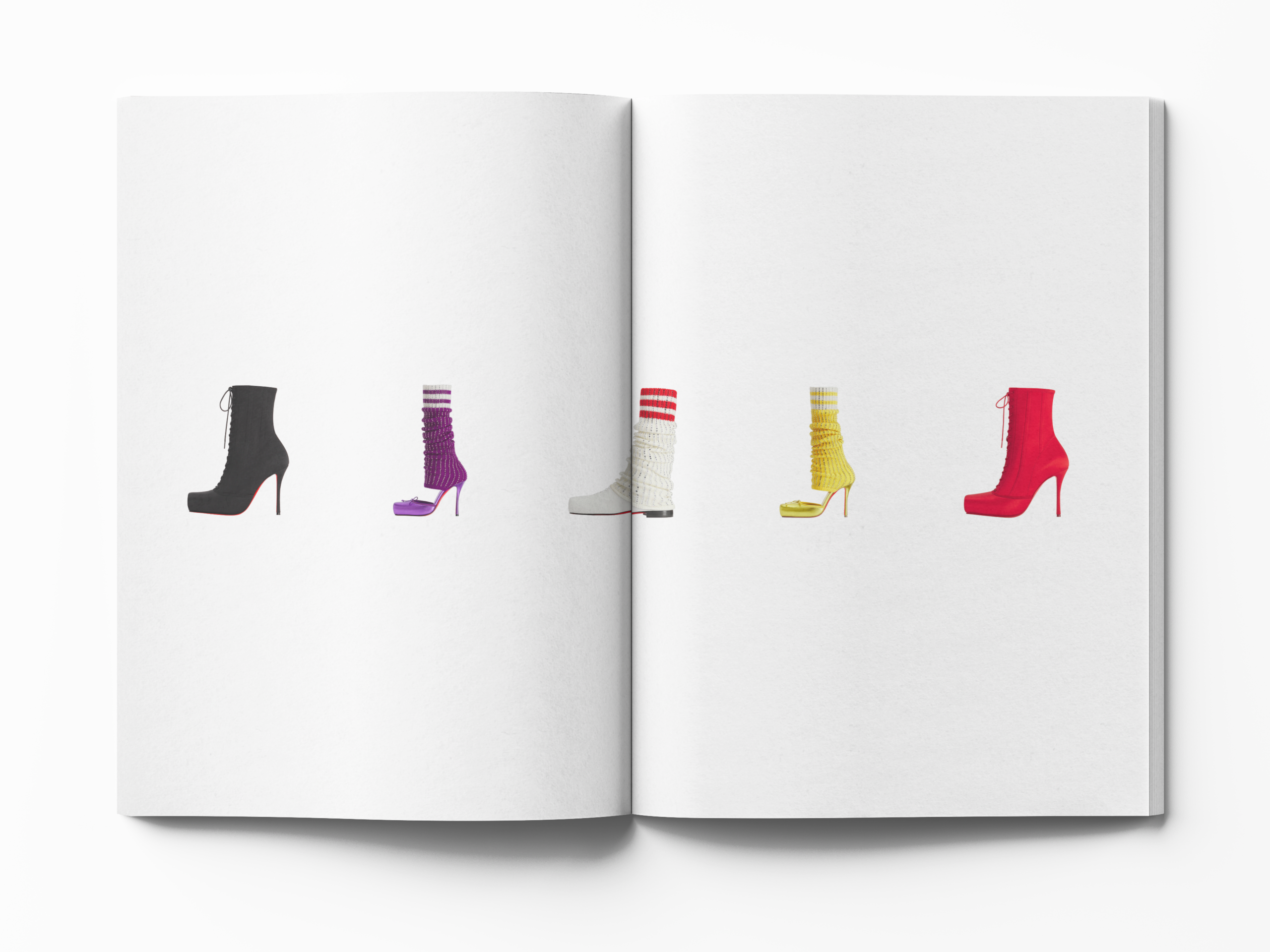
That gesture, dancers bearing the piece as if it were an offering, defines the Cassia collection: a line that approaches ballet not as aesthetic inspiration, but as a system of values. Repetition. Control. Discipline. Beauty built from demand, not lightness.
Pieces emerge such as Cassia Annmac, enveloping the foot with the protective softness of dance warmers; Cassiasticina, precise and restrained like a pointe shoe; and Ruben, the first masculine translation of this universe, where elegance does not cancel strength, nor does it disguise it.
In the contrast between crystals and stadium, delicacy and power, Christian Louboutin does not propose an innocent celebration of femininity. He proposes something more uncomfortable: a reading of the body as disciplined territory, observed, elevated, and demanded all at once.
SS26 does not explain ballet.
It uses it to speak about something else.
Christian Louboutin does not romanticize movement.
He subjects it to structure.
And in that gesture, he turns the playing field into a contemporary altar where fashion ceases to adorn the body and instead demands presence.