
For years, we learned to care for skin from a single place: the face. That is where the actives were, the complex routines, the obsession with texture, glow, visible perfection. The body, on the other hand, was reduced to an automatic gesture. A cream after showering. A quick movement. A routine without thought. But the skin of the body has always functioned under the same biological rules.
It responds, changes, adapts. It loses hydration, accumulates damage, modifies its elasticity. The difference is not in the skin, but in the attention we give it.
And when observed more closely, the data is clear: the skin of the body tends to be more dehydrated than the face, especially in areas like legs and arms. It has fewer sebaceous glands in many areas, which makes it more prone to losing water and feeling rough more easily. It is not simpler. It is more silent.
Author: Claudia Valdez

More resistant does not mean less complex
The skin of the body ages differently. It does not react immediately, it does not show abrupt changes, but it accumulates. The loss of collagen and elastin happens progressively, affecting firmness and texture over time. Approximately 40% of people experience dry skin as they age, and that dryness is not only superficial: it compromises barrier function, elasticity and defense capacity.
To this are added factors that are not always immediately visible. Sun exposure, pollution, stress and hormonal changes directly influence the quality of the skin of the body. It is estimated that up to 80% of visible aging is related to external factors, not just the passage of time.
The body does not age suddenly, it transforms slowly and for that reason, what it needs is not intensity, it is consistency.
What the skin of the body actually needs
For years, the industry responded to the skin of the body with quick solutions: reduce, tighten, eliminate. But biology does not work that way.
The skin of the body needs constant hydration, not intermittent. It needs to maintain its elasticity, not recover it occasionally. It needs to improve its texture progressively, understanding that conditions like cellulite, which affects between 80% and 90% of women, are not anomalies, but physiological characteristics.
It also needs something that is rarely mentioned: stimulation, movement, sensoriality. The skin of the body responds to touch, circulation, the repetition of gestures that activate its natural functions.
It is not about doing more, it is about doing better, and consistently.

Approximately 40% of people experience dry skin as they age, and that dryness is not only superficial: it compromises barrier function, elasticity and defense capacity.
A system, not a sum of products
At a moment where multiple brands have begun to speak about the body from new narratives —less corrective and more conscious— the difference is no longer in who enters the conversation, but in who has sustained it for longer. Because it is not the same to adapt to a change, as it is to have worked from that place from the beginning
And it is precisely there where some brands stop being a circumstantial reference and become structure. Among them, Clarins occupies a particular place, not because it is aligned with the conversation today, but because it never had to adjust to it.
Clarins: when the body was always understood this way
Long before this conversation existed, Clarins was already working from this logic.
It did not build its body care proposal from correction, but from support. Its products do not function as isolated solutions, but as part of a system that responds directly to the real needs of the skin of the body.
This structure becomes evident in the way its portfolio is organized. Exfoliating Body Scrub for Smooth Skin is not conceived as an occasional gesture, but as the necessary starting point for the skin to receive. Body-Smoothing Moisture Milk sustains hydration over time, responding to skin that naturally loses water easily. And from there, treatment becomes progressive.
Formulas like Body Fit Active or Masvelt Advanced work on texture and contour from a logic of repetition, not immediate impact. They do not seek to eliminate, they seek to improve what already exists. The same applies to Body Partner, which accompanies natural changes in the skin without treating them as an anomaly, and Body Firming Gel, which acts on targeted areas understanding that the body does not respond uniformly.
In parallel, body oils, such as Tonic Treatment Oil, Anti-Eau or even Relax, introduce a dimension that goes beyond the formula: they stimulate, activate, connect. They do not only nourish, they generate response.
Even more recent propositions like Renew Plus Body Serum reinforce this same direction: lightweight textures, progressive approach, integration with the skin, not on top of it.
Nothing is isolated. Everything responds to the same logic. Even its sensorial approach, textures, aromas, application, is not decorative. It responds to a deeper intention: to activate the relationship with the body, not just treat the surface.
There is no urgency, there is method.
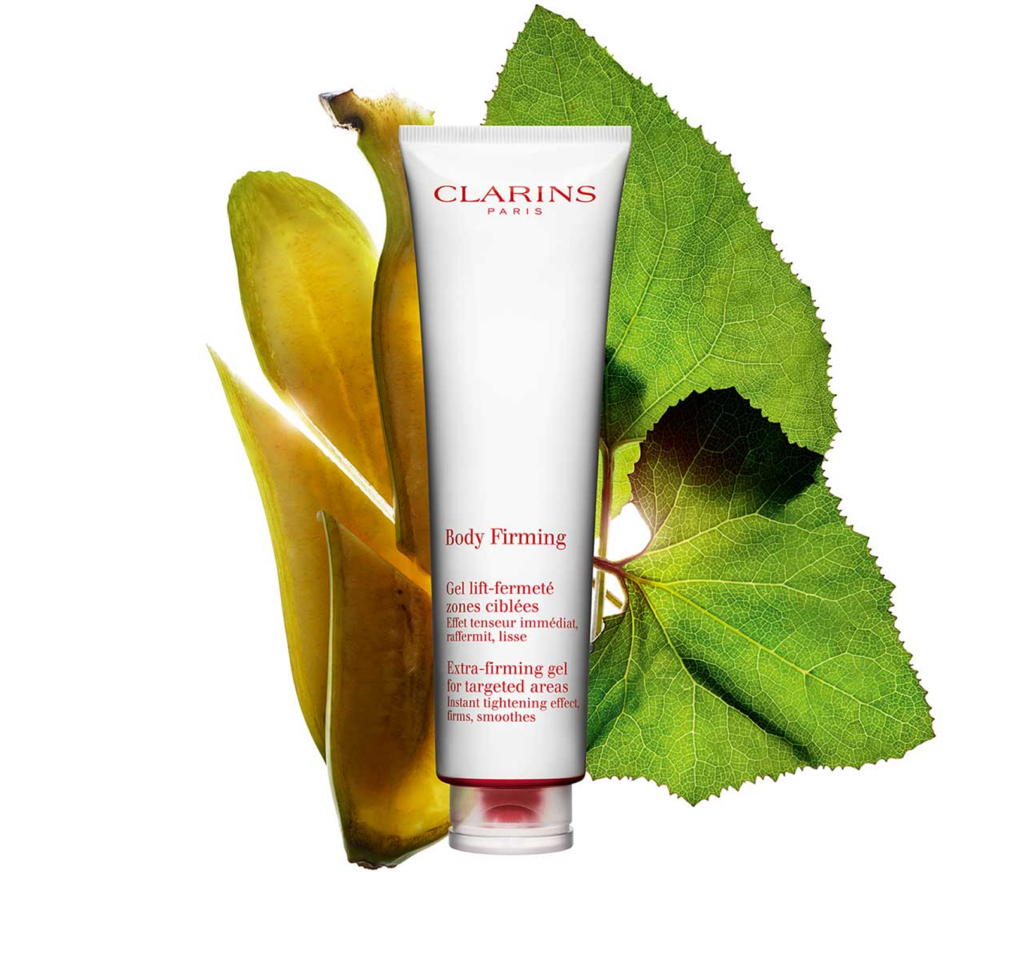
For years, the industry responded to body skin with quick solutions: reduce, tighten, eliminate. But biology doesn’t work that way.
The difference between intervening and sustaining
Caring for the skin of the body is not about constantly intervening. It is about sustaining it and that implies changing expectations. Understanding that there are no immediate results that define the process, but a progressive construction that is perceived over time.
The body does not respond to intensity, it responds to repetition and within that logic, some brands do not need to adapt to the current conversation. They only need to be understood within it.
Looking at the body again
What is changing in 2026 is not the skin. It is the way we look at it.
The body stops being a territory that needs to be constantly corrected and begins to be a space that needs to be understood, supported and sustained and in that shift, everything that once seemed basic acquires a different weight: it becomes essential.