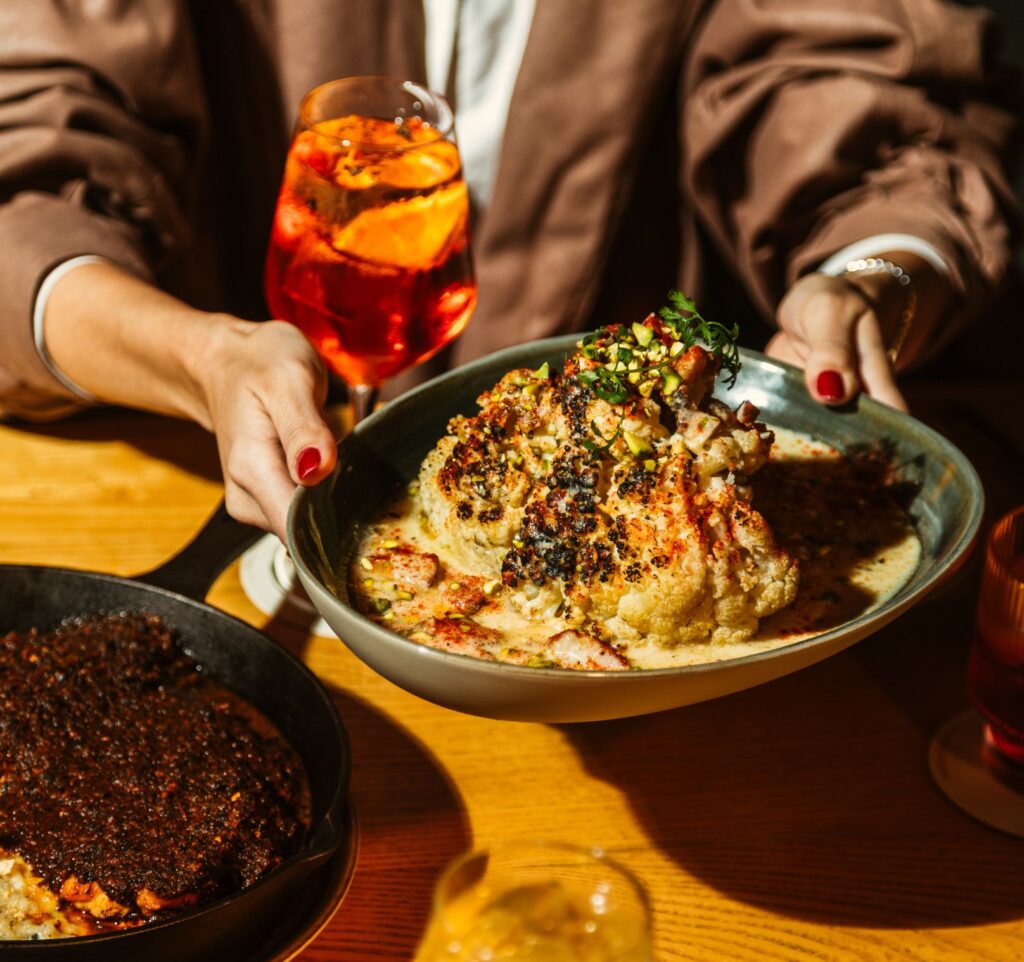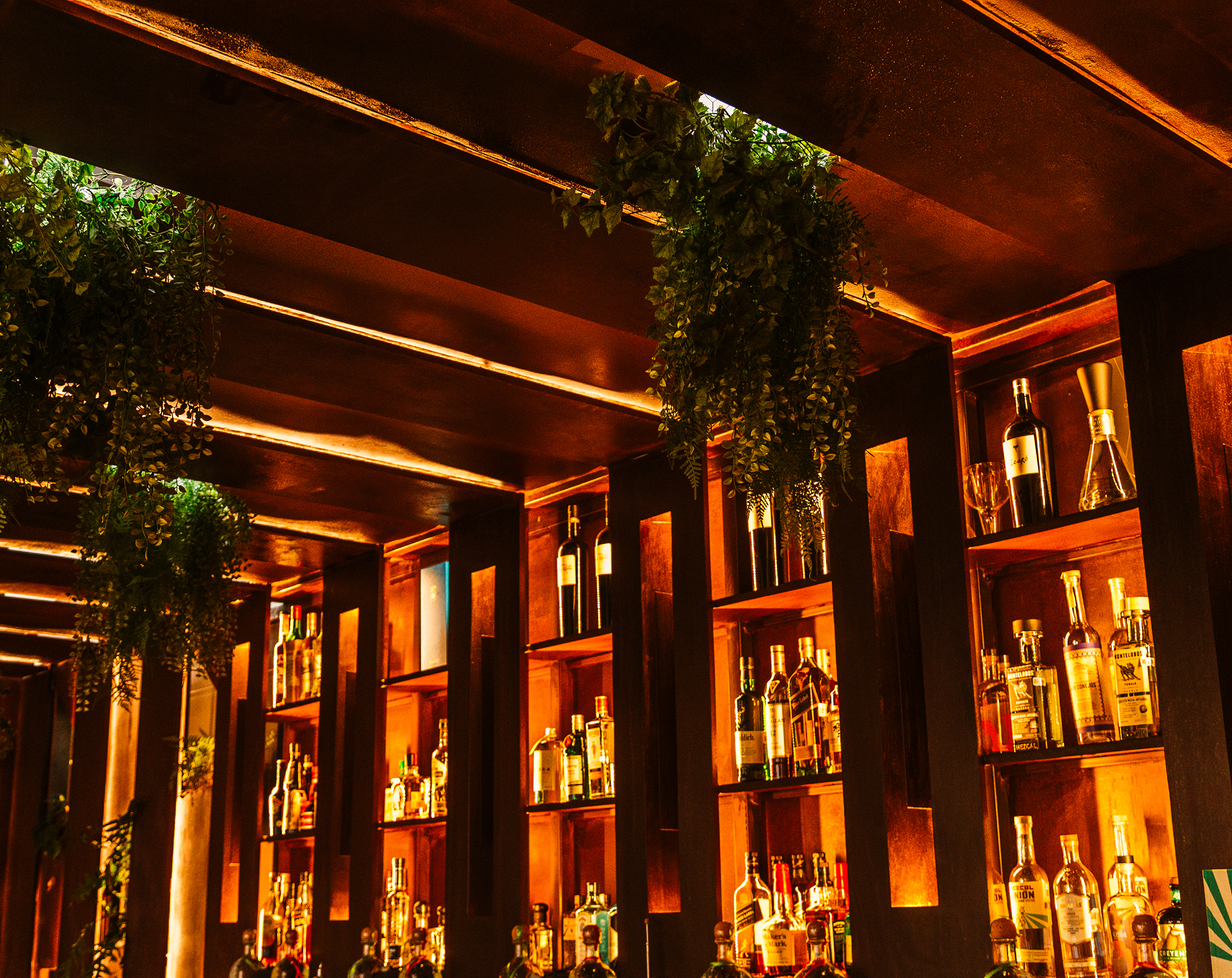
There is a moment at Fuego when the smoke appears before anyone says what they ordered. It is not a gesture or a service trick; it is the consequence of a kitchen that works with open fire constantly. The smell comes first, settles at the table and, without asking permission, begins to shape the experience.
In a city like Mexico City, where gastronomy often moves between aesthetics and speed, Fuego takes a different direction. It does not try to translate cooking into an image, nor to optimize the table for turnover. It starts from something more direct: the ember as a system.
Author: Claudia Valdez
Real fire, direct flavor
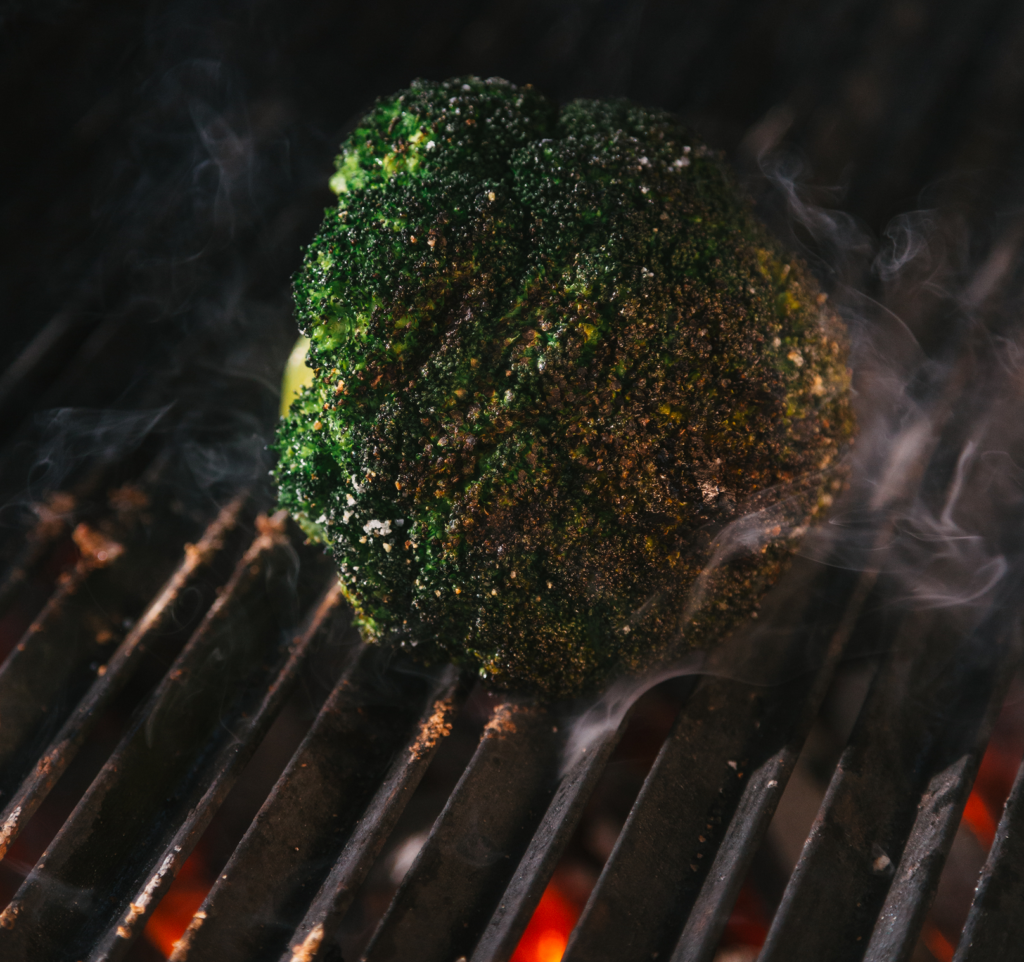
Here, everything goes through open heat. Smoke is not used to perfume, but to transform. Fat deepens, acidity appears as structure, heat cuts when it needs to. There is no intention to correct or to balance in order to please. There is a decision to take each element to the point where the flavor sustains itself.
That changes how the plate is read. It is not about identifying ingredients or decoding combinations. It is about a more immediate reaction: understanding, from the first bite, where the kitchen is going.
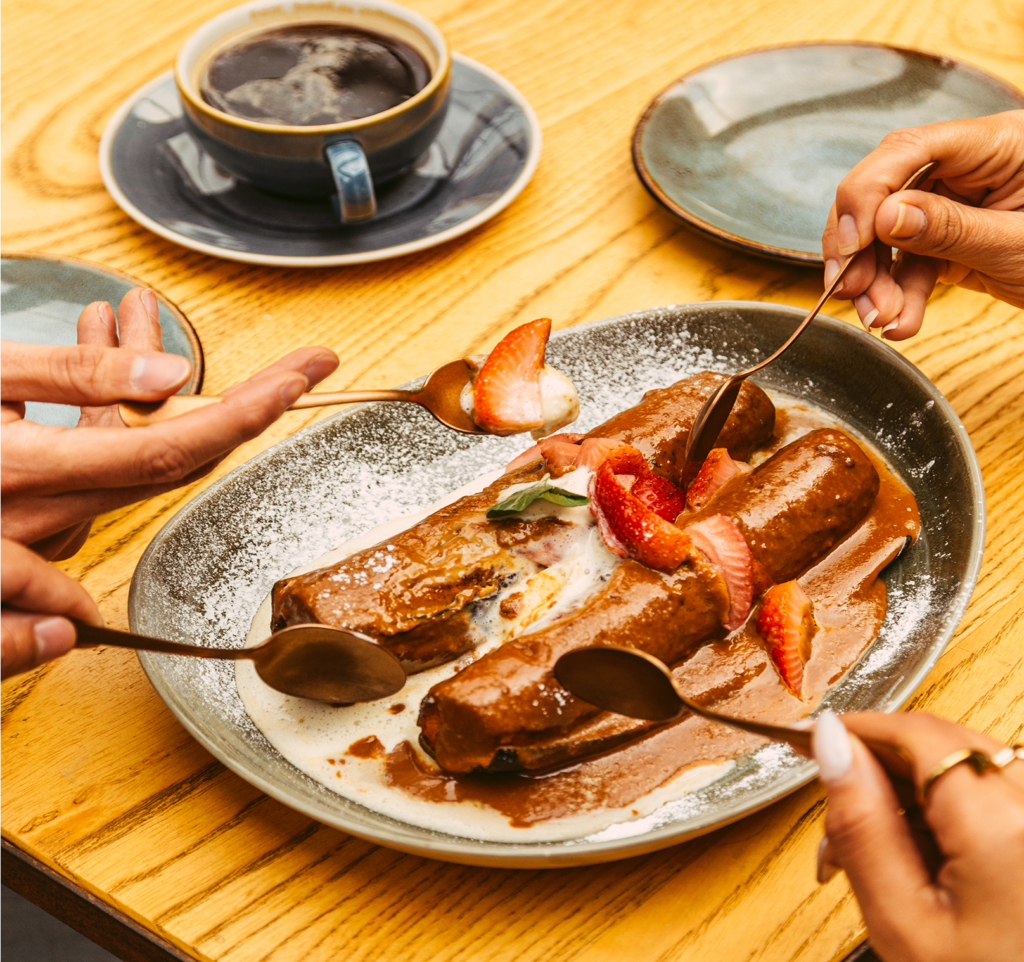
The smell comes first, settles at the table and, without asking permission, begins to shape the experience.
A menu that does not stay still
The menu does not behave like a fixed list. It changes, adjusts, lets go of what does not work. Specials can remain, dishes can disappear. There is no intention to build permanence through repetition, but through judgment.
That logic is less visible, but more demanding. It requires that every decision, from the oily base to the point of cooking, be solid enough to stand without relying on familiarity.

The bar follows the same logic
The smoke does not stay in the kitchen, it reaches the glass. The cocktail program moves from classic structures, but incorporates smoky notes that do not function as an effect, but as a layer. There is no theatrics, no artifice. The smoke integrates and quietly shifts the perception of the drink, aligning the bar with what happens in the kitchen. Together, food and drink stop competing for attention and speak the same language.
Location matters. Roma Norte is, by definition, a neighborhood in motion. But Fuego does not settle at street level, it rises just enough to filter that rhythm.
Colonia Roma, but at a different pace
Location matters. Roma Norte is, by definition, a neighborhood in motion. But Fuego does not settle at street level, it rises just enough to filter that rhythm. The terrace does not isolate, but it slows things down. The city becomes a backdrop, not a constant stimulus.
That small shift changes everything. The table stops being a point of transit and becomes a place to stay.
The table as a shared gesture
Many of the dishes arrive at the center, not as a concept, but as a natural dynamic. They are shared, passed around, experienced together. It is a simple gesture, but it defines the experience: the meal stops being individual and becomes something built among those who are there.
There is a familiarity in that which rarely appears in restaurants, something closer to how people eat at home. The desserts, deliberately less contained, follow that same logic. They do not close the meal, they extend it.
Time is not negotiated
In a city where everything moves at a marked pace, Fuego introduces a pause that does not need to be announced. There is no pressure to finish, no urgency to free the table.
After-meal time is not an extra, it is part of the system. The service understands this without overstepping. It accompanies, but does not direct. It allows the experience to hold itself without pushing it in any direction.
What remains
Fuego does not try to be the place of the moment. It is not built from a narrative. It simply holds onto something more difficult to replicate: a kitchen that is not translated, but felt; a bar that does not distract, but accompanies; and a space where time does not accelerate.
In Mexico City, that is not common, and that is why it stays.