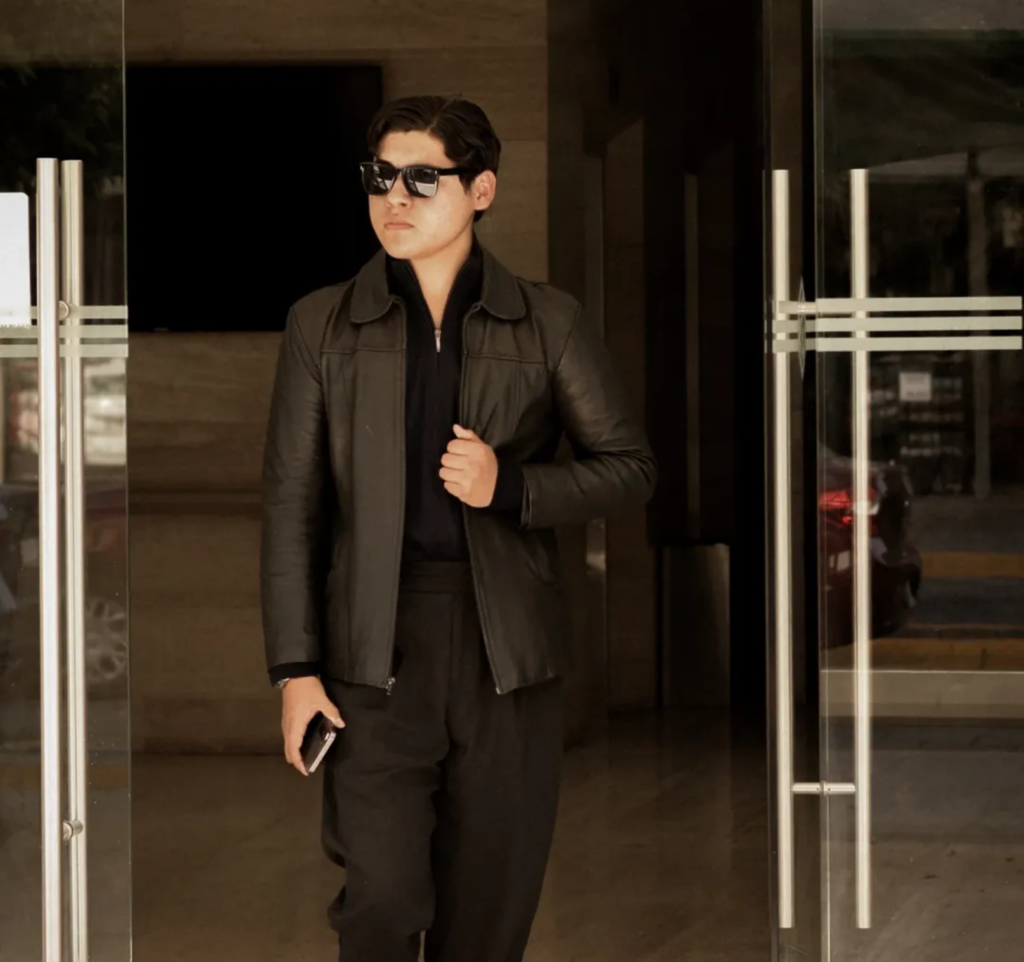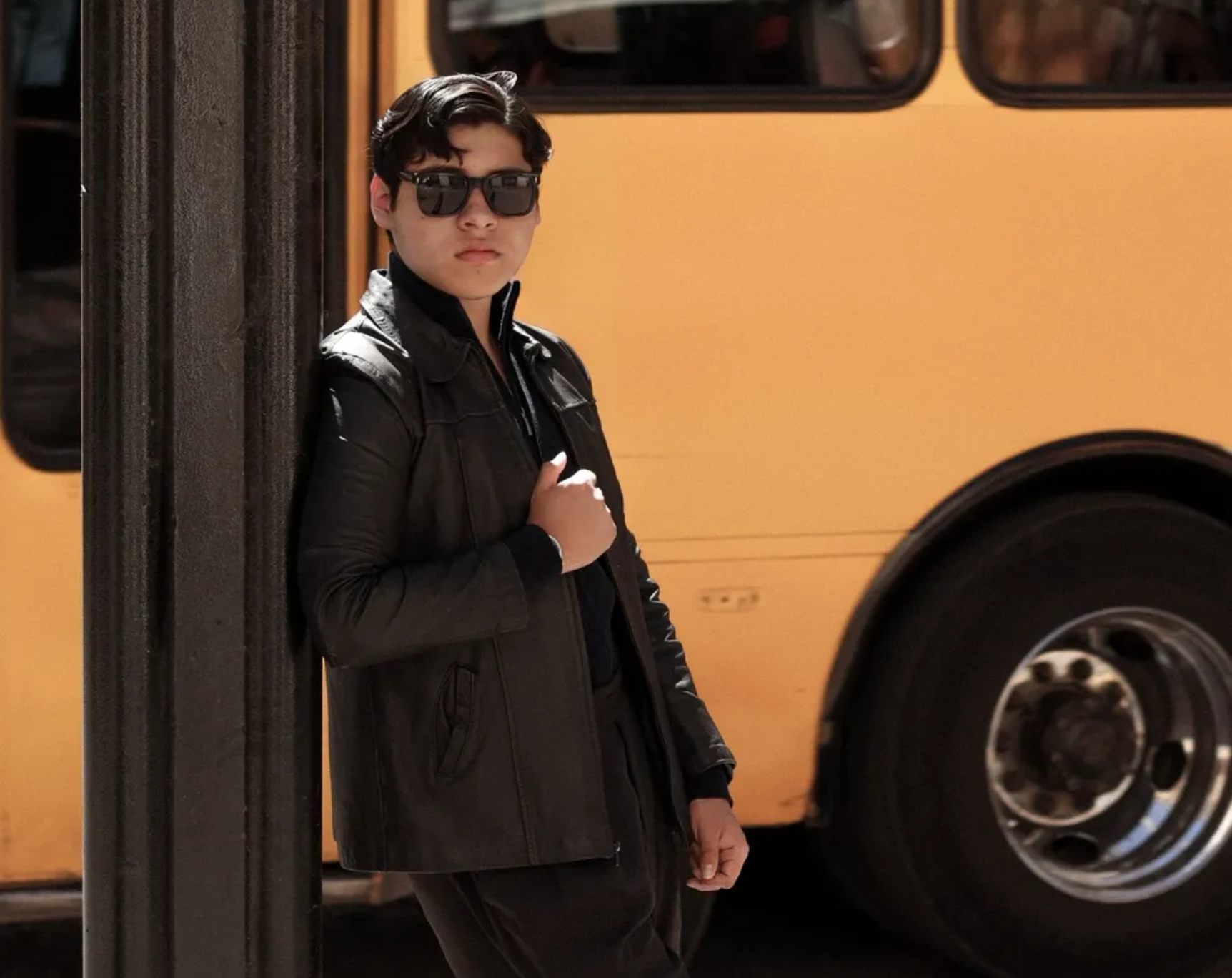
In a moment when the digital menswear industry seems to move at the speed of replication, trends that emerge, saturate, and disappear within days, pausing to build a personal identity becomes almost an act of resistance. Guillermo Herrera belongs to a generation exposed to everything, yet defined by very little.
And yet, his approach does not respond to that urgency. There is no intention in his work to encompass everything, nor to adapt to every code that appears. Instead, there is a more complex decision: to edit himself while he builds. From the outside, his proposal can be read through recognizable codes, a clean aesthetic, a sensitivity toward structure, a notion of elegance that does not rely on excess, but what truly sustains it is not what is visible, but the process. Because if anything becomes evident when observing him, it is that Herrera is not trying to arrive quickly at a result. He is trying to understand what that result actually means.
In conversation with Topics That Transform, he speaks from that place: not from a closed narrative, but from a line of thought that is still forming, yet already has direction.
Author: Claudia Valdez
Intuition as a starting point
“My style has not been something immediate, but rather a constant process of adjustment. It does not come from copying references, but from understanding what represents me and what I want to communicate.” What may seem like a simple statement actually defines a position. In an industry where reference is often the starting point, Herrera reverses the logic: first the criteria, then the aesthetic.
“As I find my place within the industry, I also filter influences and experiences to build an aesthetic identity that feels honest, even if it is still evolving.” That word, filtering, appears as a constant axis. It is not about rejecting the external, but about not absorbing everything, about deciding what stays and what doesn’t, about understanding that identity is not built through accumulation, but through selection.
“Many decisions don’t come from certainty, but from a very clear sense of what feels right. At this early stage, trusting that instinct has been more valuable than trying to fit into already established formulas.” In that context, intuition stops being a soft tool and becomes a form of direction. It does not replace analysis, but it precedes it. It sets the boundary before the external begins to dilute it.
Getting dressed, then, stops being a superficial act. “Through the process, I’ve learned that dressing is also a form of self-knowledge. Beyond trends or rules, it’s about observing: what makes you feel secure, what makes you uncomfortable, what you project without realizing it. The way I dress has become a tool to understand who I am and how I want to position myself, even before saying a word.” What he describes is not simply style, but a way of reading himself before projecting outward. Everything stems from an internal system, ideas, beliefs, values, that ultimately defines not only his image, but the person he is building.
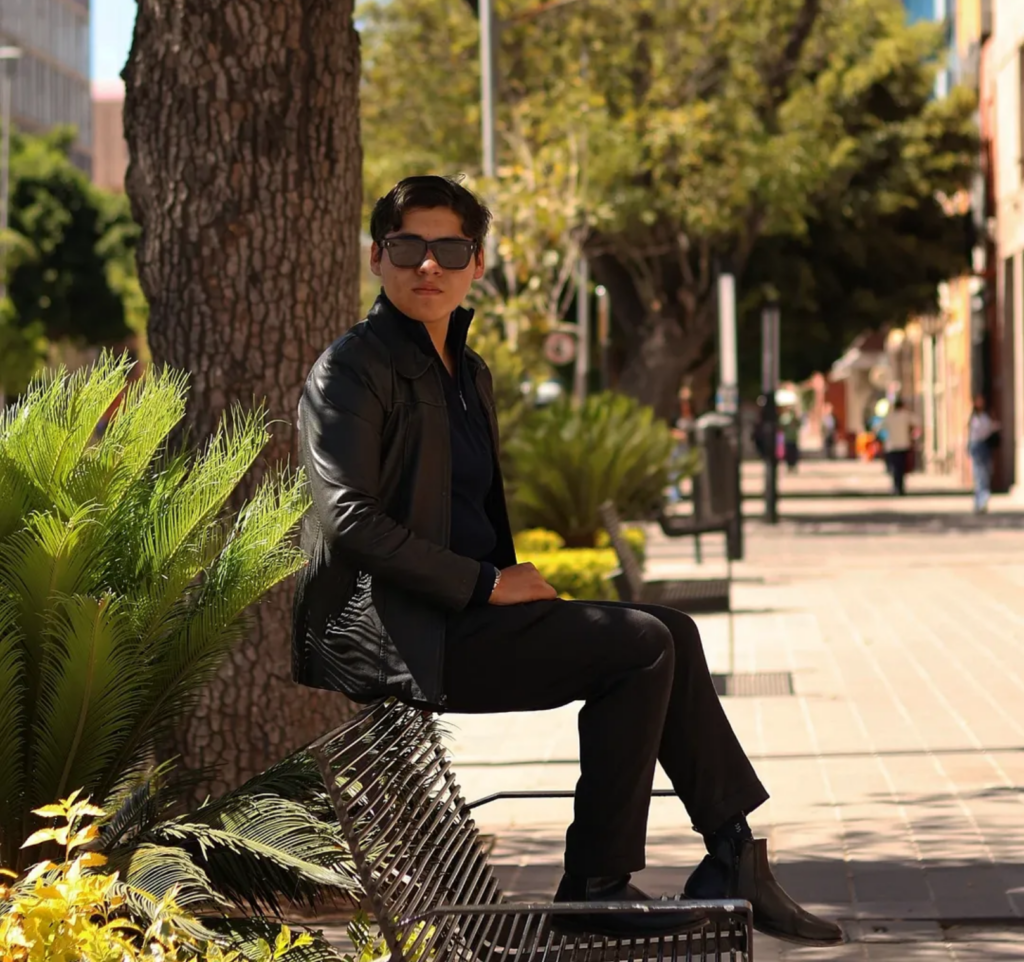
Building without losing direction
There is something particularly precise in the way Herrera speaks about youth. Not as a chaotic stage that justifies confusion, but as a moment where, if chosen, clarity can exist. “I’ve understood that youth does not have to be synonymous with chaos. For me, balance lies in experimenting, but with intention. It’s not about trying everything, but about knowing why you are trying it.”
That difference, which may seem minimal, is what allows him to move without fragmenting. Changing without losing a line. Evolving without diluting himself. Because behind every image, there is a process that is rarely seen. “Most of the time, people only see the final result, but my creative process is deeply tied to what I observe and how I process that information. Researching references, analyzing details, saving ideas, even questioning what I’ve done before… all of that happens off camera.” That “off camera” is where his language is truly built. Not in the publication, but in what precedes it.
“Getting dressed became a way of understanding who I am before explaining it.”
As his visibility grows, so does his need to protect that space. “As visibility increases, I’ve also understood that not everything external should come in. I think it’s important to protect your criteria, your sensitivity, and your way of seeing things. Because it’s very easy to dilute yourself when you start listening to too many voices at the same time.” In an environment that constantly pushes toward exposure, his decision is not to close himself off, but to draw boundaries.
His relationship with influence follows the same logic: “I don’t see it as someone who already has answers, but as someone who is still in process. If something I do resonates with others, let it be from authenticity, not from a position of authority.”
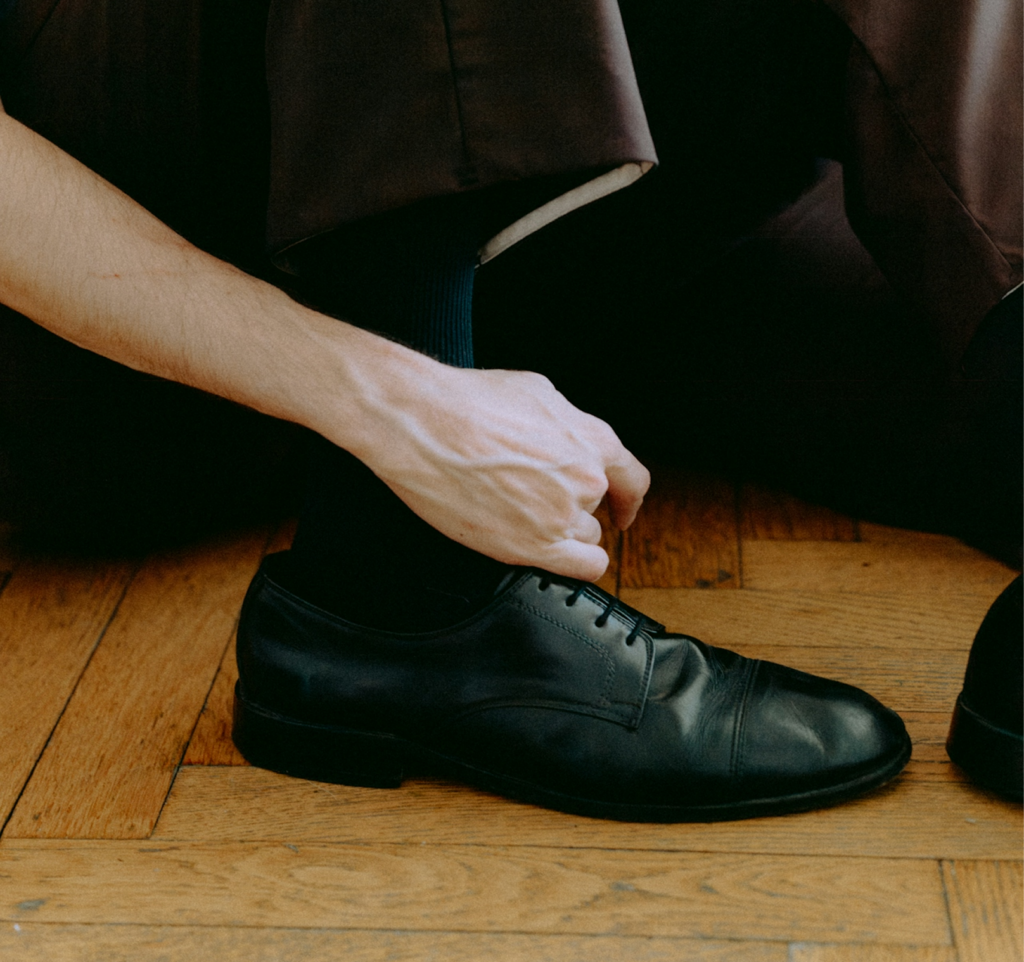
“I’m not interested in arriving fast, I’m interested in building something that is truly mine.”
And perhaps that is the most interesting point of his positioning: he does not try to occupy a place that does not yet belong to him. But neither does he minimize himself. He simply builds.
More than an arrival point, what interests him is direction. There are goals, professional and academic growth in what he is passionate about, building a family, but they do not function as an urgency to define himself, rather as a guide that accompanies the process. What makes Guillermo Herrera relevant is not only his aesthetic, not even his potential. It is his way of understanding process in a moment where everything seems to demand immediate results.
While others rush to define themselves, he chooses something more uncomfortable, but far more solid: to define himself well. And in that decision, still in progress, there is already a position.