
For years, facial care was built on a flawed logic: correction.
The surface had to be exfoliated, stimulated, forced into renewal. It burned, peeled, reacted. And that sacrifice was mistaken for efficacy.
Today, that narrative is beginning to fracture.
Hydrafacial does not appear as a novelty, nor as a disruptive promise. It appears as a consequence. As a response to a more mature understanding of the face: a living, complex organ, deeply sensitive to balance.
Author: Claudia Valdez
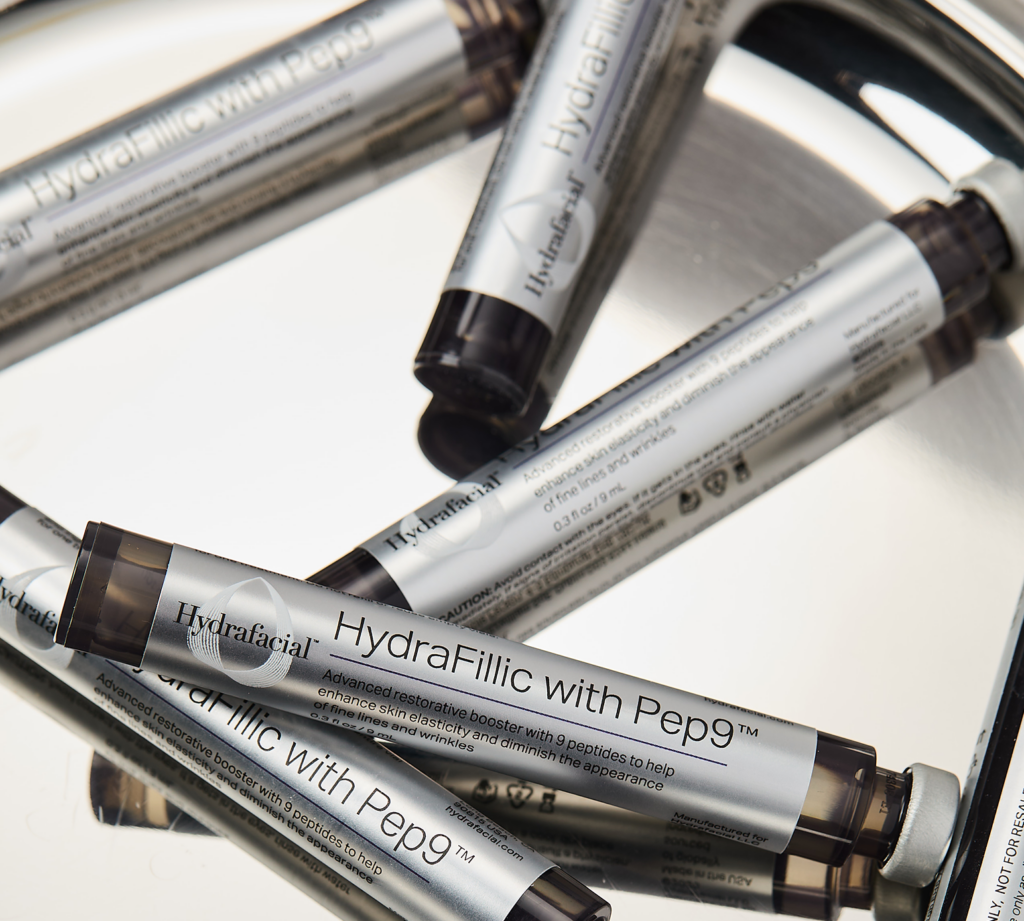
A delicate architecture
The face does not function like the rest of the body. Its tissue is thinner, more reactive, more exposed. It is designed to protect, regulate, and interact continuously with its environment. The epidermis, particularly the stratum corneum, is not an inert barrier, but a dynamic system that manages water, lipids, microbiota, and biochemical signals essential to homeostasis.
When this architecture is disrupted, by chronic stress, pollution, over-exfoliation, repeated invasive treatments, or poorly understood routines, the tissue does not improve. It defends itself. It becomes inflamed, sensitized, overproduces sebum, and loses clarity.
This is where the real conversation begins.
Hydrafacial and the logic of biological respect
Hydrafacial works not because it is aggressive, but precisely because it is not.
Its vortex-fusion hydrodermabrasion technology allows cleansing, gentle exfoliation, extraction, and infusion of active ingredients in a single continuous flow, without friction or trauma. It does not compromise the skin barrier to prove results. It respects it, allowing the tissue to function as intended.
The distinction is fundamental: skin that is not inflamed responds better.
Unlike intense mechanical or chemical exfoliation, the Hydrafacial protocol does not interrupt the natural cellular renewal cycle. It supports it. It removes debris, oxidized sebum, and dead skin cells without disrupting the structure.
The result is not “perfect” skin. It is functional skin.

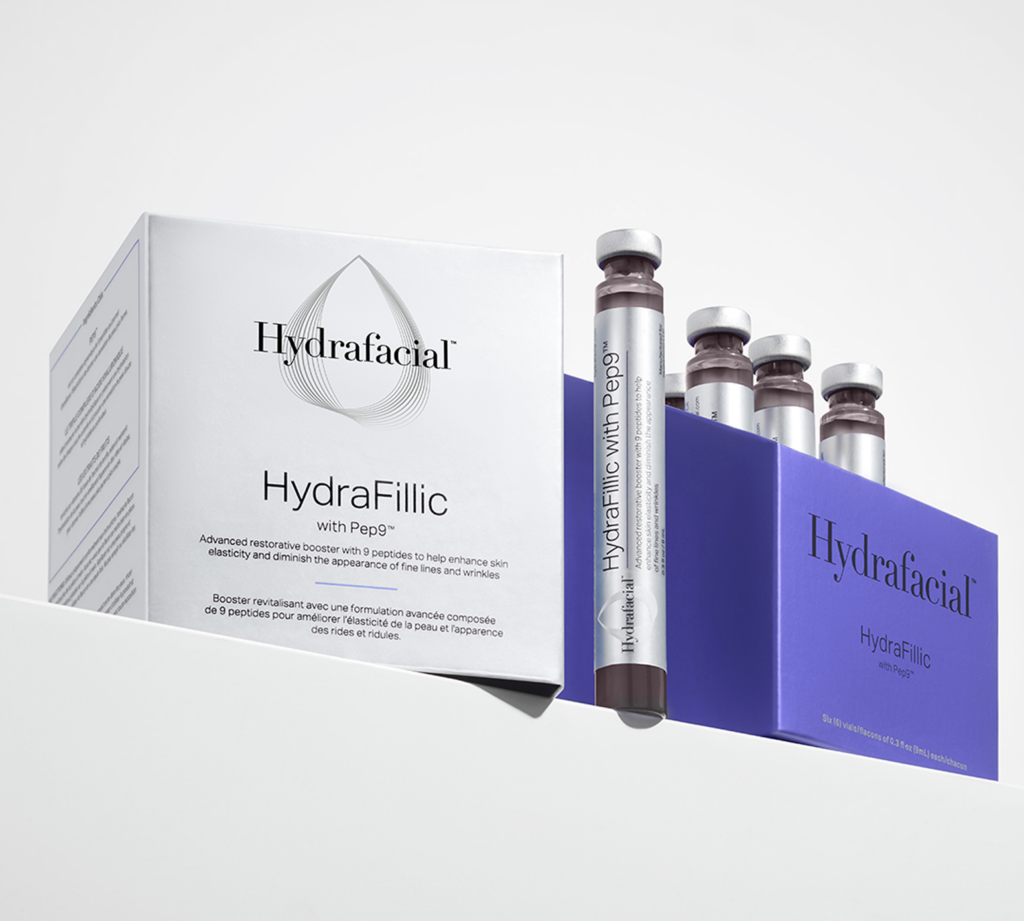
Hydration as a process, not a patch
One of the most relevant, and least understood, aspects of the Hydrafacial system is that hydration does not appear at the end as a corrective gesture. It is built throughout the entire treatment.
Clinical boosters, designed to integrate seamlessly during the session, follow a logic of biological support. The HydraFillic™ Booster, for example, combines:
- Multi-weight hyaluronic acid, capable of acting across different skin layers
- PEP9 Complex, a synergy of nine peptides that support elasticity and firmness
- Antioxidant fruit extracts, which help combat oxidative stress and reinforce barrier function
The goal is not to “fill,” but to teach the tissue to retain, to restore hydration memory and structural stability.
Other boosters are formulated to address irregular texture, fine lines, dullness, or subclinical inflammation, always through a cumulative, non-invasive approach.
System, not surface
What truly matters about Hydrafacial is not the machine. It is the philosophy behind it.
Treating the face as an interconnected system means understanding that cleansing, extraction, and hydration are not isolated steps, but processes that must dialogue with one another. When that dialogue exists, there is no need to “recover” from the treatment. The response is natural.
That is why there is no forced downtime. No redness as proof of efficacy. No reliance on impact, only on consistency.

Why it remains relevant
Hydrafacial remains relevant because biology has not changed.
What has changed is our relationship with it.
Today, we understand that:
- chronic inflammation accelerates aging
- a compromised barrier ages poorly
- healthy radiance does not come from trauma
- consistency outperforms intensity
Within this context, Hydrafacial stops being “a treatment” and becomes a maintenance tool, aligned with a more intelligent and sustainable vision of facial care.
Hydrafacial does not promise miracles. It doesn’t transform faces or sell epic narratives. It does something more complex, and today, more relevant: it respects biology. And in an era of over-intervention, over-exposure, and excess stimulation, that is not basic. It is profoundly contemporary.