There are symbols that decorate, and others that organize meaning. The monogram of Louis Vuitton belongs to the latter. It does not merely identify a brand; it functions as a language, a visual structure capable of moving across generations, cultural shifts, and creative transformations without losing coherence.
In an industry obsessed with novelty, permanence has become the true luxury. And few visual codes have demonstrated such a solid relationship with time as this one. At 130 years old, the monogram does not present itself as a relic, but as cultural infrastructure.
Author: Claudia Valdez
When luxury required protection, not spectacle
At the end of the 19th century, luxury was not built through constant visibility or marketing logic. It was shaped by craft, durability, anxd travel. Within that context, visual identity served a strategic purpose: to protect origin in a market where imitation was beginning to proliferate.
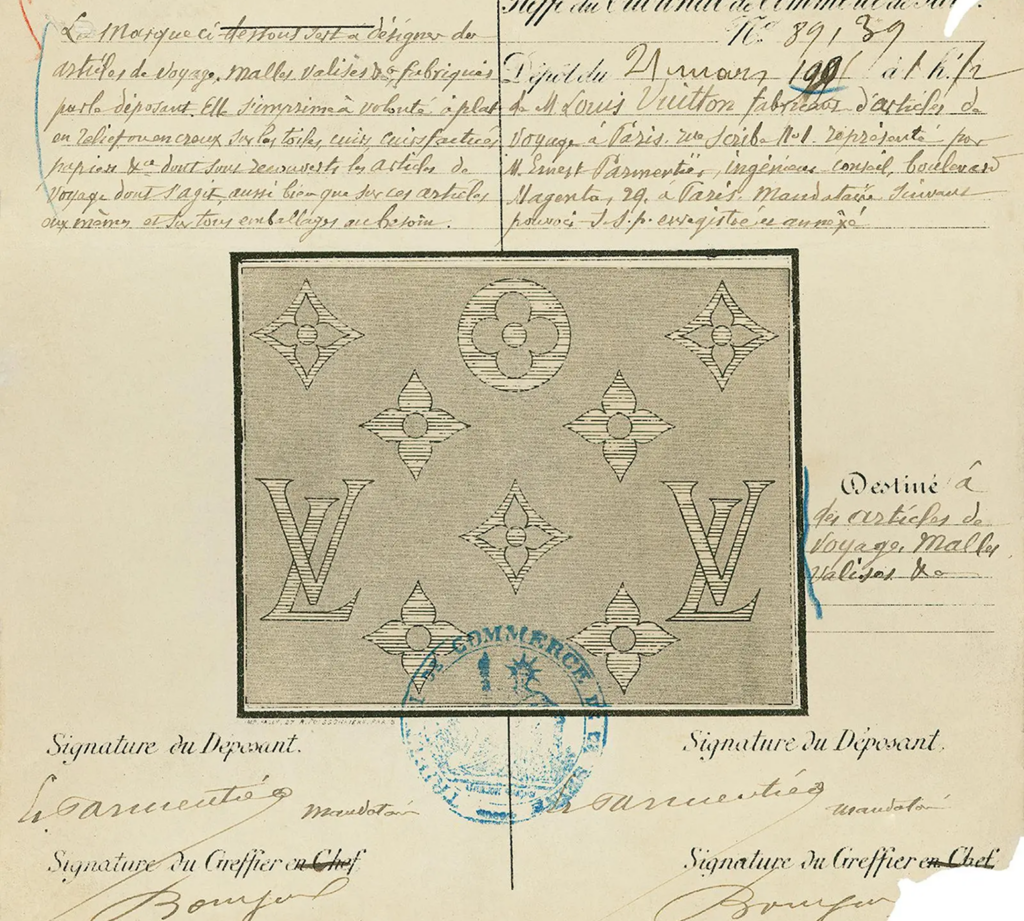
The monogram emerged as a structural decision, not an ornamental gesture. Designed in 1896 by Georges Vuitton, its logic was based on repetition, symmetry, and immediate recognition. It was not meant to seduce; it was meant to distinguish. And that distinction is key to understanding its longevity.
Symbols born from function, rather than trend, tend to establish a more stable relationship with time.
Before the monogram: design as system
The monogram did not emerge in isolation. Earlier patterns, such as the Damier, already reflected an early understanding of something that today feels obvious: in luxury, identity is designed. Not as decoration, but as visual infrastructure.
This continuity reveals a long-term vision. Design was not conceived as an isolated gesture, but as a repeatable system, capable of migrating across objects and contexts without losing strength. This is why the monogram was able to outlive the object it first adorned and become an autonomous code.
From visual defense to cultural desire
Over the decades, the meaning of the monogram shifted. What began as a mechanism of protection evolved into a symbol of aspiration. Not because it lost its original function, but because the identity it safeguarded became desirable.
That transition, from defense to desire, marks one of the most compelling moments in the history of modern luxury. The monogram stopped speaking solely about origin and began to speak about cultural belonging. Recognizing it became a way of reading the world of luxury itself.

Reinterpreting without dilution: the monogram through different creative visions
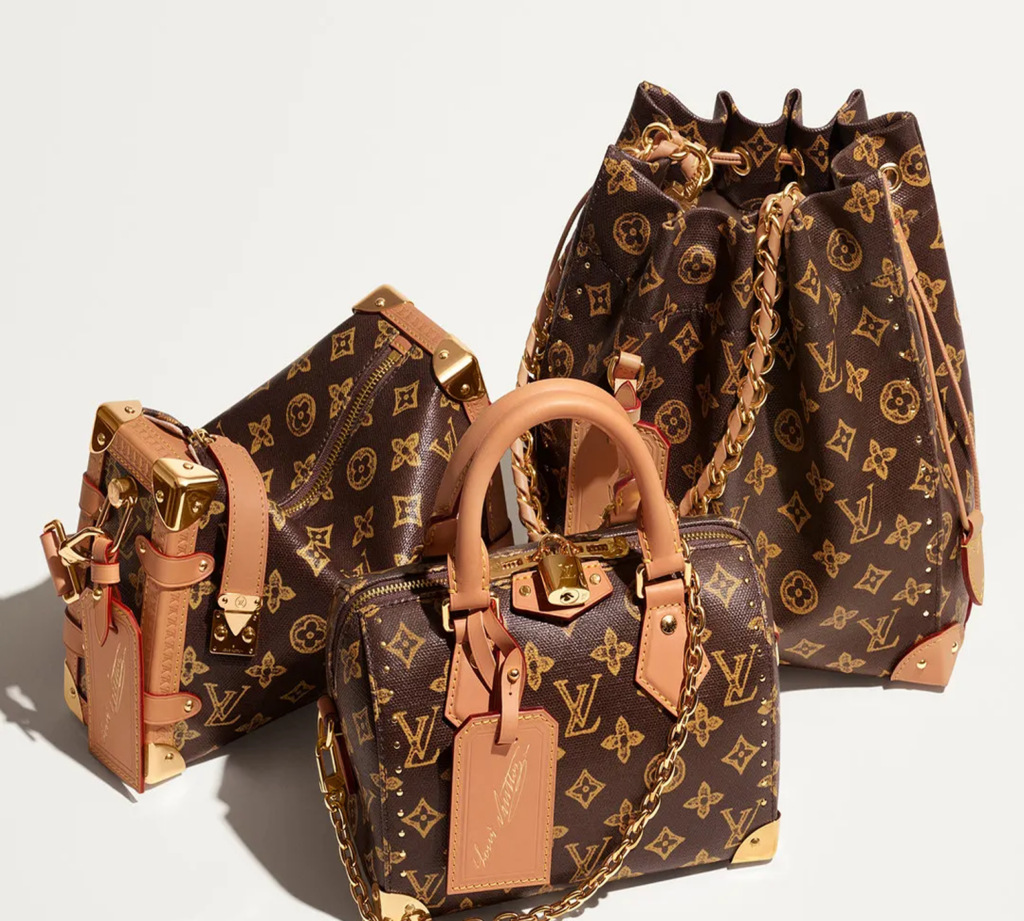
One of the reasons the monogram remains relevant is its ability to welcome reinterpretation without losing identity. Under the direction of Marc Jacobs, the monogram opened itself to artistic collaborations that moved it beyond strictly classical territory and into contemporary visual culture.
The interventions of Stephen Sprouse and Takashi Murakami marked a turning point: the monogram ceased to be untouchable and became a canvas. It did not lose value; it gained layers of meaning.
Later, Virgil Abloh reinterpreted it through a generational lens, connecting it with new audiences without erasing its historical weight. That trajectory confirms a fundamental idea: strong symbols do not break when reinterpreted, they expand.
Travel, archive, and visual memory
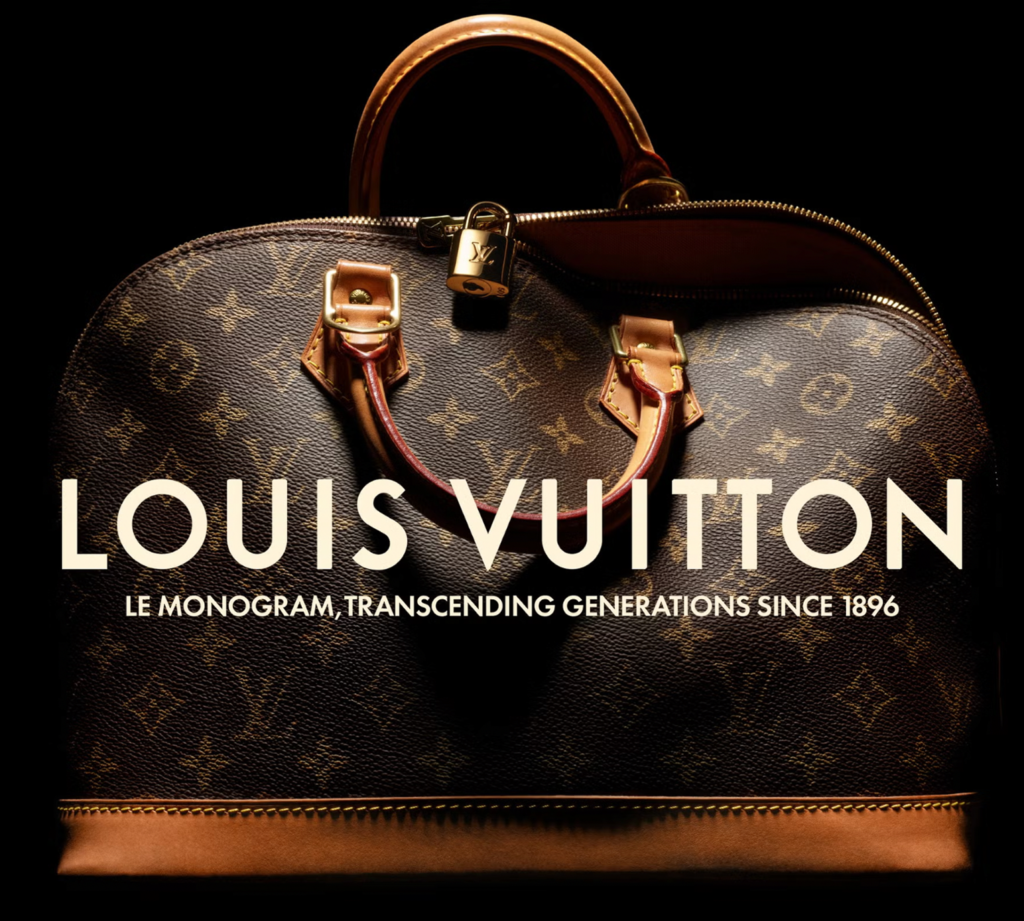
The monogram is deeply tied to the culture of travel, one of the founding pillars of the maison. Trunks and objects designed to last decades built a narrative in which luxury was not ephemeral, but accumulative.
This relationship with the archive explains why the monogram functions today as visual memory. It refers not only to a product, but to a way of understanding time, movement, and permanence. In a present defined by immediacy, that memory has gained renewed value.
Remaining in the age of the ephemeral
In today’s visual ecosystem, saturated with stimuli, symbols are born and disappear rapidly. The relevance of the monogram is not explained by insistence, but by structure. It does not compete with the new; it positions itself as a stable axis around which narratives can revolve.
Today, true luxury lies not in producing more signs, but in sustaining those that have already proven their ability to move through time.
Beyond fashion
To speak of the Louis Vuitton monogram is not to speak only of accessories or collections. It is to speak of how design can become cultural capital. Of how a well-constructed visual code can traverse fashion, art, and society without dilution.
When a symbol reaches that level of resonance, it no longer belongs solely to a fashion house, it becomes part of the collective imagination of contemporary luxury.
A language that does not age
The monogram’s relevance today is not rooted in nostalgia, but in its capacity for conscious adaptation. It does not depend on trend; it depends on meaning. And when meaning is solid, time ceases to be a threat and becomes an ally.
In a world where everything feels ephemeral, the monogram reminds us that design, when born from a clear idea and a long-term vision, can transcend fashion and become cultural language.