Not all flagship stores aim to dominate.
Some aim to be inhabitable.
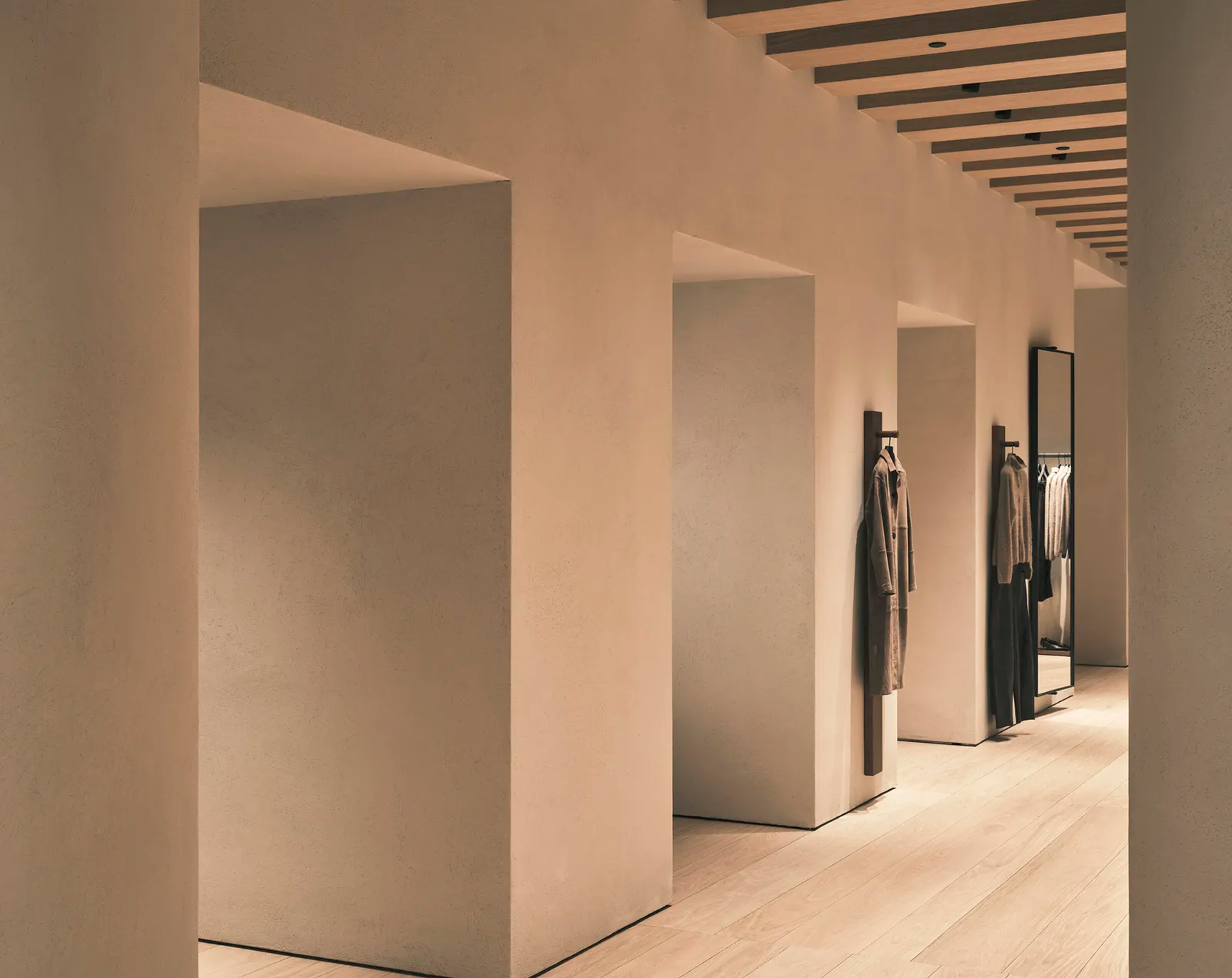
Zara’s new flagship store in Barcelona, located on Avenida Diagonal, deliberately distances itself from traditional commercial spectacle. Designed by Belgian architect Vincent Van Duysen, the space is conceived as a contemporary domestic architecture: restrained, quiet, and meant to be experienced over time.
More than an aesthetic decision, the space operates as a cultural reading of the present, where the home has taken on a central role as refuge, workplace, emotional setting, and extension of identity.
AUTHOR: Claudia Valdez

Vincent Van Duysen and Zara: A Relationship Built Through Space
Vincent Van Duysen is internationally recognized for an architectural language that prioritizes proportion, materiality, and everyday experience over iconic gesture. His work is defined by precise restraint, where spaces are shaped by real use and permanence rather than theatricality.
His relationship with Zara predates this flagship. Since 2022, Van Duysen has collaborated with the brand through Zara Home, developing collections of furniture and objects that share a consistent philosophy: honest materials, refined forms, and a notion of luxury rooted in calm.
The Barcelona flagship marks the first time this vision is translated into the complete architectural design of a Zara store, extending Van Duysen’s domestic language to the full scale of a commercial environment.
“Not all flagship stores aim to dominate.
Some aim to be inhabitable.”
Why Avenida Diagonal?
The choice of Avenida Diagonal follows a clear urban logic. It is one of Barcelona’s most important structural axes, where architecture, commerce, and everyday life coexist continuously.
Opening here is not only about commercial visibility, but about insertion into a consolidated urban context with a strong relationship between city life, design, and daily activity. For Zara, Avenida Diagonal provides the appropriate setting for a flagship that prioritizes permanence and connection to its surroundings over immediate impact.

An Architecture That Slows Down
In contrast to the accelerated rhythm of contemporary retail, this flagship adopts a different stance: lowering the volume.
Van Duysen’s architecture organizes the space as a sequence of connected environments, closer to rooms than to conventional retail sections. Materials such as wood, stone, and matte-finished metals create a tactile, restrained atmosphere, where architecture acts as support rather than spectacle.
Here, the space does not push toward rapid consumption.
It invites movement, observation, and staying.
Translating the Language of Home Into Retail
That this flagship feels like a home is not a decorative trend, but a conceptual decision.
After years in which the home absorbed emotional, professional, and social functions, Zara proposes an experience where fashion and everyday life operate as part of the same system. The integration of Zara Home pieces, many designed by Van Duysen, reinforces this reading: dressing and living are no longer separate worlds.
The store does not simply display product.
It constructs an environment coherent with how life is lived today.


“The store does not simply display product.
It constructs an environment coherent with how life is lived today.”
A Quiet Reading of the Present
This flagship does not attempt to position Zara as a traditional luxury house. Instead, it offers a more precise interpretation of the current moment: consumers seeking spaces that are less demanding, more human, and more thoughtfully designed.
By opting for a domestic, restrained, and durable architecture, the brand responds to a generalized fatigue with visual excess and the constant urgency of consumption.
Editorial Closing
Zara’s new flagship store on Avenida Diagonal is not designed to become an immediate icon, but a space that is habitable and enduring.
By translating the language of home into retail, guided by the architectural vision of Vincent Van Duysen, the brand raises a broader question about the future of physical stores: not as stages for accelerated consumption, but as architectures meant to be experienced with time.