For decades, weight legitimized the watch. The density of metal formed part of luxury’s argument: tangible presence, material permanence, physical solidity as a synonym for value. In that context, lightness was rarely celebrated.
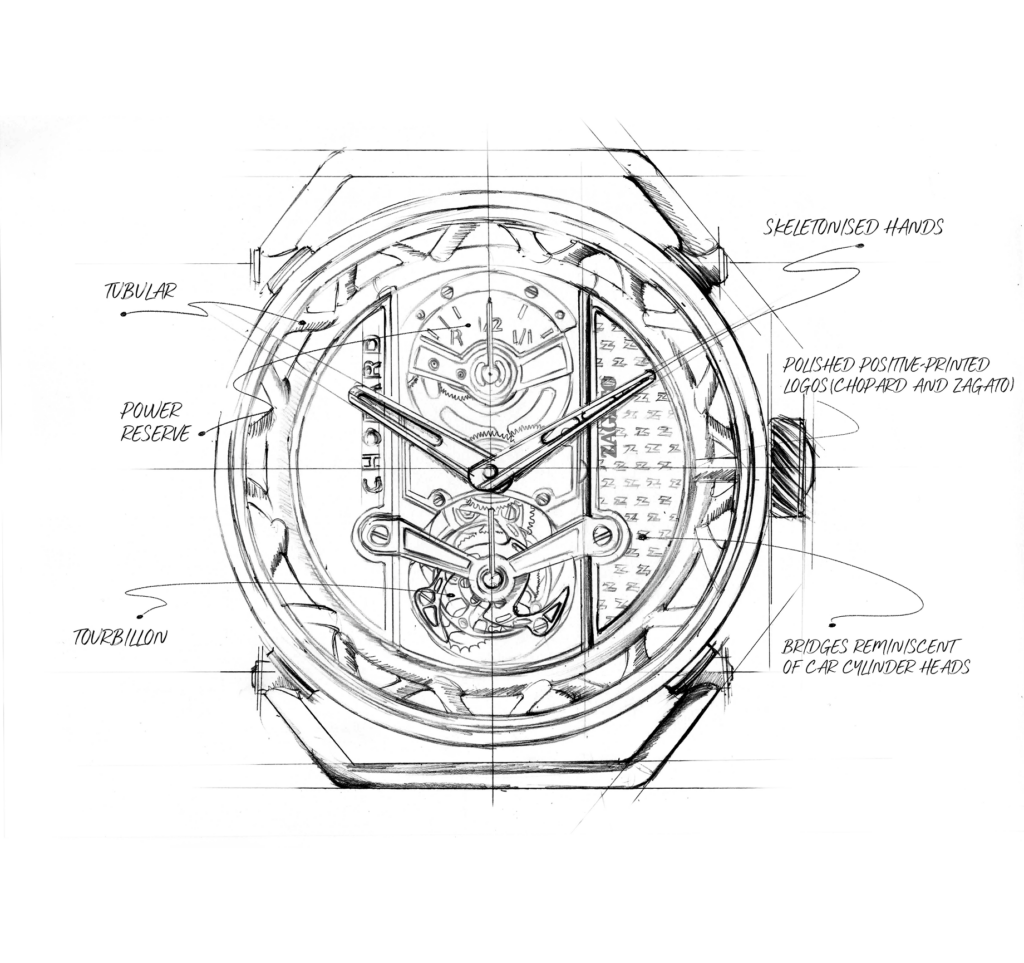
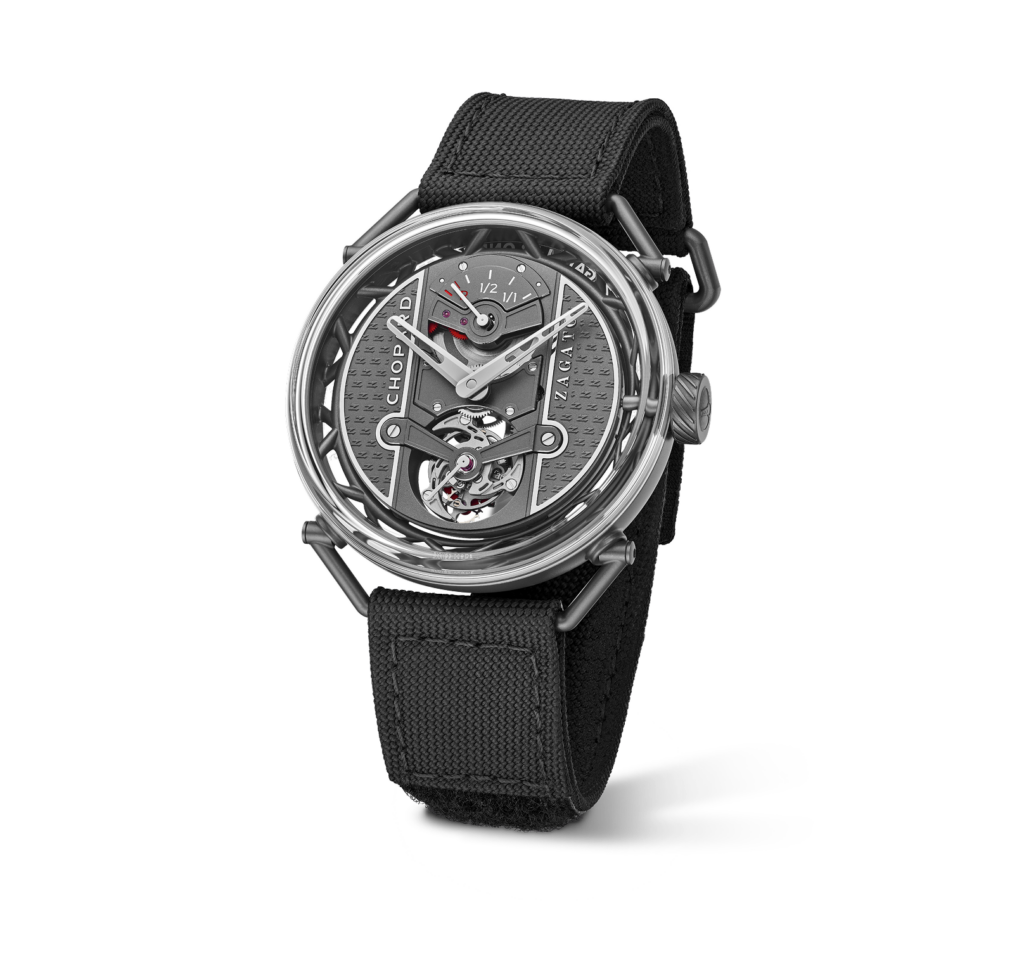
The Zagato Lab One Concept proposes a different reading. At 43.20 grams with strap, 36.5 grams without, it becomes the lightest titanium watch ever created by Chopard. Yet the number is not the headline. It is the visible consequence of a deeper investigation: how to reduce mass without compromising stability, shock absorption, or chronometric precision.
Here, lightness is not aesthetic. It is structural discipline.
Author: Claudia Valdez
Two Lineages, One Ethic
The project emerges from the dialogue between Karl-Friedrich Scheufele, Co-President of Chopard and the driving force behind the L.U.C line since the founding of the Fleurier Manufacture in 1996, and Andrea Michele Zagato, President of the Milanese design house founded on April 19, 1919.
Both maisons share more than a creative partnership. They are family-owned institutions with a historic relationship to motorsport as a culture of performance. Chopard has been the official sponsor of the Mille Miglia since 1988, the setting where Scheufele, a collector and driver himself, consolidated his relationship with Zagato.
This marks the third collaboration between the two houses. Unlike its predecessors, however, the Lab One Concept does not reinterpret aesthetic codes. It translates mechanical principles.
Zagato pioneered the application of aeronautical construction techniques to racing cars, developing lightweight tubular aluminum chassis to achieve maximum rigidity with minimal mass. That principle, structural stiffness at the lowest possible weight, is what is transferred here to the interior of the watch.
This is not visual inspiration. It is conceptual transfer.
The Laboratory as Method
“Lab” does not designate a commercial collection; it signals experimental intent. In 2020, Chopard introduced the Mille Miglia Lab One as its first concept-watch. This new iteration radicalizes that logic.
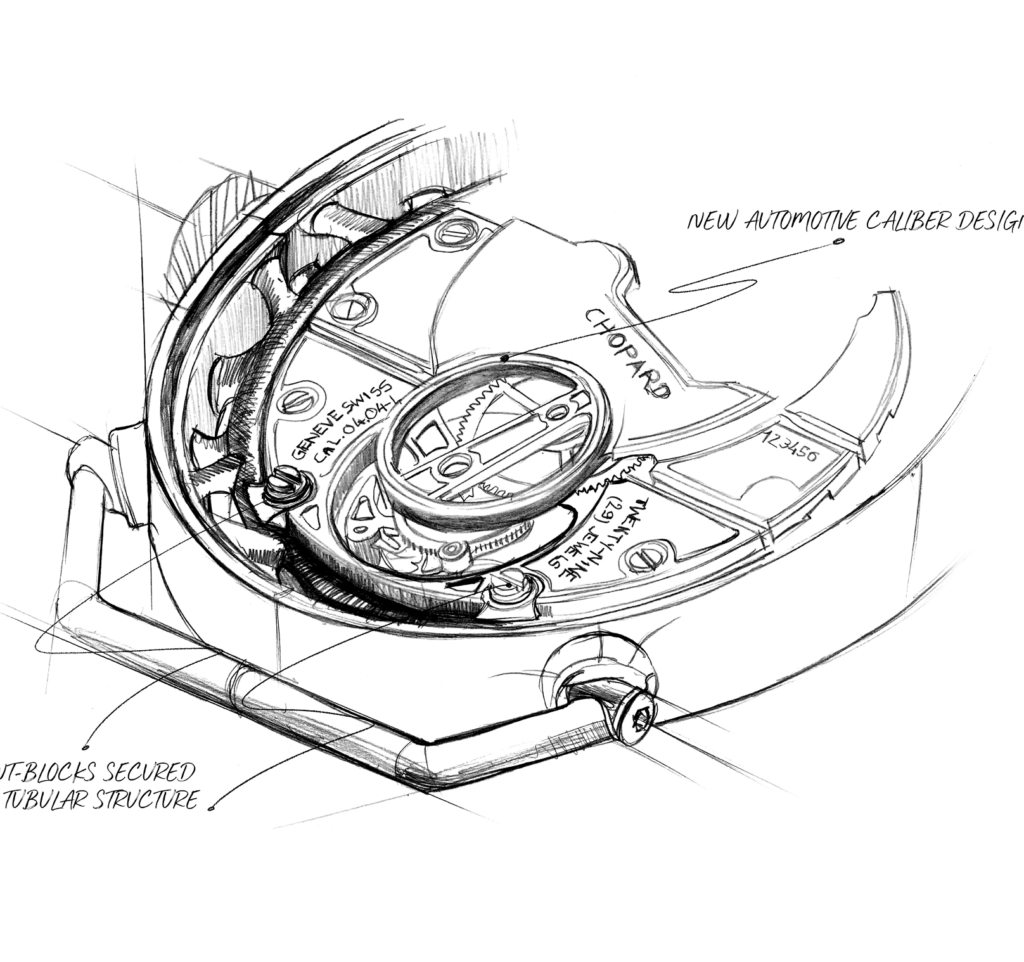
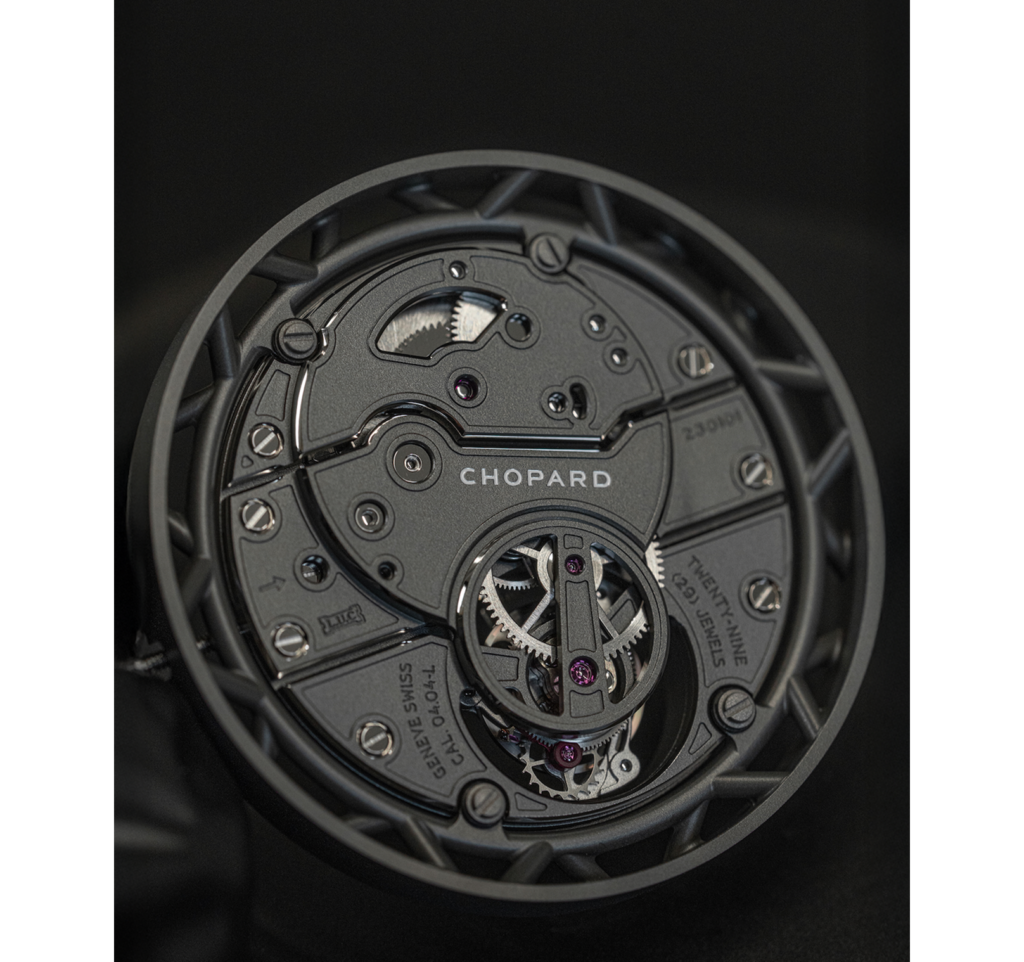
The movement adopts a structural network inspired by tubular construction to distribute mechanical stress in the event of impact. It incorporates a shock-absorption system based on silent blocks redesigned specifically for this piece, while four lever arms integrated into the case middle reinforce the protection of the calibre.
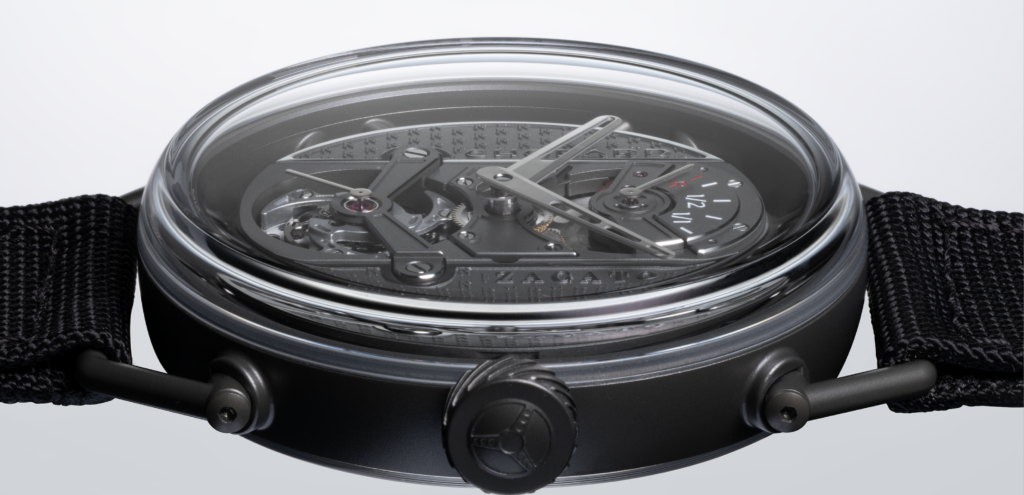
The 42 mm case, bridges, and mainplate are crafted from ceramized titanium through an electroplasma oxidation process, achieving a hardness close to 1000 Vickers and impact resistance comparable to ceramic while maintaining superior lightness. Originally developed for aerospace and automotive industries, the material presents a stable anthracite grey tone that does not wear over time.
The material choice here does not follow trend. It follows performance.
“Lab” does not designate a commercial collection; it signals experimental intent.
The Engine
At the center operates the manual-winding L.U.C 04.04-L calibre, an evolution of the Engine One Tourbillon introduced in 2010.
It integrates:
- A 60-second tourbillon with small seconds
- Variner® balance wheel
- Phillips terminal curve hairspring
- Aluminum tourbillon cage for reduced mass
- 60-hour power reserve
- Official chronometer certification
For the first time, bridges and mainplate migrate from German silver to ceramized titanium. The round architecture of the movement departs from the vertical configurations of its predecessors.
The power reserve indicator retains its fuel gauge inspiration, reinforcing the automotive analogy without theatrical excess.
“This third installment of our collaboration with Zagato embodies the shared values of our family businesses: bold design serving technical performance, the perpetual pursuit of precision, and a passion for motorsport.” Karl-Friedrich Scheufele
In this context, boldness does not mean excess. It means assuming technical risk.
19
The edition is limited to 19 pieces, a direct reference to April 19, 1919, the founding date of Zagato. The number does not communicate scarcity as strategy. It communicates historical continuity.
In a decade where segments of high watchmaking oscillate between heritage reissues and visual spectacle, the Zagato Lab One Concept adopts a more complex position: optimizing mass as a performance variable.
To reduce not in order to simplify, but to refine. True sophistication is not always felt in the weight of metal. Sometimes it is measured in the control exercised over it.