In the world of high jewelry, certain design codes have become almost synonymous with the houses behind them. Bvlgari has its fascination with color; Cartier, its iconic feline motifs; and Van Cleef & Arpels, its signature four-leaf clover, a symbol of good fortune. Chopard, however, owes one of its most distinctive signatures to a slightly different idea: high jewelry can be fun, too. And to understand why, it is worth going back to the 1970s, when Happy Diamonds was born.
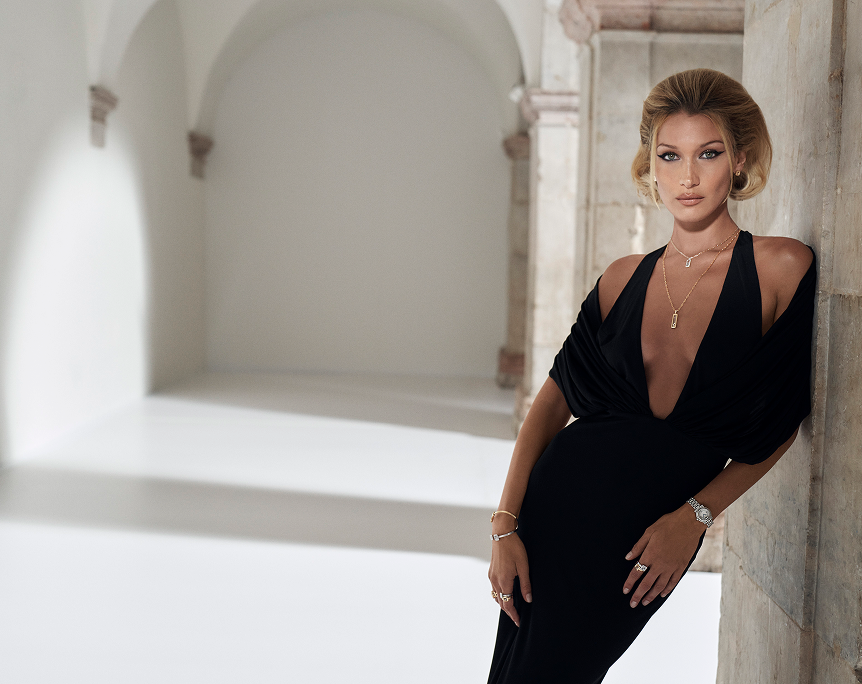
With its freely moving diamonds, the collection has become a symbol of innovation and creative freedom. Five decades later, it remains one of the Swiss maison’s most recognizable signatures. This year, Chopard marks the anniversary of one of its signature collections by bringing together two major figures in fashion, Bella Hadid and Liu Wen, for a campaign exploring the relationship between movement, jewelry and personal expression.
Happy Diamonds: When Chopard Set Diamonds Free
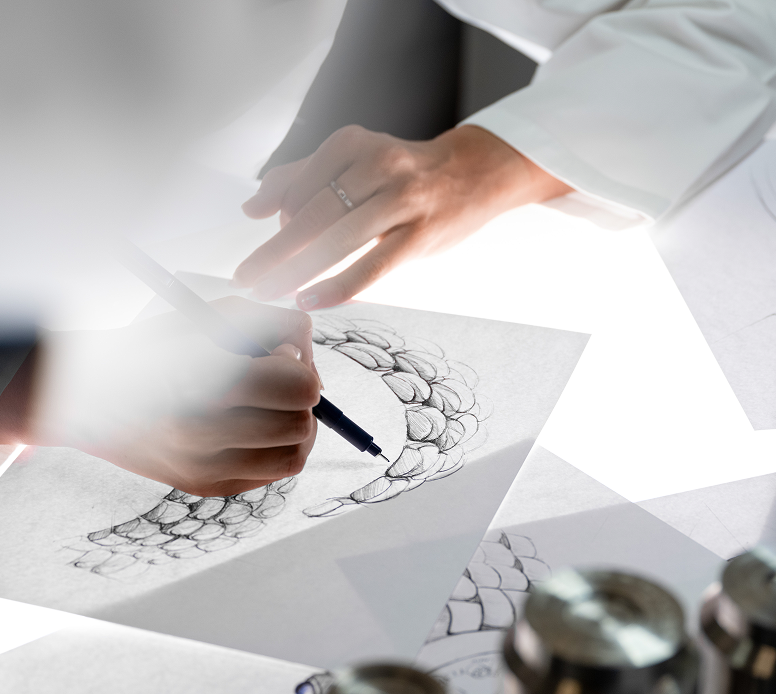
One of the most fascinating aspects of high jewelry is discovering the inspiration behind each creation. In the case of Happy Diamonds, it all began with nature. The idea came from watching sunlight catch the droplets of a waterfall, creating tiny flashes of light in constant motion. It raised an intriguing question: why not recreate that same effect in jewelry?
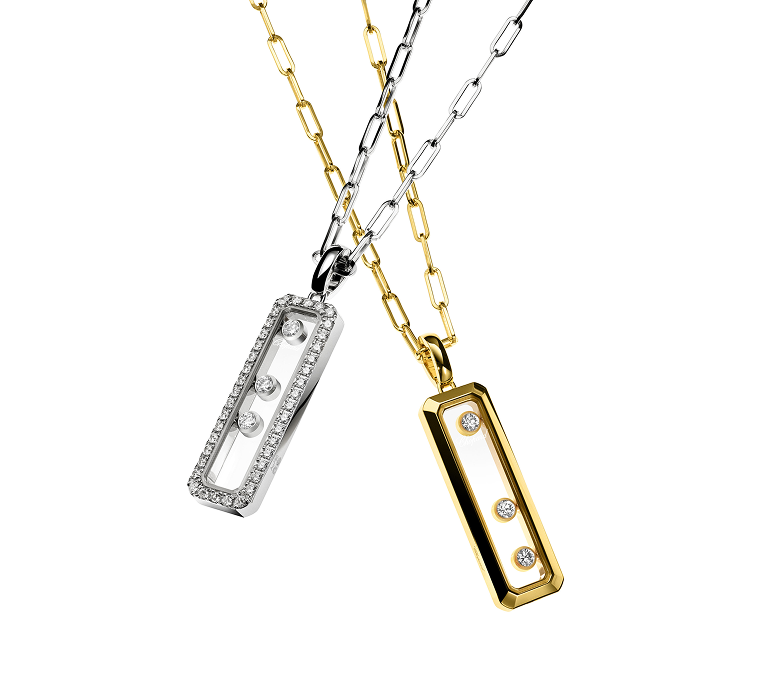
In 1976, Chopard introduced a concept that departed from traditional stone-setting techniques: diamonds that could move freely between two sapphire crystals. The idea fascinated Karin Scheufele, who ran the maison alongside her husband, Karl Scheufele, and is credited with one of the house’s most memorable quotes: “Diamonds are happier when they are free.”
What made this concept particularly interesting was the element of spontaneity it brought to jewelry design. The appearance of a piece no longer depended solely on the cut of its stones or the precision of its setting, but also on the movements of the person wearing it. Every gesture could change the arrangement of the diamonds within the same piece, making unpredictability part of its charm.
One of the most fascinating aspects of high jewelry is discovering the inspiration behind each creation. In the case of Happy Diamonds, it all began with nature.
From Happy Diamonds to Happy Sport: The Evolution of an Icon
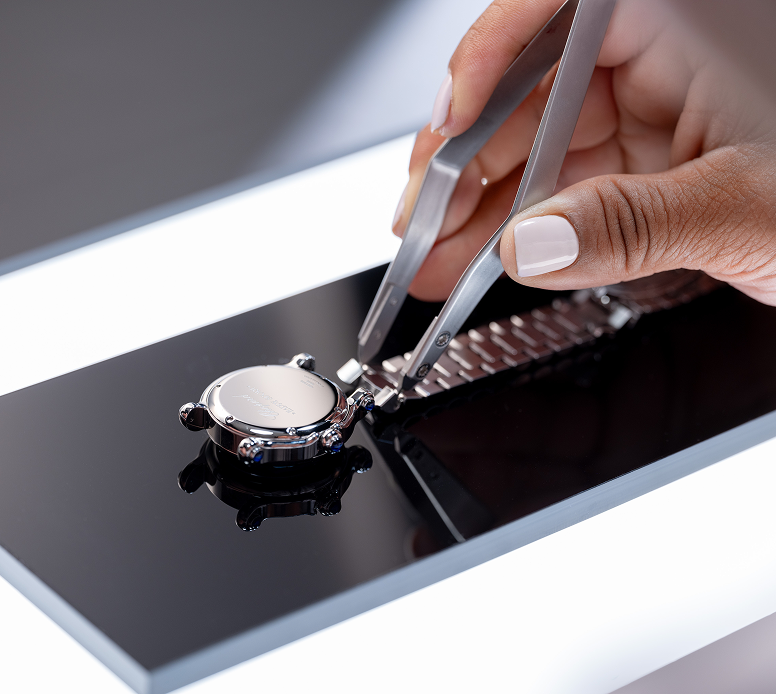
The success of Happy Diamonds encouraged Caroline Scheufele, now Chopard’s co-president and artistic director, to experiment with another unconventional idea in 1993: combining steel and diamonds in a watch. The result was Happy Sport, a timepiece that brought the sophistication of fine jewelry into everyday life.
Today, the maison celebrates the legacy of both collections with Happy Sport The First, a reissue of the 1993 model that stays true to the original design while introducing new proportions of 26 and 33 mm. Alongside the watches comes a series of Happy Diamonds pendants in yellow, rose and white gold. Their rectangular silhouette, first introduced in 2006, has been reworked to give the diamonds even more room to move.
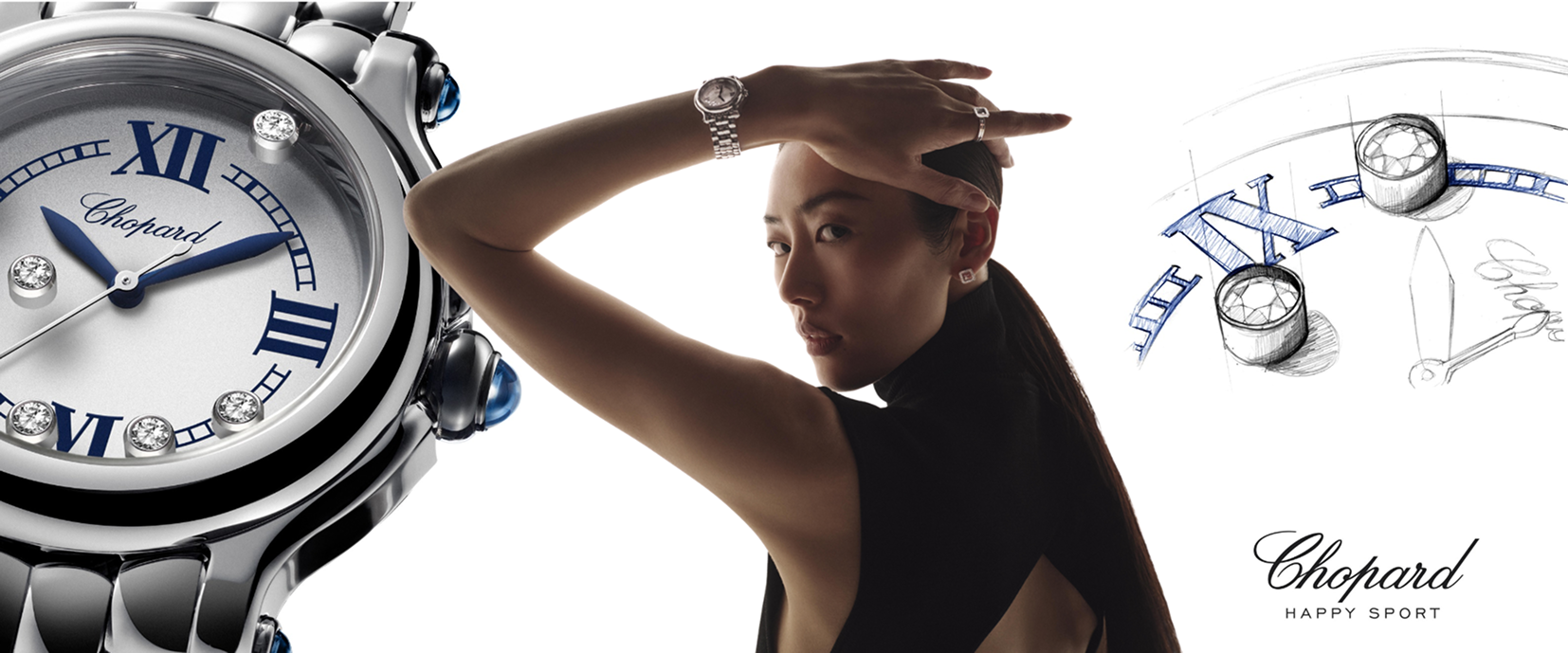
Bella Hadid and Liu Wen: Two Interpretations of Happy Diamonds
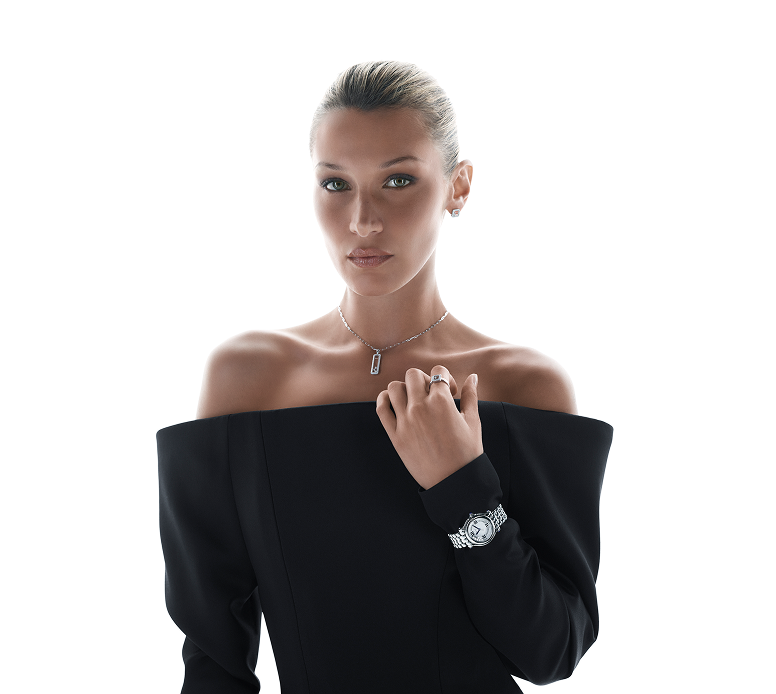
Although Bella Hadid and Liu Wen have both graced the world’s leading runways, each has carved out a very different identity within the fashion industry. It is precisely this contrast that Chopard plays with in its latest campaign. Hadid, an ambassador for the maison since 2024, brings a bold, spontaneous energy. Wen, who makes her debut as a Chopard ambassador in this campaign, stands out for her understated elegance.
Directed by Manu Cossu, photographed by Greg Williams and choreographed by Stephen Galloway, the campaign draws inspiration from contemporary dance. The movements of both models set the rhythm of the imagery while bringing the diamonds to life. It is a lovely illustration of how the same piece of jewelry can take on an entirely different personality depending on who wears it.
High Jewelry Can Be Fun, Too
Part of the charm of Happy Diamonds lies in how naturally Chopard has made playfulness a defining feature of high jewelry. For all the craftsmanship that goes into each of these creations, their real appeal lies in something the maison cannot control: the way the diamonds move.
Chopard understood that a piece of jewelry could be just as sophisticated as it was spontaneous, without compromising either quality. An approach to high jewelry that, since 1976, has remained as much a signature of the Swiss house as the diamonds themselves.
-5d6bcbf4.png)