There is no neutral red. Unlike every other color in the makeup arsenal, red cannot slip into the background of a face and ask nothing, it announces itself, it decides, and what it decides to say has never once been the same thing twice.
This is what makes the red lip the most enduring and most complex gesture in the history of beauty. No other shade carries more accumulated meaning. Red has been simultaneously claimed by power and protest, by desire and defiance, by grief and celebration. To wear red is never simply to wear a color. It is to enter a conversation that began long before you arrived and will continue long after you have left.
Author: Elizabeth Ulloa

Red Before It Was Fashion
Long before red became a runway staple it was a ceremony, with ancient Egyptian women applying red pigment to their lips not as vanity but as vocabulary, marking status, ritual, and the sacred boundary between the ordinary self and the elevated one in a culture that understood the face as a site of meaning.
What connects these ancient uses of red to the red lip as we know it today is not the pigment or the formula. It is the intention. The understanding, carried across centuries without ever being formally taught, that red on the face changes something. Not just how a person looks. How they feel. What they are permitted to become.

The Politics of Red
The 20th century turned red into politics. The suffragette movement adopted the red lip as quiet defiance, a visible signal that said, without words, that women intended to take up space. It was not universally celebrated. It was, by design, a statement. Elizabeth Arden understood this completely, famously standing outside the Women’s suffrage march on Fifth Avenue handing red lipstick to the women walking by, turning a beauty product into an act of solidarity that the industry has never quite repeated at that level since.
By the 1940s, red had transformed again. During World War II it became resilience, femininity asserted in the middle of a world falling apart. A woman’s face wearing red in that era was not making a fashion choice. It was making a statement about survival.

Hollywood and the Paradox of Red
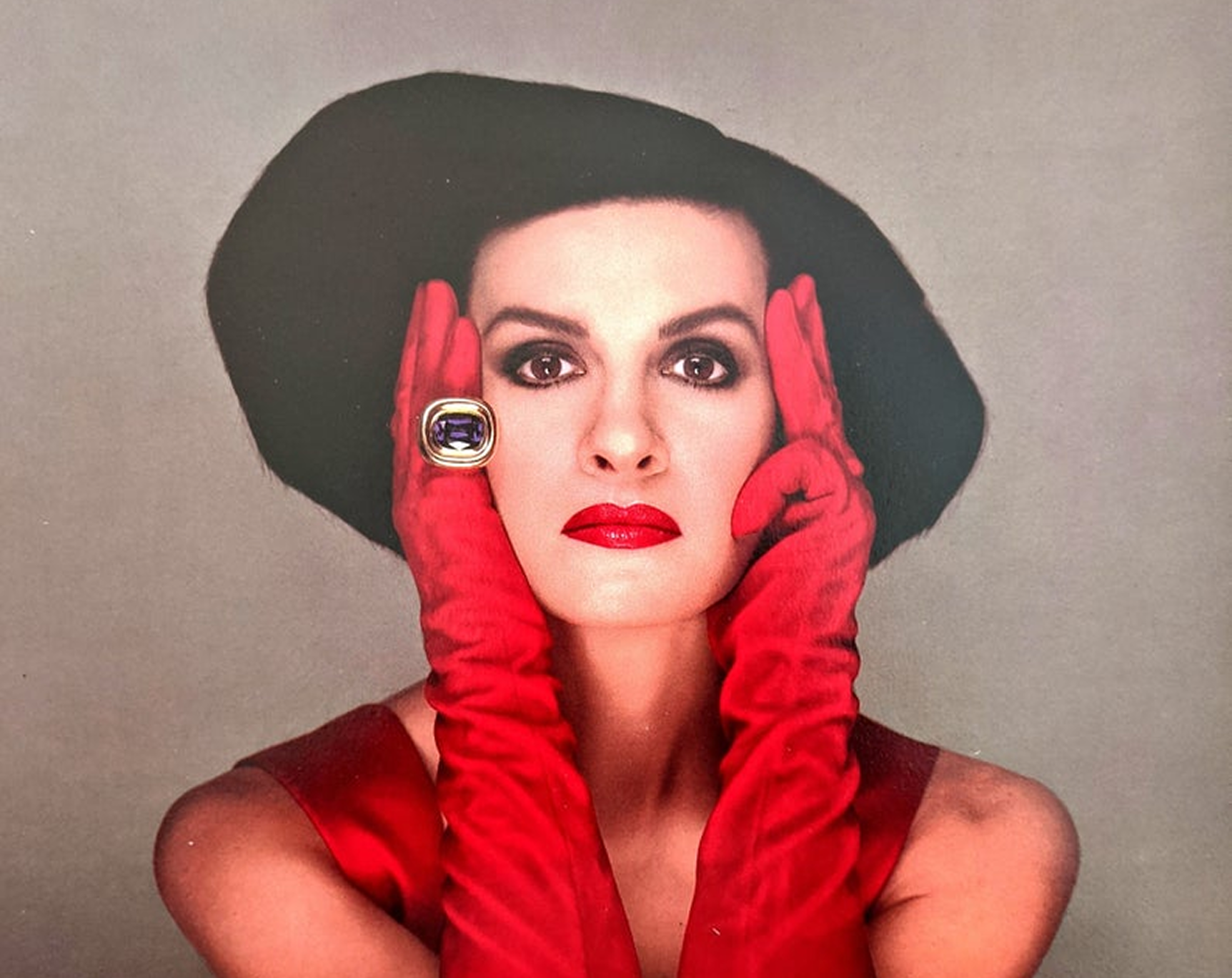
When cinema took ownership of red, it complicated everything. For the first time, the red lip was being broadcast at scale, projected onto screens in darkened theaters across the world, and with that scale came a narrowing. Hollywood decided who got to wear red, how they wore it, and what it was allowed to mean. The women chosen to carry red on screen were almost exclusively white, almost exclusively cast within a specific idea of femininity that centered desire, availability, and a particular kind of beauty that left entire cultures invisible. Red became aspirational in a way that was also exclusionary. It was glamorous and it was limited, and those two things existed together without much tension for a very long time.
And yet within that limitation, the women wearing red found ways to make it mean something Hollywood had not scripted. Marilyn Monroe’s red was vulnerability made glamorous. Elizabeth Taylor’s red was authority. And south of the border, María Félix, the most defiant face in Mexican cinema, wore red as something else entirely: sovereignty. A woman who belonged to no one, whose red lip was not an invitation but a declaration of absolute self-possession. The same color, worn across three women in the same approximate era, speaking three completely different languages.
This is the paradox red has always carried. It can mean everything and its opposite at the same time. It has been worn to be desired and worn to signal that desire is no longer the primary concern.

Red Across Cultures
In many Latin American cultures, the red lip has never been a statement. It has simply been presence. An ordinary Tuesday. A grandmother leaving for church. Red as the unremarkable language of a woman who has decided she deserves color, not for any particular occasion but for the daily act of moving through the world.
In East Asian beauty traditions, red carries theatrical and ceremonial weight, from Peking Opera to geisha culture. Here red is archetype, the face elevated into something that represents more than a single person. In South Asian bridal culture, red marks transition, the self crossing a threshold into a new chapter of life.
Across all of these radically different meanings, red on the lip communicates the same essential thing: this moment matters.

Why Red Keeps Returning
The question was never whether red would return, only whether the moment was ready to receive it.
Red returns visibly when something in the collective atmosphere asks for it. When there is a desire to be counted. To stop softening the edges of the self for the comfort of a room that was never asking you to be quiet in the first place.
In 2026, red is rising again in the context of a beauty culture that has spent years asking women to look effortless, natural, undone, and is beginning to hear the exhaustion in that request. Red is the answer to effortless, the quiet insistence of a woman who chose deliberately and has no interest in apologizing for it.

What Red Has Always Known
Red is not a passive choice, it is presence, impression, and memory carried in a single gesture. Underneath every meaning it has ever carried, across centuries and cultures and revolutions in taste, the same truth remains, that red is the simplest and most complete way a face has ever said: I am here.