There is something curious about the way we have learned to talk about our emotions. We can describe our day in detail, what we accomplished, what still needs to get done, and even what we have planned for tomorrow. Yet when someone asks how we are, we often turn to a response that seems to settle everything: I’m fine. Not necessarily because we want to hide something, but because some experiences are difficult to explain, some emotions are only beginning to make sense, and some conversations never seem to find the right moment.
We can be going through a difficult period while continuing to work, care for others, make plans, and fulfill our responsibilities. From the outside, our lives may appear perfectly organized, even as we navigate worry, exhaustion, or uncertainty internally. That distance between what we show and what we feel is more common than we might imagine. According to research conducted by Ipsos for Lancôme among 4,000 women in France, the United Kingdom, the United States, and China, 80% admitted to saying they were fine when they actually were not. The figure invites us to look beyond an automatic response and consider why, even at a time when emotional well-being is increasingly part of public conversation, expressing what we are experiencing can still feel so difficult.
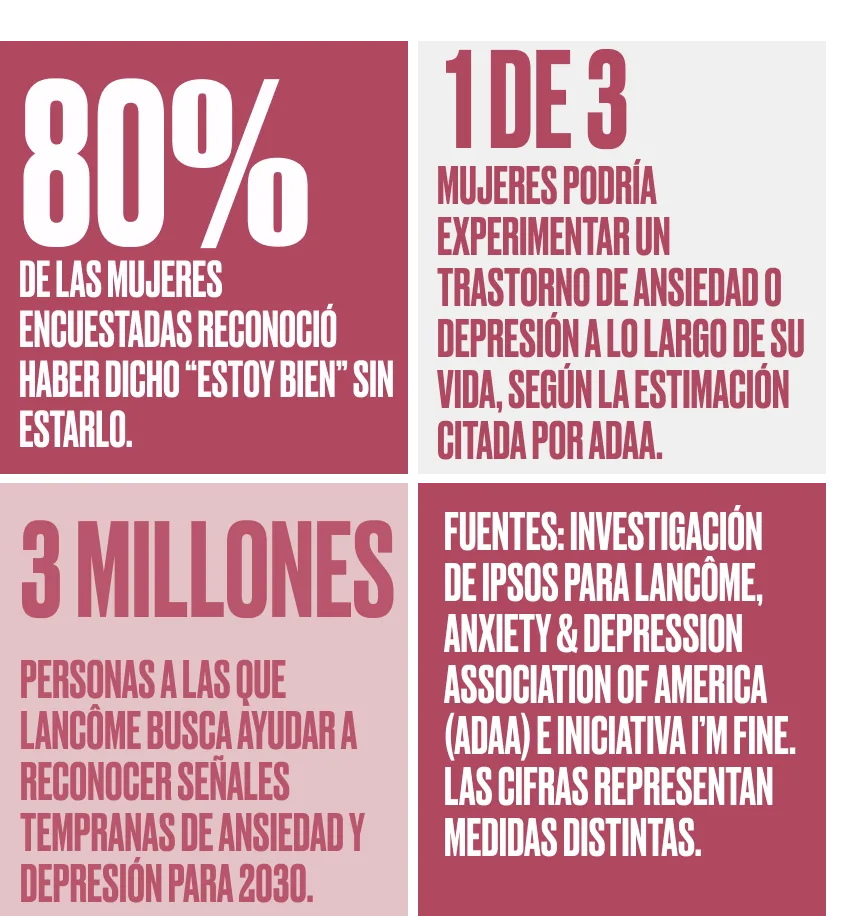
Sources: Ipsos research for Lancôme, Anxiety & Depression Association of America (ADAA), and the I’M FINE initiative. These figures represent different measures.
The Pressure to Have It All Together
Strength has long played a significant role in how we talk about women. We admire those who support their families, build careers, navigate major life changes, and find solutions even under difficult circumstances. Yet the ability to keep going can also become a constant expectation, particularly when professional responsibilities, caregiving, and the mental load of everyday life leave little room to attend to our own emotional needs. In that context, saying we are fine can become a way of moving forward without having to explain what is happening beneath the surface.
The challenge is not necessarily recognizing that we are going through a difficult time, but allowing ourselves to express it without feeling that we are falling short of what is expected of us. There is an important difference between being resilient and believing we must remain strong at all times. Mental health is not a simple division between being well and being unwell, either. We can experience joy and worry on the same day, go through periods of uncertainty without having a mental health condition, or need support even when life appears to be moving along normally.
This complexity becomes particularly relevant when discussing women’s mental health. The World Health Organization has documented gender differences in the prevalence of certain mental health conditions, including anxiety and depression, which can be influenced by biological, social, and economic factors. Acknowledging these differences does not mean assuming that all women share the same experiences, but rather understanding that emotional well-being is also shaped by the circumstances in which we live.
What Happens Before We Ask for Help
There can be a considerable distance between sensing that something is not right and understanding what we need. Sometimes we attribute exhaustion to a particularly demanding period at work, normalize changes in our mood, or interpret certain signs as inevitable consequences of our responsibilities. Although sadness, fear, and worry are part of the human experience, paying attention when symptoms persist, intensify, or interfere with everyday life can help us recognize when professional guidance may be appropriate.
It is within this space between emotional experience and recognition that I’M FINE, Lancôme’s global initiative, takes shape. Designed to help women identify potential early signs of anxiety and depression, the initiative has been developed in collaboration with specialized organizations, including the Anxiety & Depression Association of America (ADAA) and AtentaMente in Mexico. Its goal is to help three million people recognize early signs of these conditions by 2030. Beyond raising awareness about the importance of discussing mental health, the program aims to provide accessible information and resources that can turn that conversation into a first step toward action.
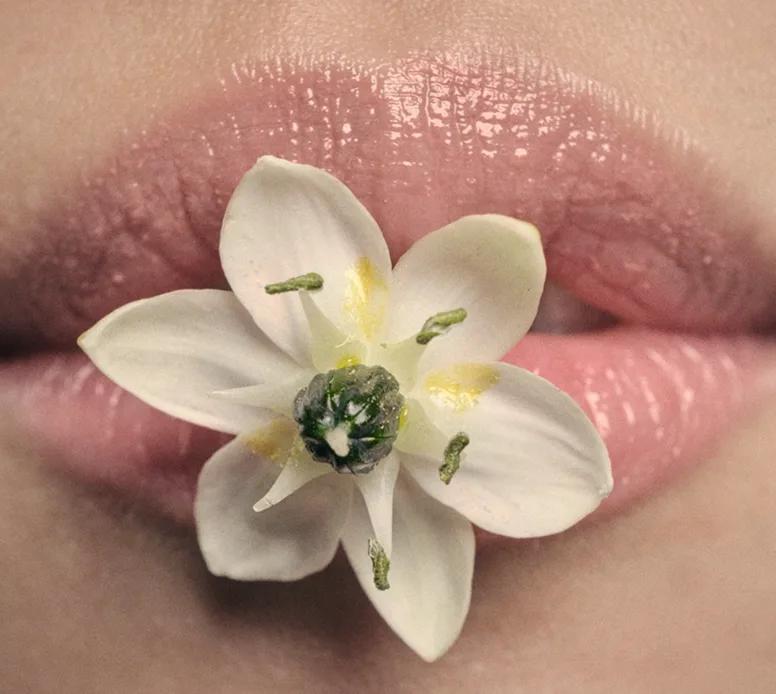
Courtesy of Lancôme
We admire women who care for their families, build careers, navigate major life changes, or find solutions even in difficult circumstances.
Five Minutes to Ask Yourself How You Really Feel
One of the challenges of emotional well-being is that we do not always have the tools to identify what we are feeling. Unlike other aspects of our health, where changes may be more immediately noticeable, signs associated with anxiety or depression can be mistaken for everyday experiences, especially when we have grown accustomed to living with certain levels of stress or exhaustion. Learning to recognize the frequency, duration, and intensity of particular symptoms can therefore offer a starting point for understanding our emotional state.
Through its I’M FINE digital platform, Lancôme provides educational content and a self-assessment tool that takes approximately five minutes to complete. The experience incorporates two questionnaires used in healthcare settings: GAD-7, designed to identify symptoms associated with anxiety, and PHQ-8, which focuses on depressive symptoms. Both instruments explore how frequently certain symptoms occur, although their results do not constitute a diagnosis or replace an evaluation by a mental health professional.
The platform also features articles and informational resources that explore different aspects of emotional well-being. In Mexico, its collaboration with AtentaMente, an organization specializing in the development of social and emotional skills, aims to provide tools that encourage a deeper understanding of our emotions. What makes this approach particularly interesting is how it transforms a seemingly simple question into an exercise in self-awareness: taking a moment to recognize how we have actually been feeling over a period of time, rather than automatically answering how we believe we should feel. The objective is not to find an immediate solution, but to access information that may help us determine whether additional support is needed.
Cortesía de Lancôme
What Beauty Cannot Always Reveal
Lancôme’s involvement in this conversation also invites us to reconsider the relationship between the beauty industry and women’s well-being. For decades, concepts such as confidence, self-esteem, and self-care have been central to the industry's narrative, often associated with appearance and the way we present ourselves to the world. Yet our relationship with ourselves is also shaped by experiences that are not always visible: emotional changes, personal concerns, and the circumstances we navigate throughout different stages of life.
This does not mean that beauty and mental health are interchangeable, or that a self-care routine can replace psychological support when it is needed. Rather, initiatives such as I’M FINE broaden the conversation to include a dimension of well-being that requires information, awareness, and access to appropriate resources. The significance of an international beauty brand entering this space lies in its ability to bring the subject to new audiences and help make the early recognition of mental health symptoms part of a more everyday conversation.
Perhaps one of the most meaningful aspects of this initiative is the reminder that paying attention to our mental health should not depend on reaching a moment of crisis. Recognizing our emotions, understanding when an experience deserves closer attention, and feeling able to seek help are all part of developing a more conscious relationship with our well-being. In a culture that often values our ability to keep moving without stopping, learning to listen to what is happening internally can be just as important as any other form of care.
And although we will probably continue saying “I’m fine” many times throughout our lives, it is worth remembering that those two words do not always have to be the end of the conversation.
Discover I’M FINE and explore Lancôme’s emotional well-being resources.